
Transfigured on the mountain
Jesus took Peter, James and John up a high mountain apart. His face shone as the sun and his clothes became white as the light, and Moses and Elijah appeared, talking with him.
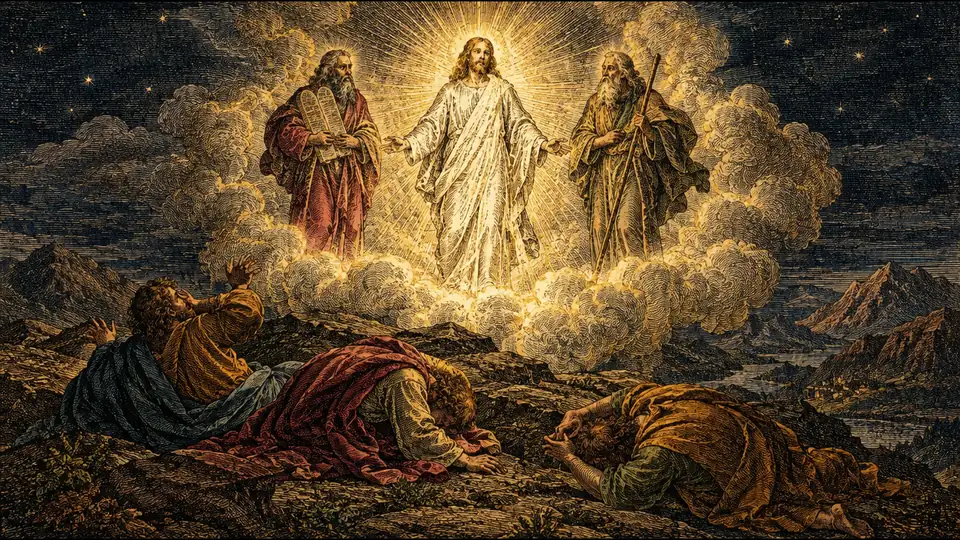
Press play: the paintings change with the story and the words come as the narrator reads them. The whole story is written out below.
Now playing: Transfigured on the mountain
The whole story
Peter, not knowing what to say, offered to build three tabernacles, one for Jesus, one for Moses and one for Elijah. While he spoke, a bright cloud overshadowed them, and a voice came out of the cloud: “This is my beloved Son, in whom I am well pleased; hear ye him” (Matthew 17:5). The disciples fell on their faces, and when they looked up they saw no man, save Jesus only.
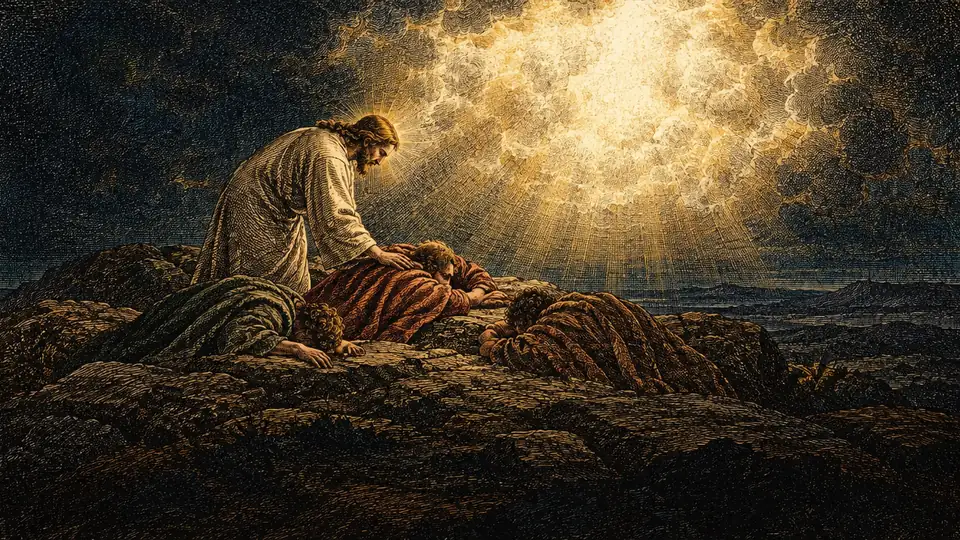
Luke adds what Moses and Elijah spoke of: his decease, which he would accomplish at Jerusalem. Coming down, Jesus told the three to tell no one until he had risen from the dead. Years later Peter wrote of it as a thing he had seen with his own eyes, saying they “were eyewitnesses of his majesty” (2 Peter 1:16).
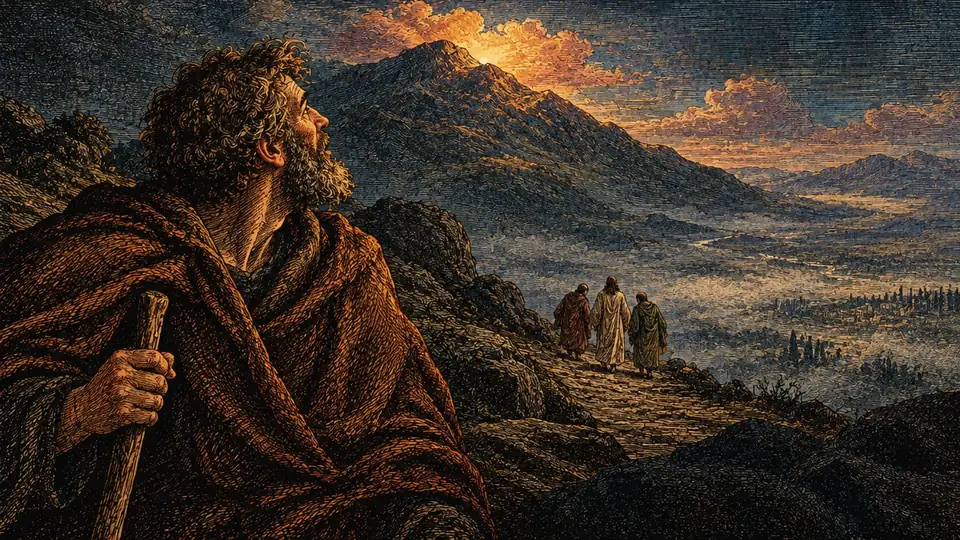
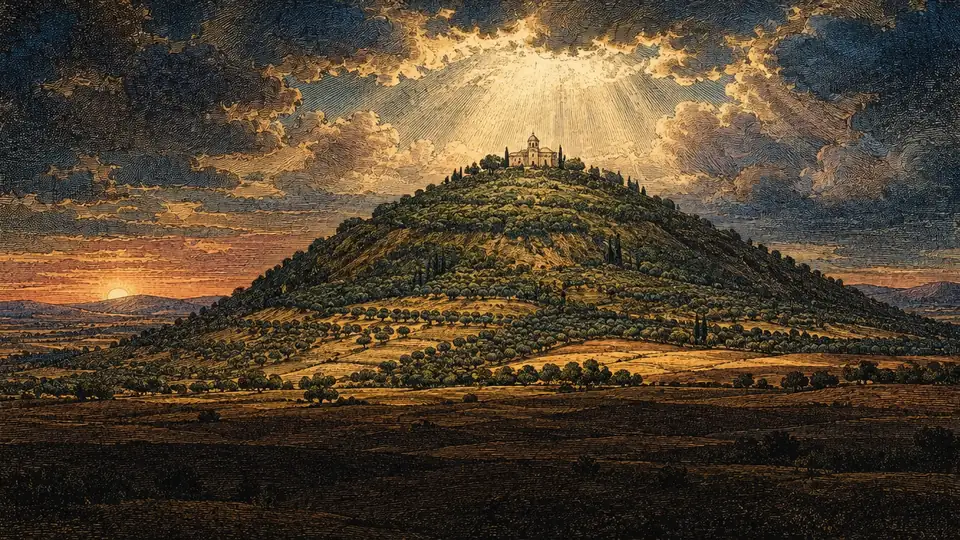
Churches have crowned Tabor since the fourth century; the basilica on its summit today was finished in 1924. The churches keep the feast of the Transfiguration on the sixth of August, and Eastern teachers speak of the uncreated light that the disciples saw, the same glory believers hope to see.
And was transfigured before them: and his face did shine as the sun, and his raiment was white as the light.
Matthew 17:2, KJV
Where it happened
Mount Tabor, Lower Galilee (site by tradition).
The Gospels say only a high mountain. Since the fourth century tradition has named Tabor, the round mountain rising alone from the plain of Jezreel; others have proposed Hermon.
Every story stands at its place on the Worldwide Watch map: the Bible’s world, on the map.
More from the Gospels
Matthew to John
Sources and editorial method
Research and editorial references used for this page include:
- The King James Bible, as published by bible-api.com
- The Book of Enoch, translated by R. H. Charles (1917), Project Gutenberg
Every story is told from the King James Bible, and from the Book of Enoch in R. H. Charles’s translation (1917) where a story names it. Every quotation was checked word for word against those texts. Where a place is not known, the page says so. The paintings and the narration were made for the house.

