
In the land of Goshen
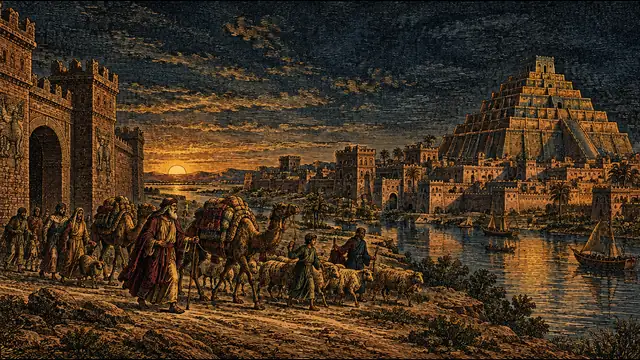
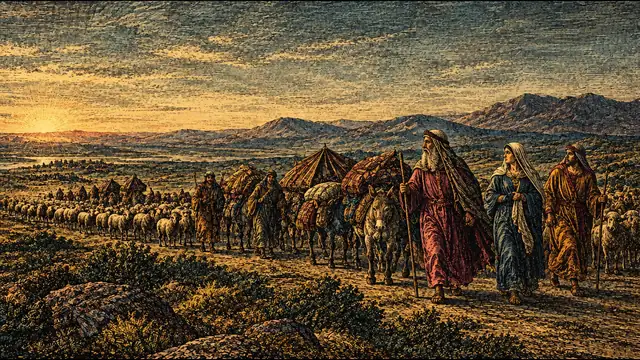
Jacob’s family came down to Egypt in the famine and settled in Goshen, where they grew into a people.
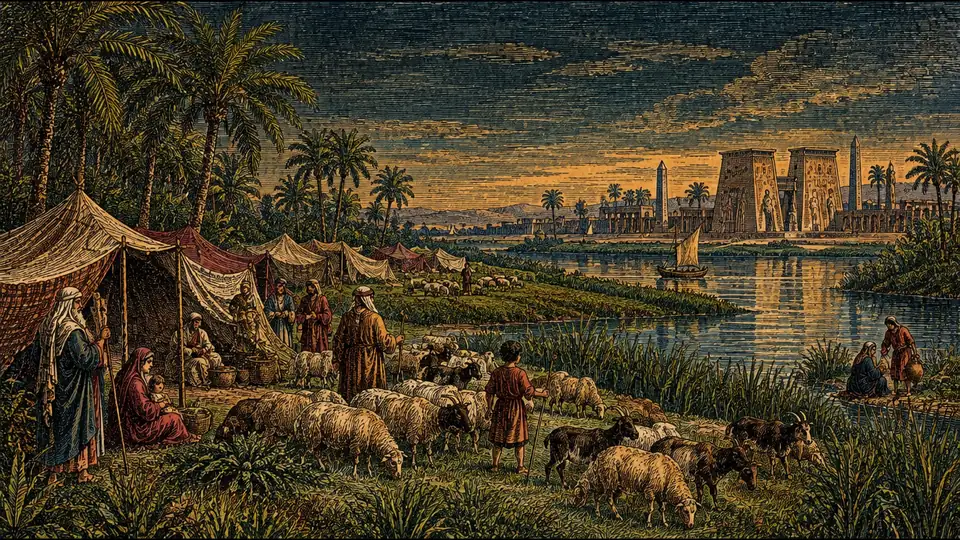
Press play: the paintings change with the story and the words come as the narrator reads them. The whole story is written out below.
Now playing: In the land of Goshen
The whole story
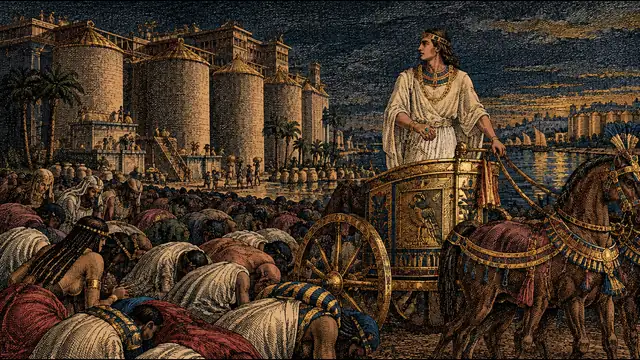
Jacob, hearing that Joseph was alive, went down to Egypt with all his house, seventy souls. Joseph drove out in his chariot to meet his father in Goshen and wept on his neck a good while. Pharaoh gave them the best of the land for their flocks, and since shepherds were an abomination to the Egyptians, they dwelt apart.
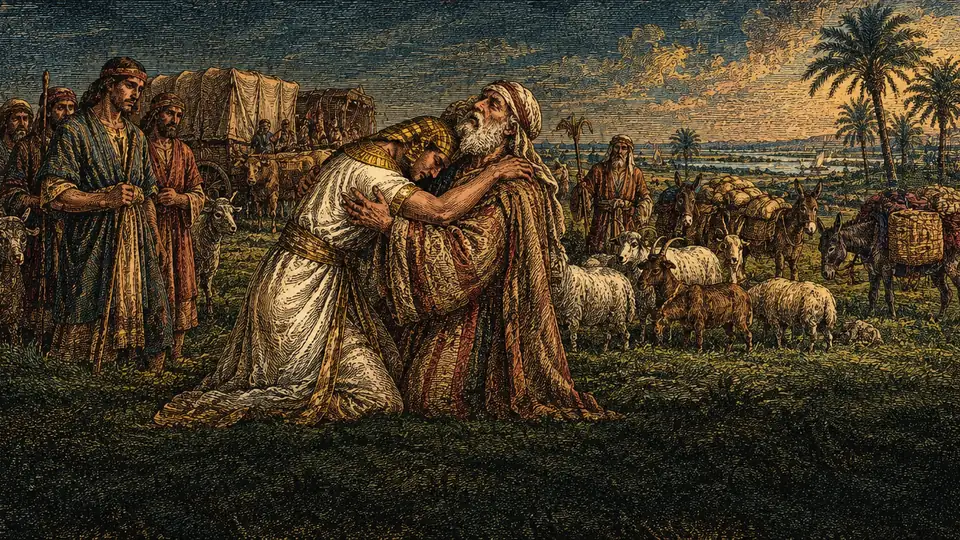
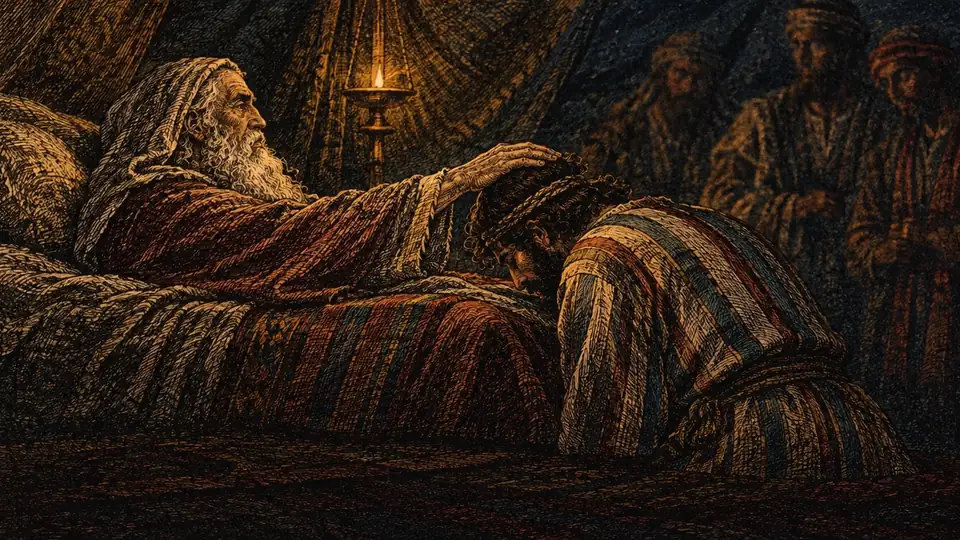
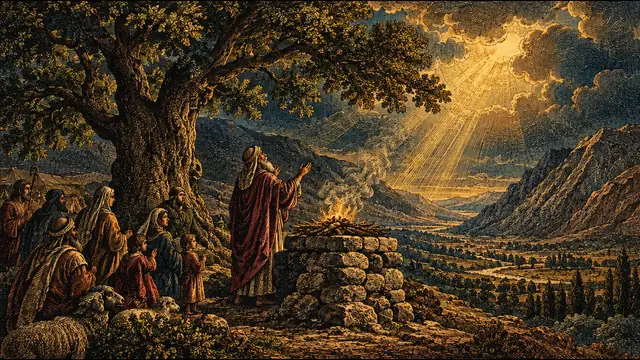
Jacob lived seventeen years in Egypt and blessed his twelve sons before he died, words that shaped the tribes of Israel. In Goshen they were fruitful and multiplied, until there arose a new king over Egypt who knew not Joseph, and set taskmasters over them to build the treasure cities of Pithom and Raamses.
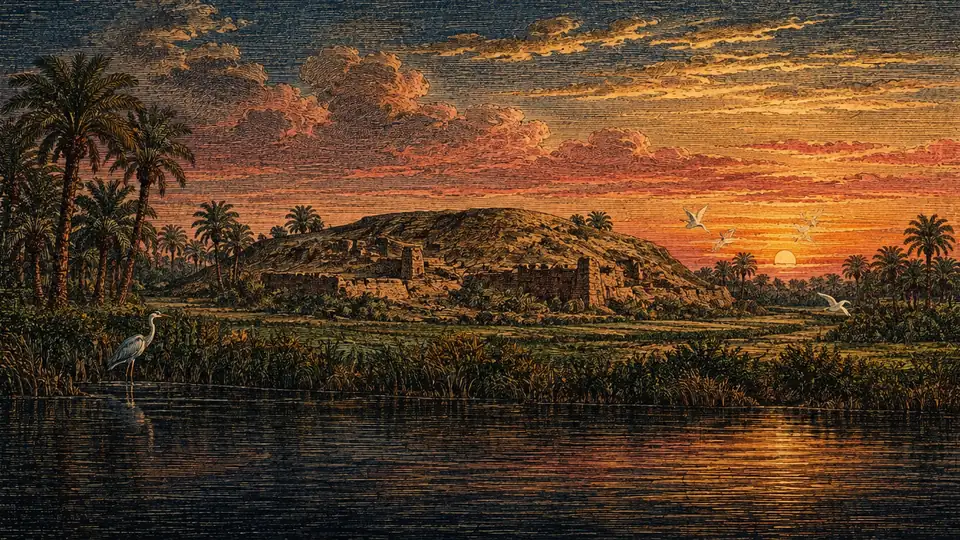
Goshen lay in the eastern delta, near the border with Sinai. Excavations at Tell el-Dab’a found the great city of Avaris, where people from Canaan lived in large numbers for centuries, and close by lay Pi-Ramesses, the capital of Ramesses the Second, which many take to be the city of Raamses.
And Israel dwelt in the land of Egypt, in the country of Goshen; and they had possessions therein, and grew, and multiplied exceedingly.
Genesis 47:27, KJV
Where it happened
Egypt: the land of Goshen, The eastern Nile delta (site likely).
Goshen lay in the eastern Nile delta; most place it along the Wadi Tumilat, where the mark stands.
Every story stands at its place on the Worldwide Watch map: the Bible’s world, on the map.
More from the fathers
Genesis 12 to 50
Sources and editorial method
Research and editorial references used for this page include:
- The King James Bible, as published by bible-api.com
- The Book of Enoch, translated by R. H. Charles (1917), Project Gutenberg
Every story is told from the King James Bible, and from the Book of Enoch in R. H. Charles’s translation (1917) where a story names it. Every quotation was checked word for word against those texts. Where a place is not known, the page says so. The paintings and the narration were made for the house.

