
Called out of Ur
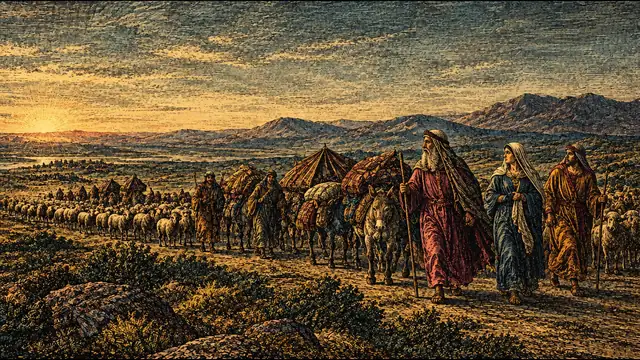
Abram’s family set out from Ur of the Chaldees, by the Euphrates, to go into the land of Canaan, and stopped on the way at Haran.
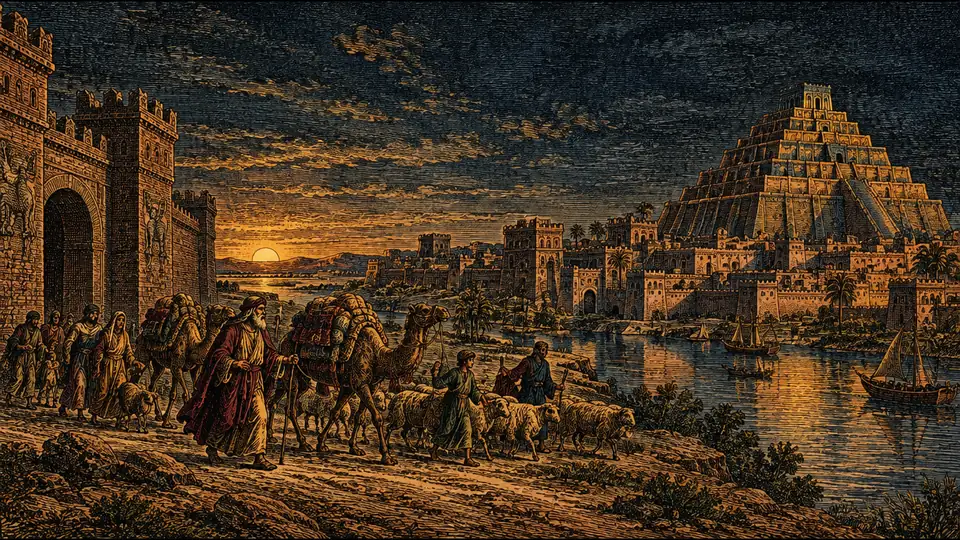
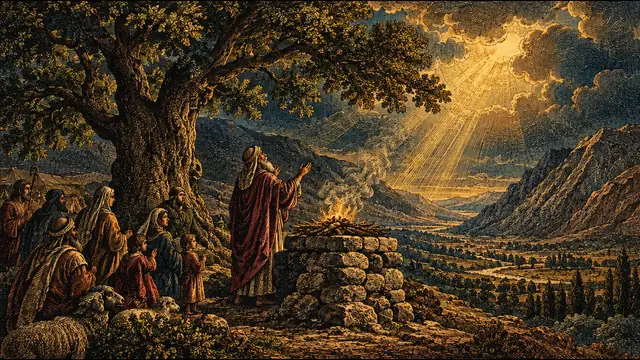
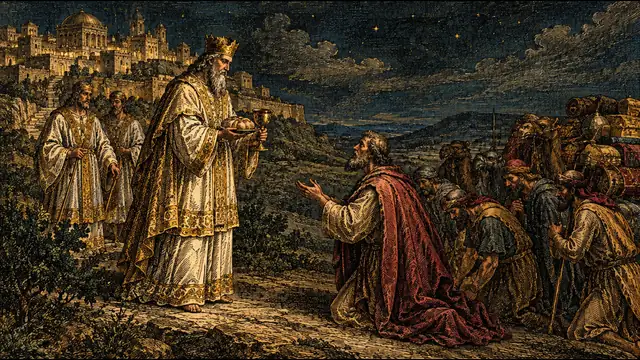
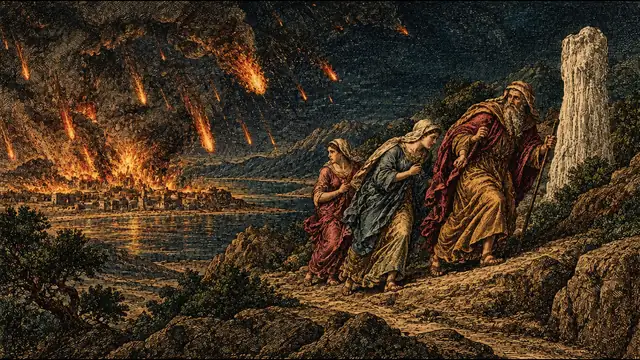
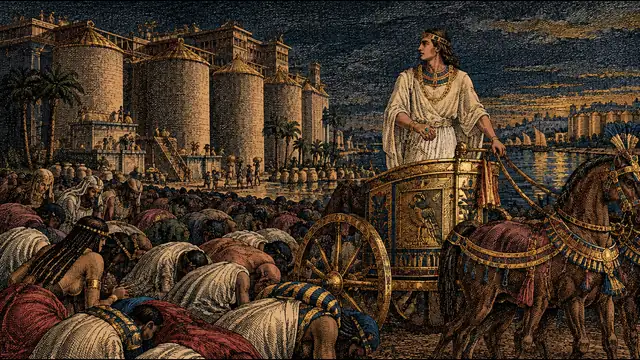
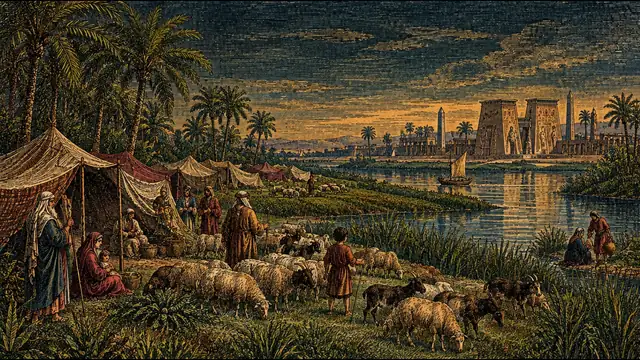
Press play: the paintings change with the story and the words come as the narrator reads them. The whole story is written out below.
Now playing: Called out of Ur
The whole story
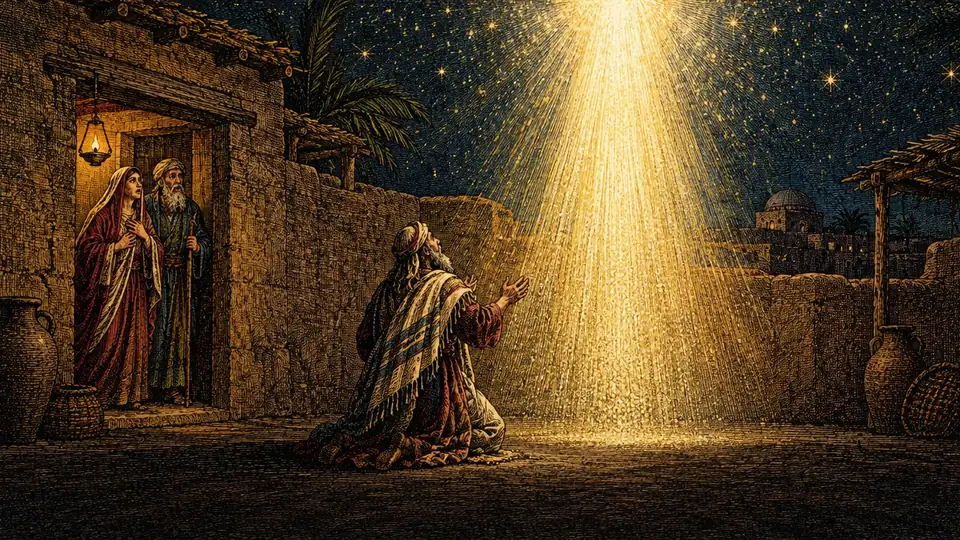
Terah took Abram his son, Lot his grandson and Sarai his daughter-in-law, and they went forth from Ur of the Chaldees to go into the land of Canaan; they came to Haran and dwelt there. Centuries later Stephen told the council in Jerusalem, “The God of glory appeared unto our father Abraham, when he was in Mesopotamia, before he dwelt in Charran” (Acts 7:2).
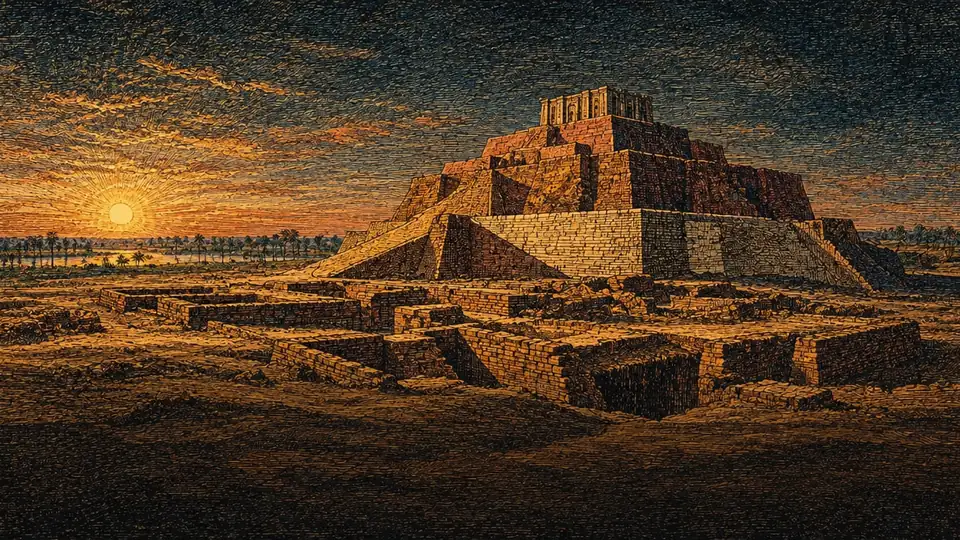
Ur was one of the great cities of Sumer, on the Euphrates near the head of the Gulf, a seat of the moon god Nanna. Leonard Woolley’s excavations in the 1920s and 1930s uncovered its great ziggurat, partly rebuilt today, and the royal tombs, with their gold helmet, their lyres and the famous Standard of Ur, now in the British Museum.
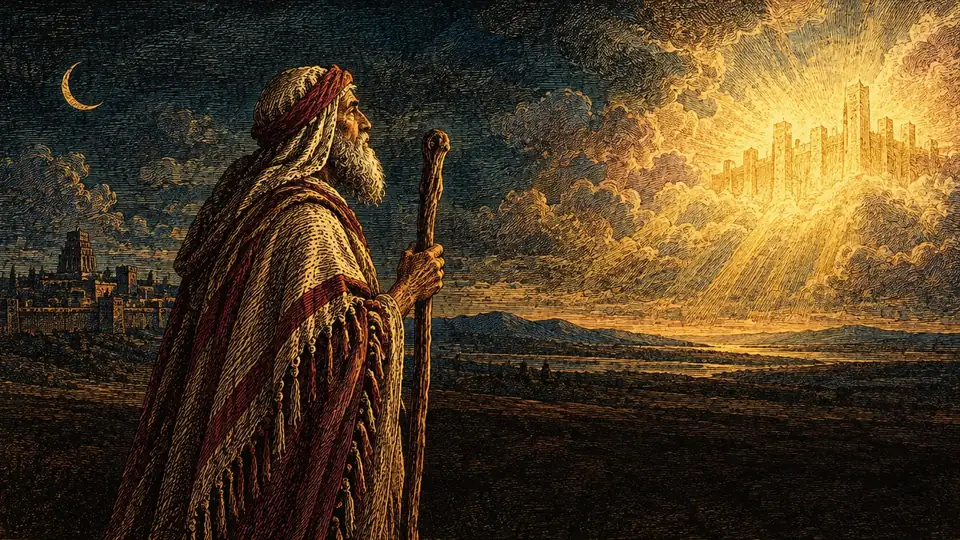
Leaving such a city meant leaving its gods behind; Joshua later reminded Israel that their fathers had served other gods on the far side of the river. The letter to the Hebrews says Abraham went out “not knowing whither he went” (Hebrews 11:8), looking for a city which hath foundations, whose builder and maker is God.
And he said unto him, I am the LORD that brought thee out of Ur of the Chaldees, to give thee this land to inherit it.
Genesis 15:7, KJV
Where it happened
Ur of the Chaldees, Tell el-Muqayyar, southern Iraq (site likely).
Most scholars take it to be Ur in southern Iraq, excavated by Leonard Woolley from 1922 to 1934; a few look for Abraham’s Ur in the north, near Haran.
Every story stands at its place on the Worldwide Watch map: the Bible’s world, on the map.
More from the fathers
Genesis 12 to 50
Sources and editorial method
Research and editorial references used for this page include:
- The King James Bible, as published by bible-api.com
- The Book of Enoch, translated by R. H. Charles (1917), Project Gutenberg
Every story is told from the King James Bible, and from the Book of Enoch in R. H. Charles’s translation (1917) where a story names it. Every quotation was checked word for word against those texts. Where a place is not known, the page says so. The paintings and the narration were made for the house.

