
Abram departs
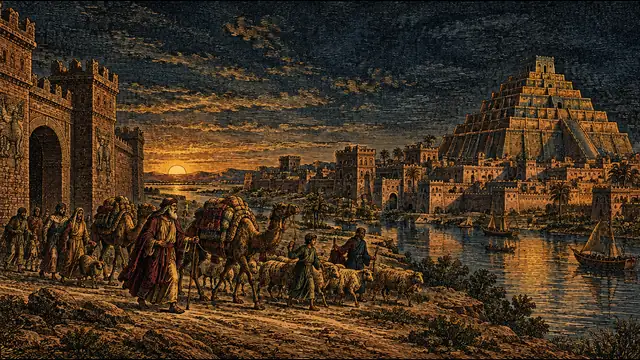
At Haran, God told Abram to leave his country for a land he would be shown. He went at seventy-five, with Sarai his wife and Lot his nephew.
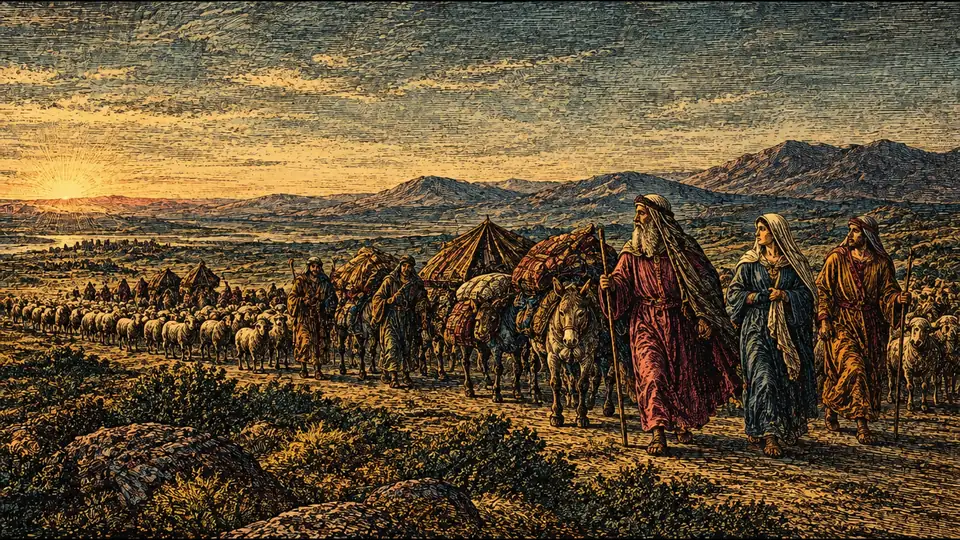
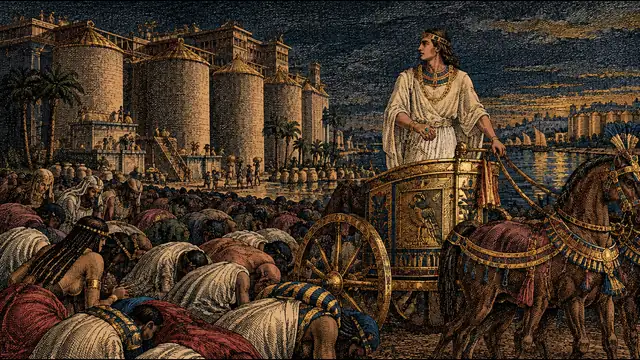
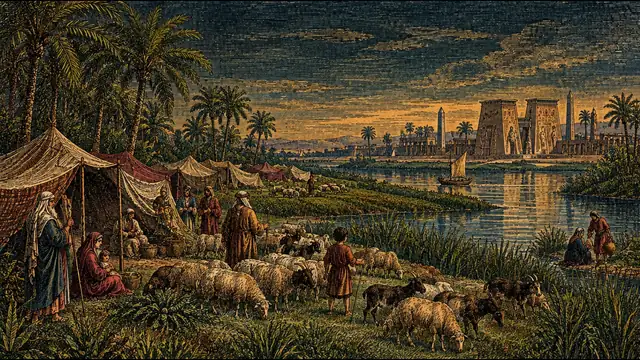
Press play: the paintings change with the story and the words come as the narrator reads them. The whole story is written out below.
Now playing: Abram departs
The whole story
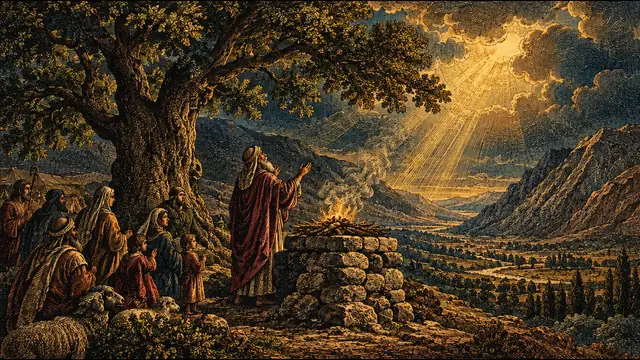
In Haran Terah died, and the LORD said to Abram: Get thee out of thy country, and from thy kindred, and from thy father’s house, unto a land that I will shew thee. With the call came a promise, “I will make of thee a great nation, and I will bless thee, and make thy name great” (Genesis 12:2), and in him all the families of the earth would be blessed.
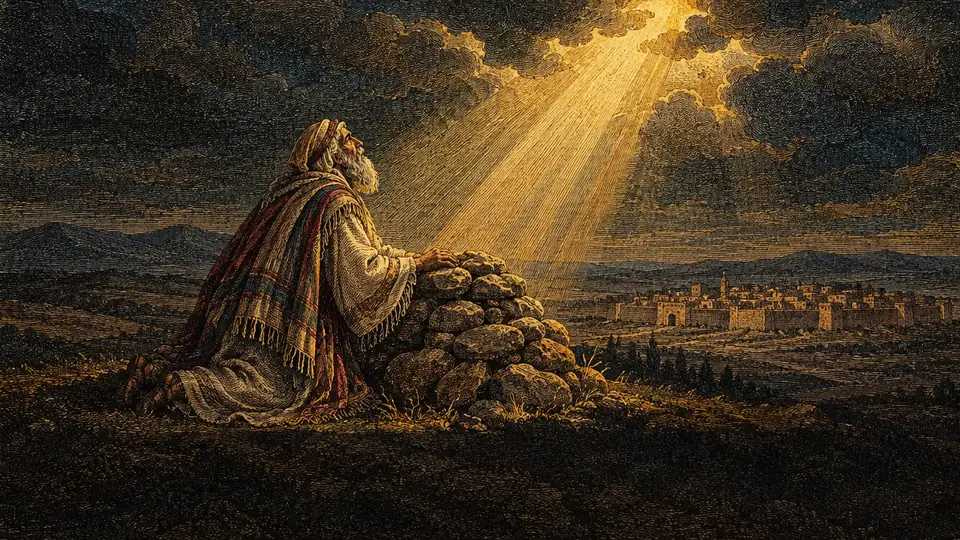
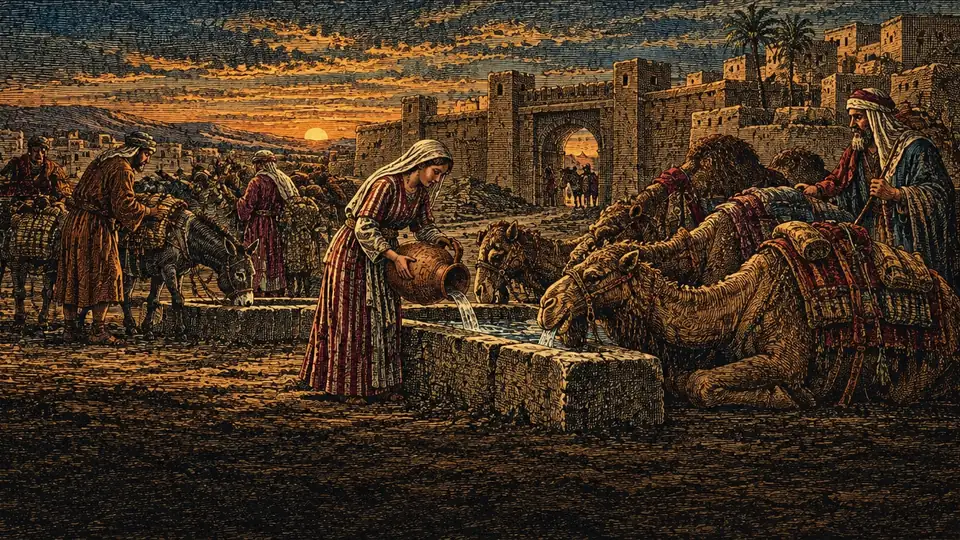
Haran was a busy caravan town on the road between Mesopotamia and the Mediterranean, and like Ur a city of the moon god. The family kept its ties there: Abraham’s servant went back to that country to find Rebekah for Isaac, and Jacob later fled to his uncle Laban at Haran, where he served twenty years and married Leah and Rachel.
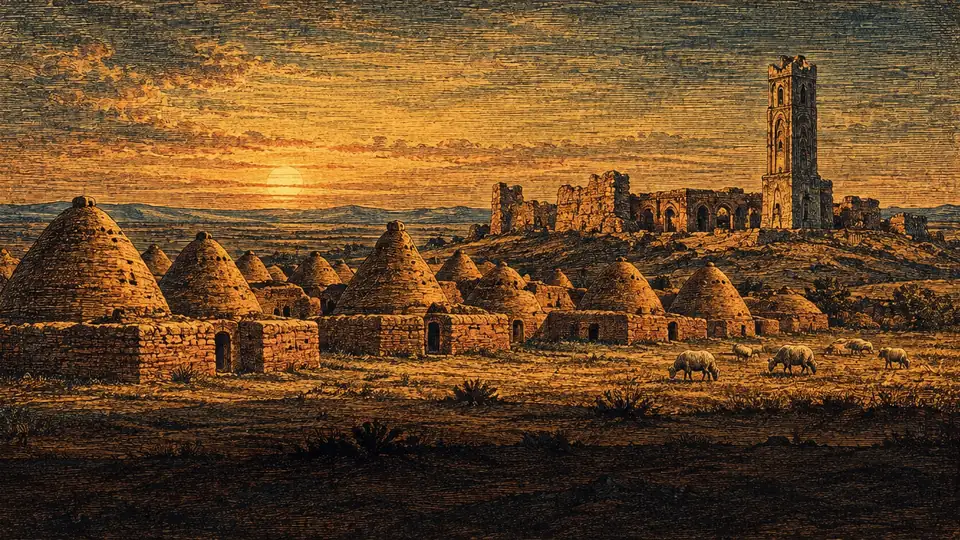
Harran in southeastern Turkey still keeps the name, with its beehive houses of mud brick and the ruins of a great mosque and an old university. Nabonidus, the last king of Babylon, rebuilt its moon temple, and the long inscriptions of his mother found there tell of her lifelong devotion to the moon god.
So Abram departed, as the LORD had spoken unto him; and Lot went with him: and Abram was seventy and five years old when he departed out of Haran.
Genesis 12:4, KJV
Where it happened
Haran, Harran, southeastern Turkey.
The town of Harran keeps the old name and stands on the old site.
Every story stands at its place on the Worldwide Watch map: the Bible’s world, on the map.
More from the fathers
Genesis 12 to 50
Sources and editorial method
Research and editorial references used for this page include:
- The King James Bible, as published by bible-api.com
- The Book of Enoch, translated by R. H. Charles (1917), Project Gutenberg
Every story is told from the King James Bible, and from the Book of Enoch in R. H. Charles’s translation (1917) where a story names it. Every quotation was checked word for word against those texts. Where a place is not known, the page says so. The paintings and the narration were made for the house.

