
Joseph over Egypt
Sold by his brothers, Joseph rose from prison to rule Egypt under Pharaoh, storing grain in seven years of plenty for seven years of famine.
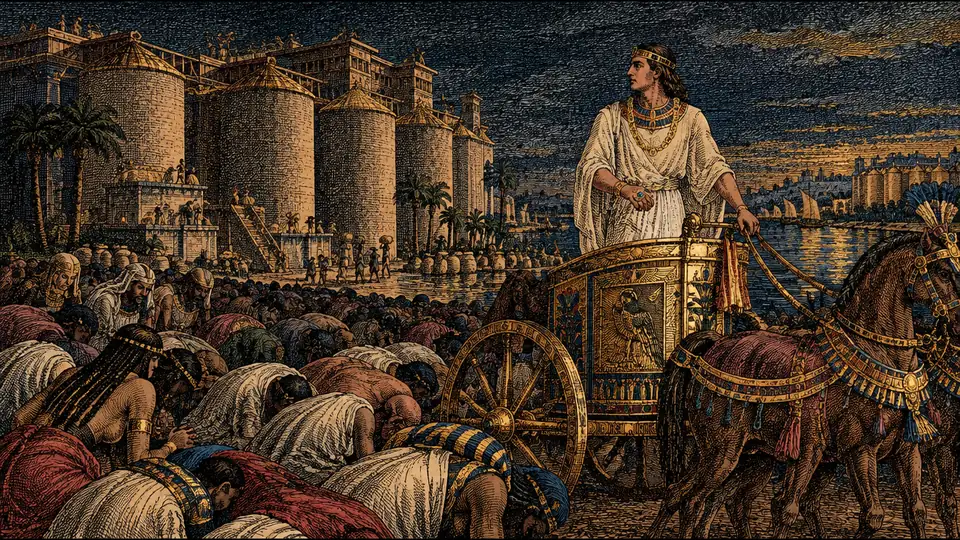
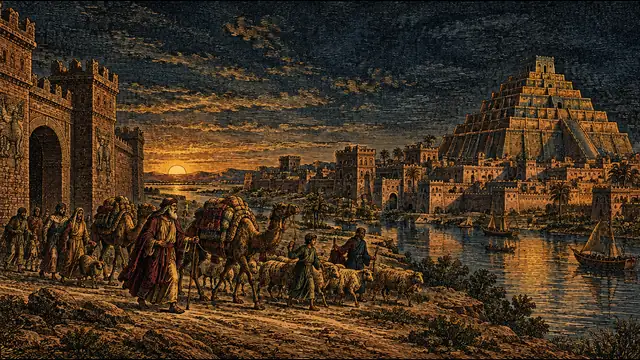
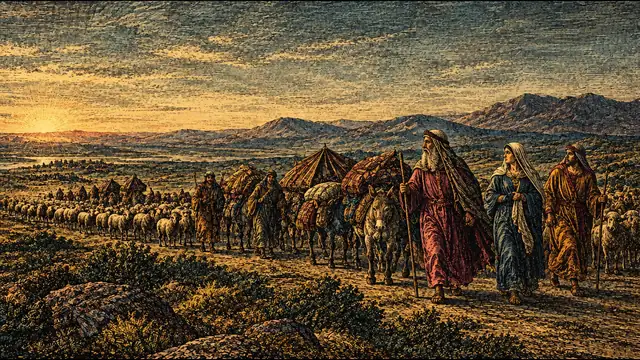
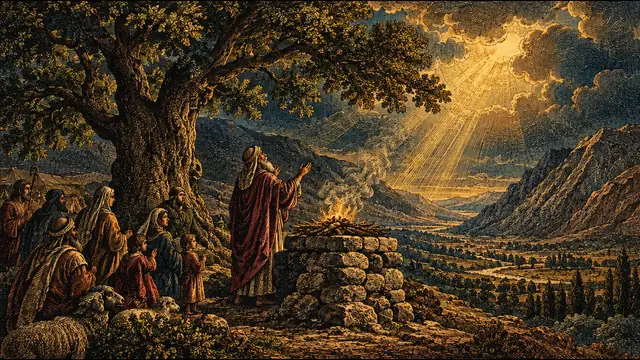
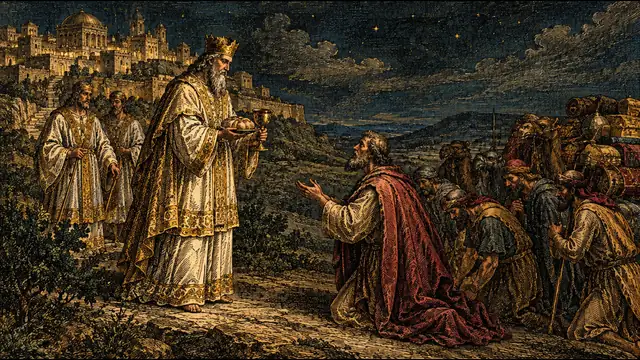
Press play: the paintings change with the story and the words come as the narrator reads them. The whole story is written out below.
Now playing: Joseph over Egypt
The whole story
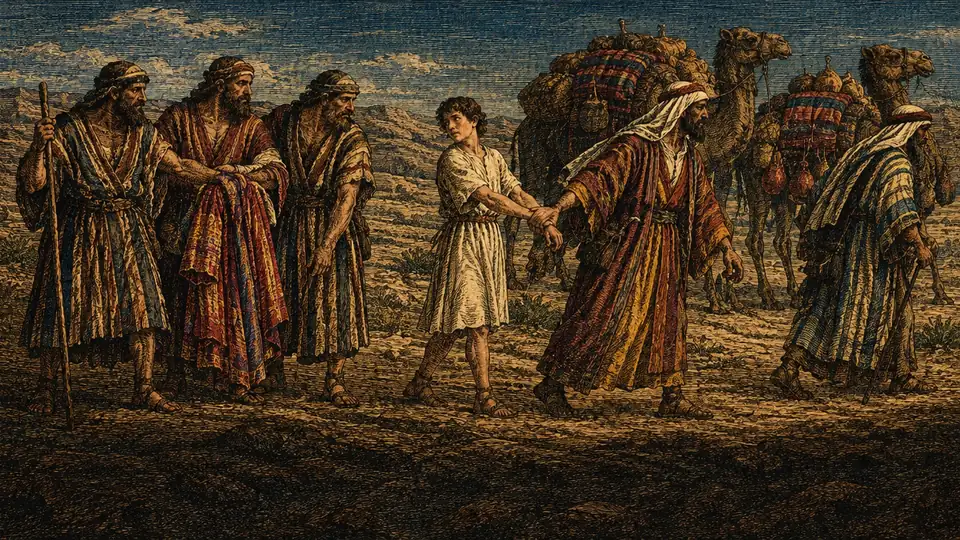
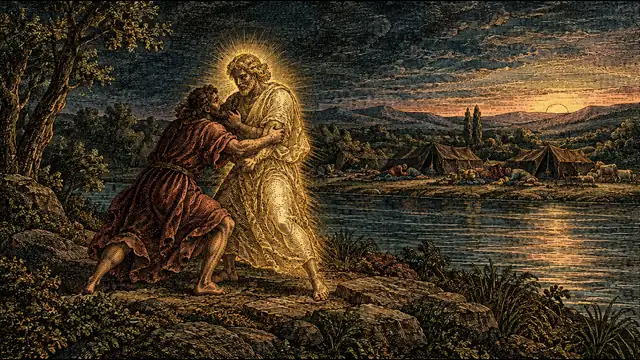
Joseph was Jacob’s favorite, given a coat of many colors, and his dreams of sheaves and stars bowing to him made his brothers hate him. They sold him to traders going down to Egypt and told their father a wild beast had devoured him. In Egypt he served Potiphar, was falsely accused and cast into prison, where he read the dreams of Pharaoh’s butler and baker.
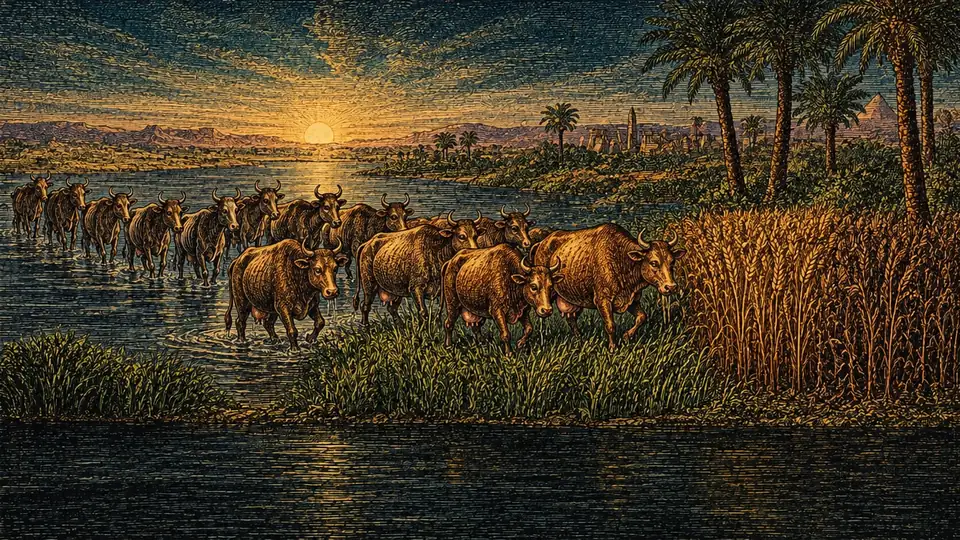
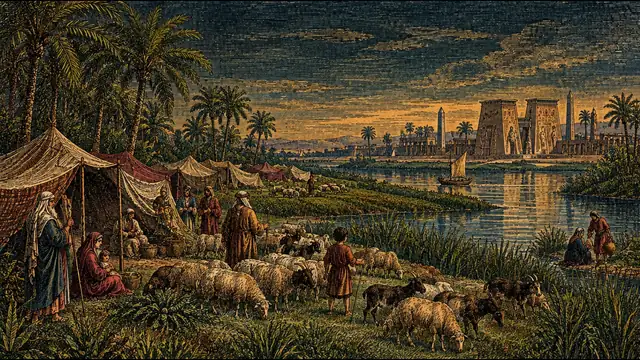
When Pharaoh dreamed of seven fat kine eaten by seven lean, and seven good ears of corn swallowed by seven thin, no one could read it until the butler remembered Joseph. Seven years of plenty were coming, he said, and then seven of famine. Pharaoh set him over all the land, gave him his ring and a chain of gold, and a new name, Zaphnathpaaneah.
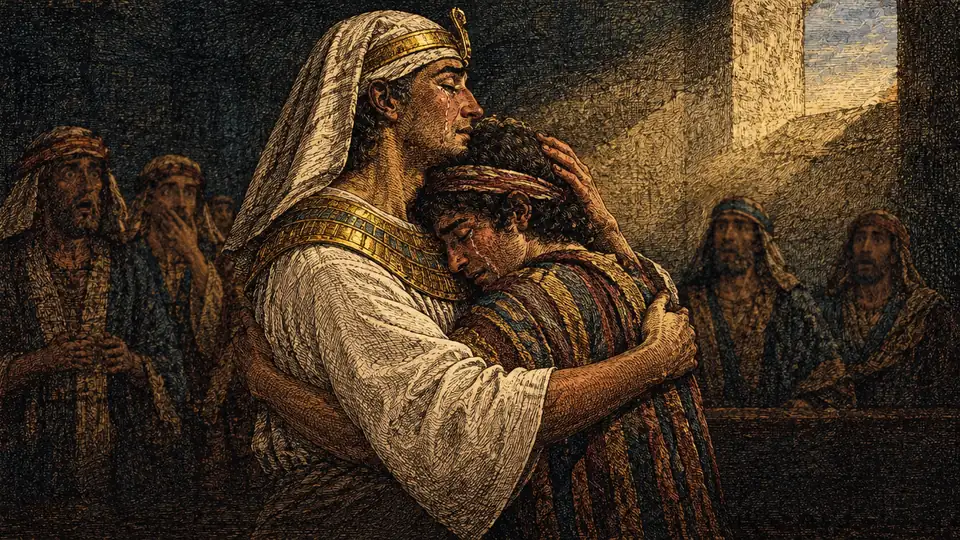
When his brothers came down to buy grain, he knew them and they did not know him. In the end he made himself known, weeping, and later told them, “ye thought evil against me; but God meant it unto good” (Genesis 50:20). Egyptian records tell of officials from Canaan and of years of famine, though none names Joseph.
And Pharaoh said unto Joseph, See, I have set thee over all the land of Egypt.
Genesis 41:41, KJV
Where it happened
Egypt: the land of Goshen, The eastern Nile delta (site likely).
Goshen lay in the eastern Nile delta; most place it along the Wadi Tumilat, where the mark stands.
Every story stands at its place on the Worldwide Watch map: the Bible’s world, on the map.
More from the fathers
Genesis 12 to 50
Sources and editorial method
Research and editorial references used for this page include:
- The King James Bible, as published by bible-api.com
- The Book of Enoch, translated by R. H. Charles (1917), Project Gutenberg
Every story is told from the King James Bible, and from the Book of Enoch in R. H. Charles’s translation (1917) where a story names it. Every quotation was checked word for word against those texts. Where a place is not known, the page says so. The paintings and the narration were made for the house.

