
The land of Moriah
God tested Abraham, telling him to offer Isaac on a mountain in the land of Moriah. An angel stayed his hand, and a ram caught in a thicket was offered instead. Second Chronicles says Solomon built the temple on mount Moriah, and tradition joins the two.
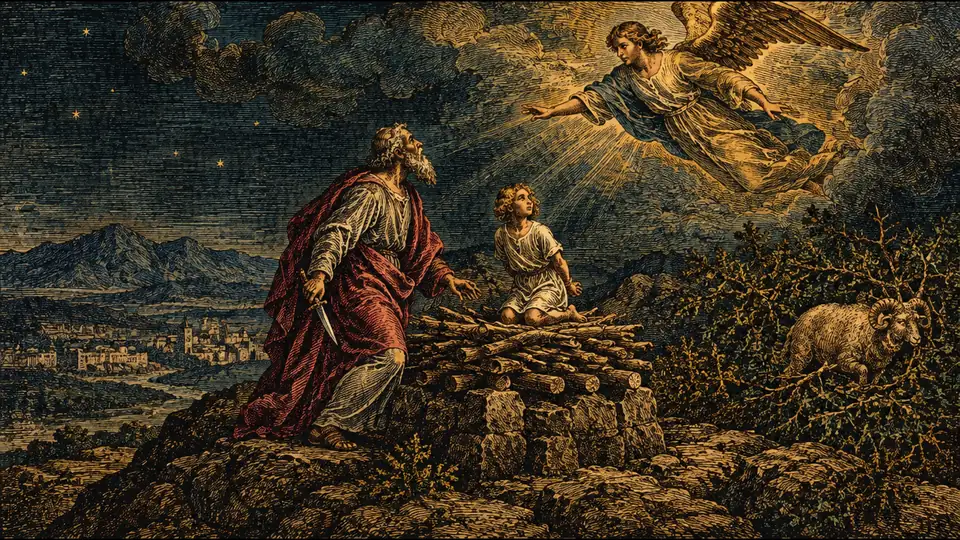
Press play: the paintings change with the story and the words come as the narrator reads them. The whole story is written out below.
Now playing: The land of Moriah
The whole story
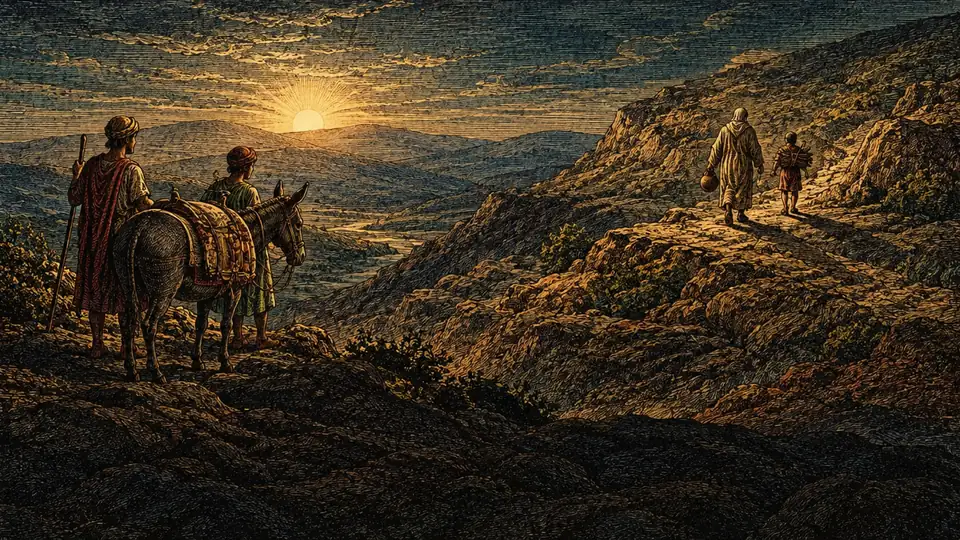
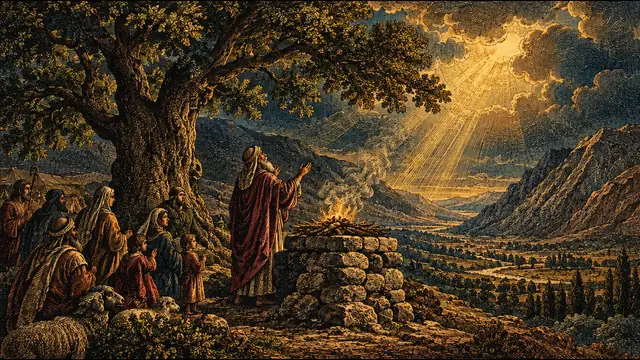
God said, “Take now thy son, thine only son Isaac, whom thou lovest” (Genesis 22:2), and Abraham rose early, saddled his ass and set out with Isaac, two young men and wood for the offering. On the third day he saw the place afar off, and father and son went up together, Isaac carrying the wood.
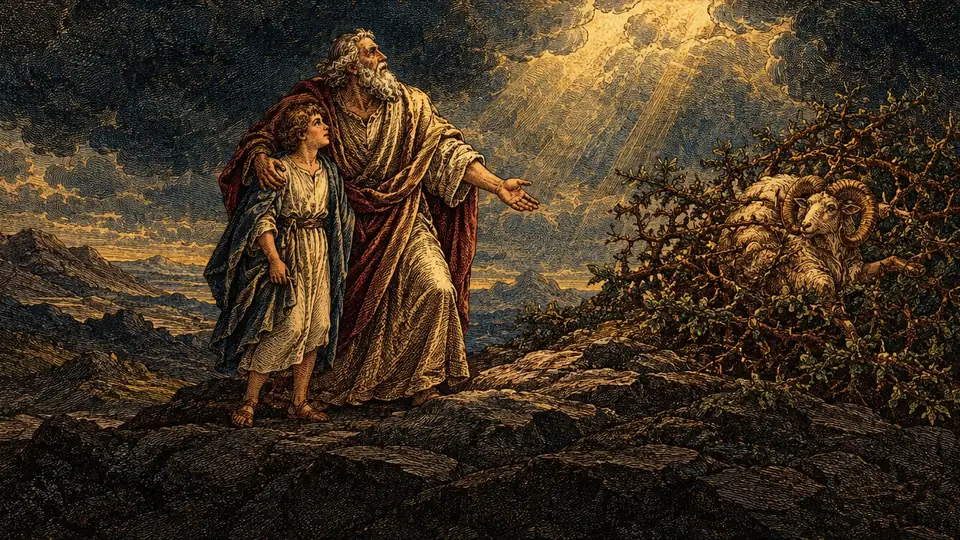
Isaac asked where the lamb was, and Abraham answered that God would provide himself a lamb. At the last moment the angel of the LORD called out of heaven, and Abraham saw a ram caught in a thicket by his horns. He named the place Jehovahjireh, and it was said, “In the mount of the LORD it shall be seen” (Genesis 22:14).
Jewish tradition calls the story the Akedah, the binding of Isaac, and sets it on the rock now covered by the Dome of the Rock on Jerusalem’s Temple Mount. Christians from the earliest times have read it as a picture of the Father who gave his only Son, and of the wood carried up the hill. Muslim tradition tells a version with Ishmael as the son.
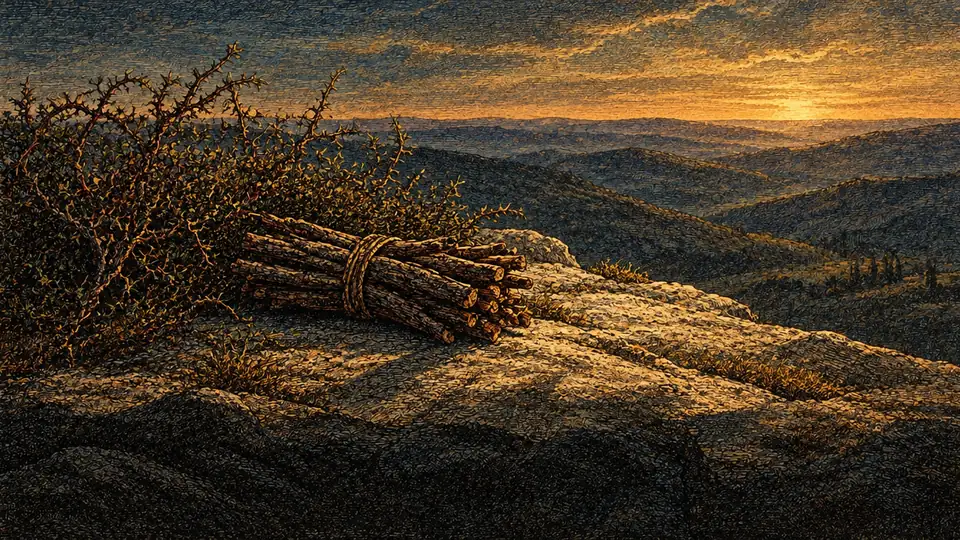
And Abraham said, My son, God will provide himself a lamb for a burnt offering: so they went both of them together.
Genesis 22:8, KJV
Where it happened
Jerusalem (site by tradition).
The Temple Mount, by the tradition that joins Abraham’s Moriah to the mount of the temple.
Every story stands at its place on the Worldwide Watch map: the Bible’s world, on the map.
More from the fathers
Genesis 12 to 50
Sources and editorial method
Research and editorial references used for this page include:
- The King James Bible, as published by bible-api.com
- The Book of Enoch, translated by R. H. Charles (1917), Project Gutenberg
Every story is told from the King James Bible, and from the Book of Enoch in R. H. Charles’s translation (1917) where a story names it. Every quotation was checked word for word against those texts. Where a place is not known, the page says so. The paintings and the narration were made for the house.

