
Unto thy seed
At Shechem, in Canaan, God promised the land to Abram’s seed, and Abram built an altar there.
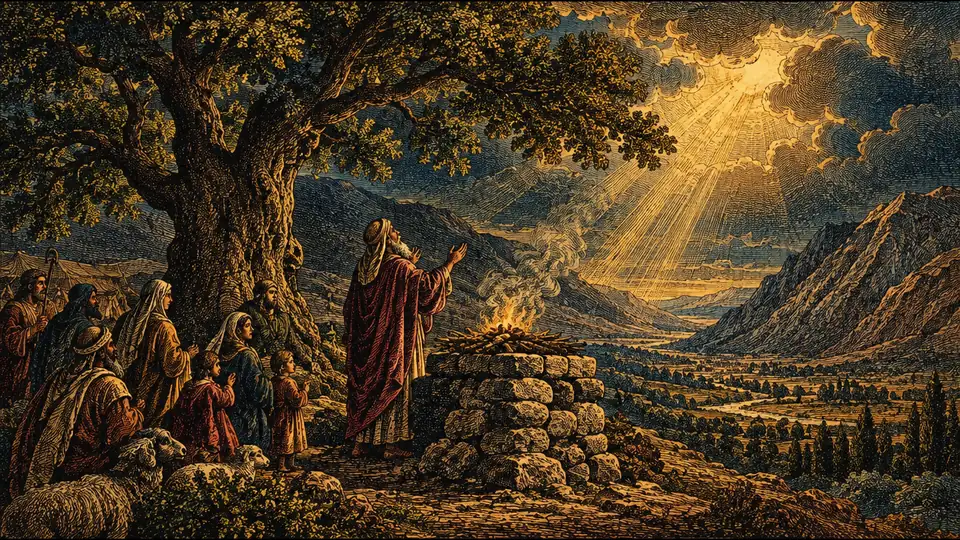
Press play: the paintings change with the story and the words come as the narrator reads them. The whole story is written out below.
Now playing: Unto thy seed
The whole story
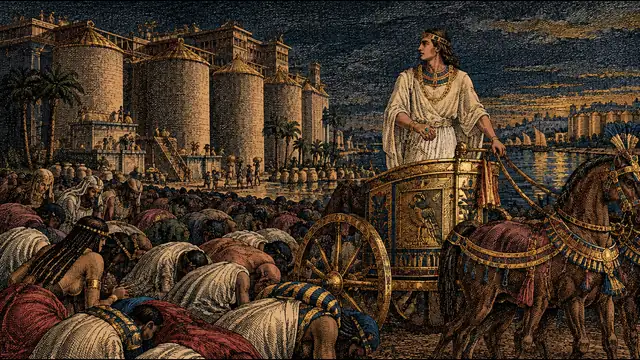
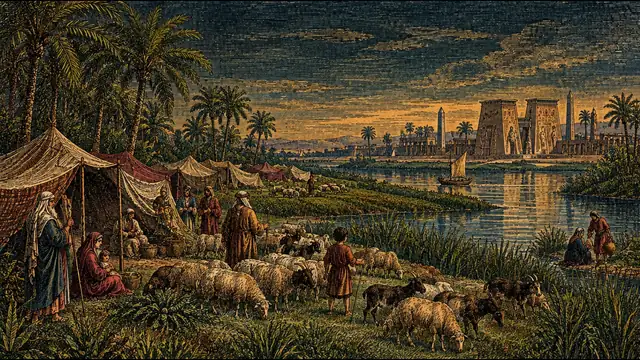
Abram passed through the land to the place of Sichem, unto the plain of Moreh, and the Canaanite was then in the land. There the LORD appeared to him with the promise, and Abram built his first altar in Canaan. From there he moved on to a mountain east of Bethel, pitched his tent, built another altar and called upon the name of the LORD.
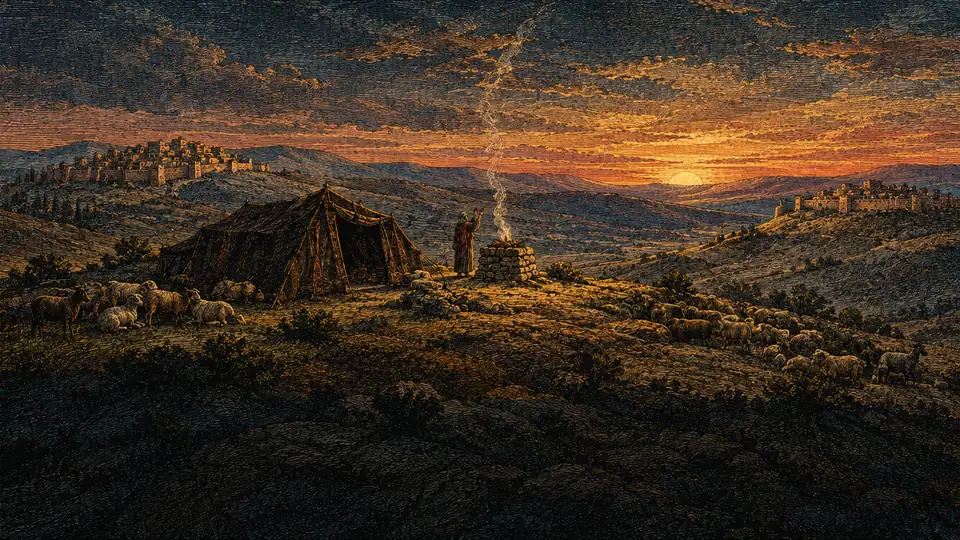
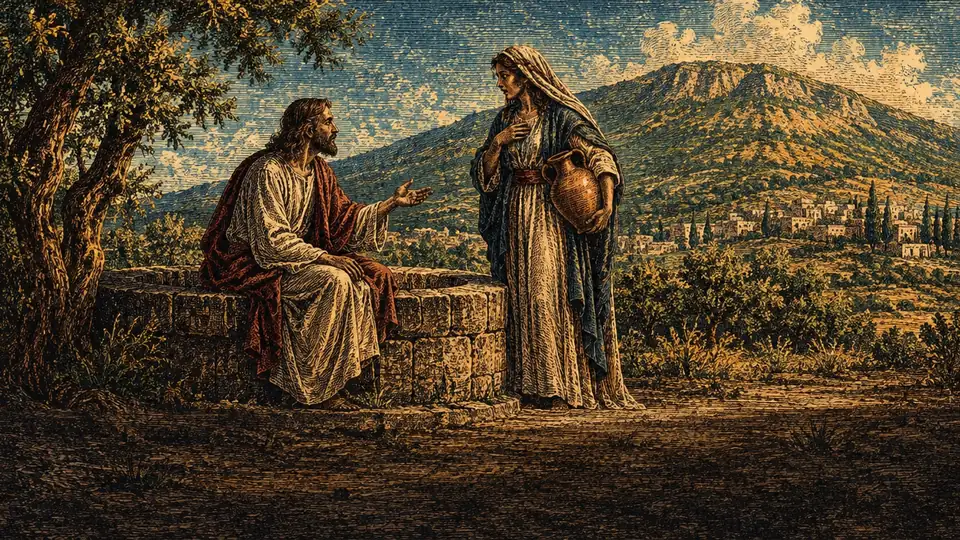
Shechem lay in the pass between Mount Ebal and Mount Gerizim, at the heart of the hill country. Jacob later bought land there; Joseph’s bones were buried there when Israel came out of Egypt; and Joshua gathered the tribes there to renew the covenant. In the Gospel of John, Jesus talks with a Samaritan woman by Jacob’s well nearby.
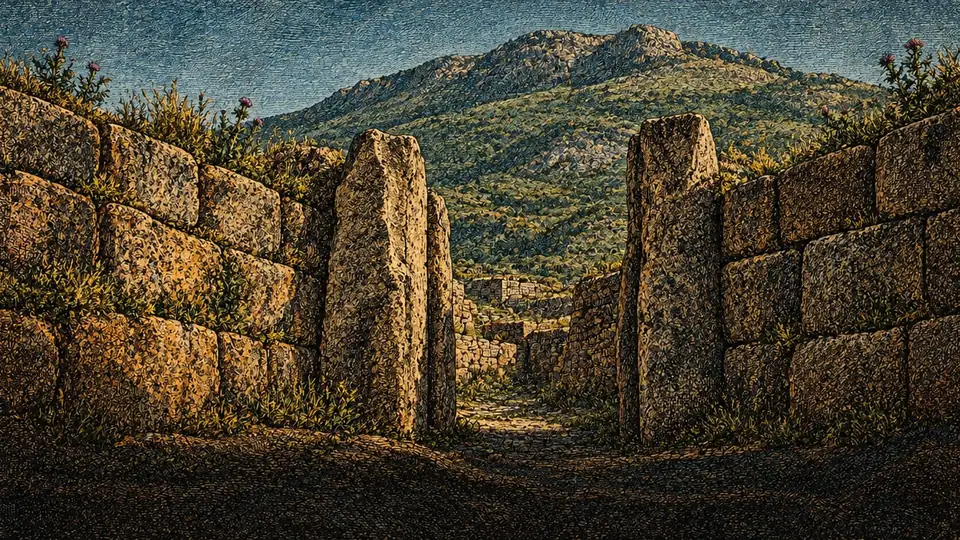
Excavations at Tell Balata have uncovered Shechem’s massive walls and gates and a great temple of the Bronze Age, perhaps the house of Baalberith that the book of Judges names. The Samaritans, who still live on Mount Gerizim above the city, keep it as their holy mountain.
And the LORD appeared unto Abram, and said, Unto thy seed will I give this land: and there builded he an altar unto the LORD, who appeared unto him.
Genesis 12:7, KJV
Where it happened
Shechem, Tell Balata, Nablus.
Tell Balata, at the edge of Nablus, between Mount Ebal and Mount Gerizim.
Every story stands at its place on the Worldwide Watch map: the Bible’s world, on the map.
More from the fathers
Genesis 12 to 50
Sources and editorial method
Research and editorial references used for this page include:
- The King James Bible, as published by bible-api.com
- The Book of Enoch, translated by R. H. Charles (1917), Project Gutenberg
Every story is told from the King James Bible, and from the Book of Enoch in R. H. Charles’s translation (1917) where a story names it. Every quotation was checked word for word against those texts. Where a place is not known, the page says so. The paintings and the narration were made for the house.

