
The cave of Machpelah
Abraham bought the cave of Machpelah at Hebron to bury Sarah. Abraham, Isaac and Rebekah, Jacob and Leah were laid there too.
Press play: the paintings change with the story and the words come as the narrator reads them. The whole story is written out below.
Now playing: The cave of Machpelah
The whole story
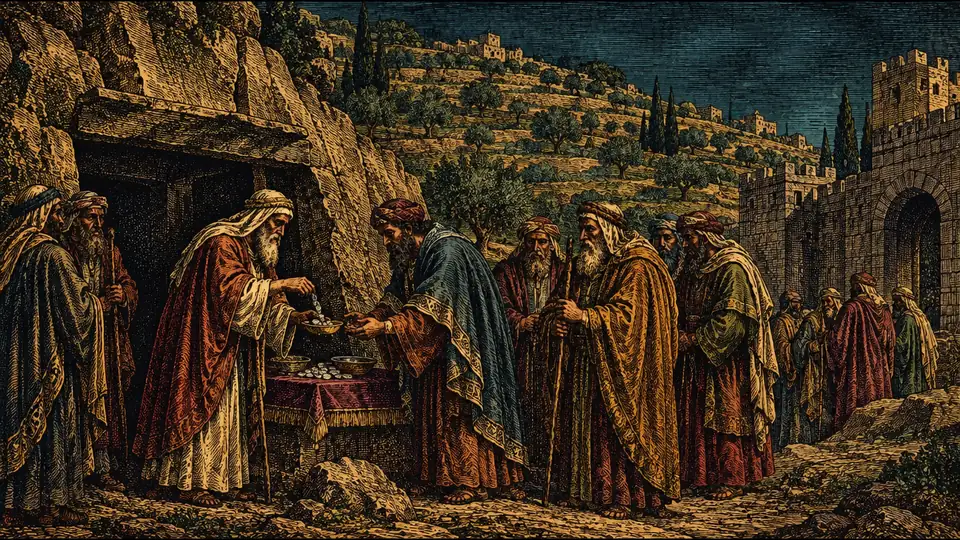
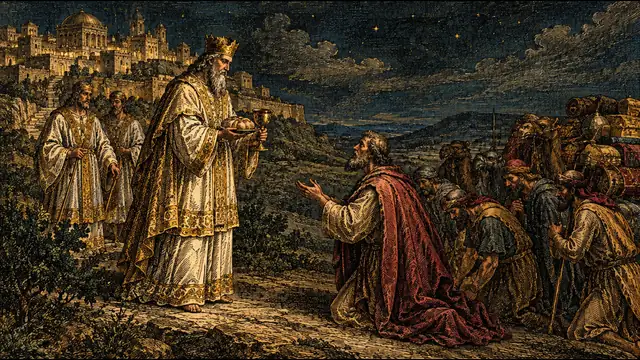
Sarah died at Kirjath-arba, which is Hebron, at a hundred and twenty-seven years, and Abraham came to mourn for her. A stranger in the land, he asked the sons of Heth for a burying place, and Ephron offered the field as a gift; Abraham insisted on paying, and weighed out four hundred shekels of silver before the elders at the gate of the city.
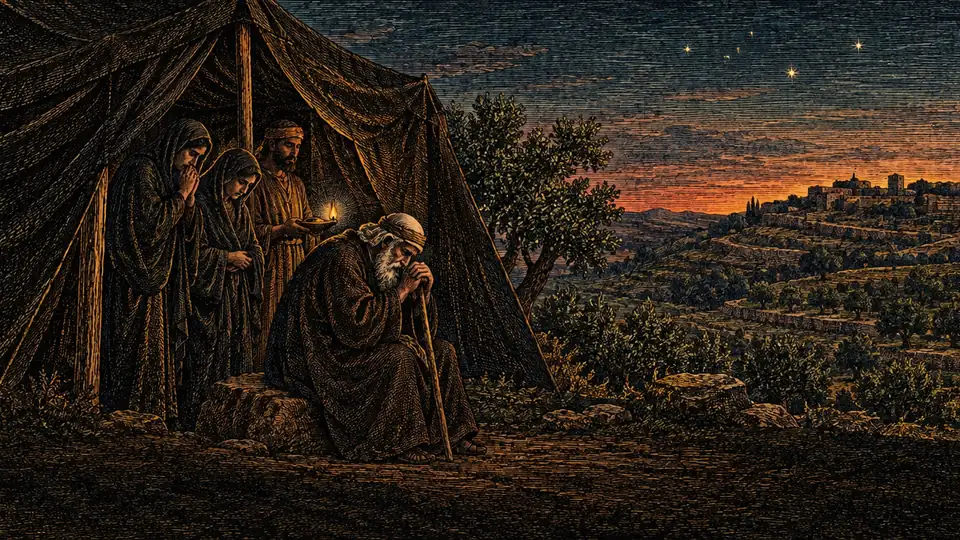
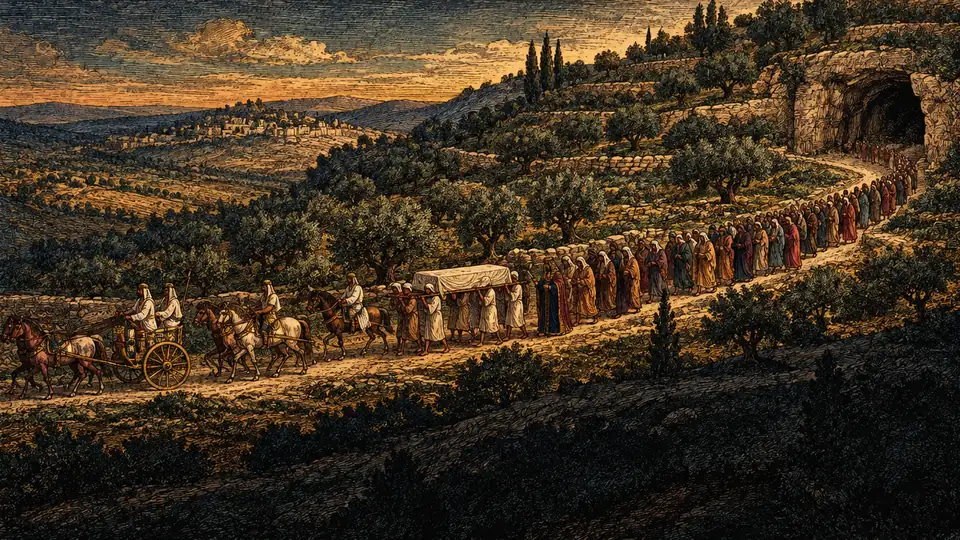
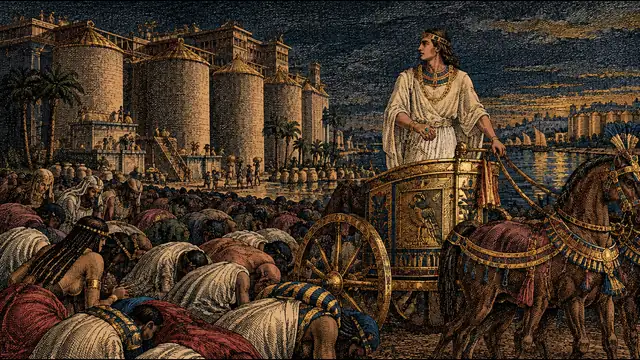
It was the first piece of the promised land Abraham owned, and the family kept coming back to it. Isaac and Ishmael buried Abraham there; Isaac, Rebekah and Leah were laid there after him; and Joseph carried Jacob’s body all the way from Egypt, with chariots and horsemen, to lay him in the cave as he had asked.
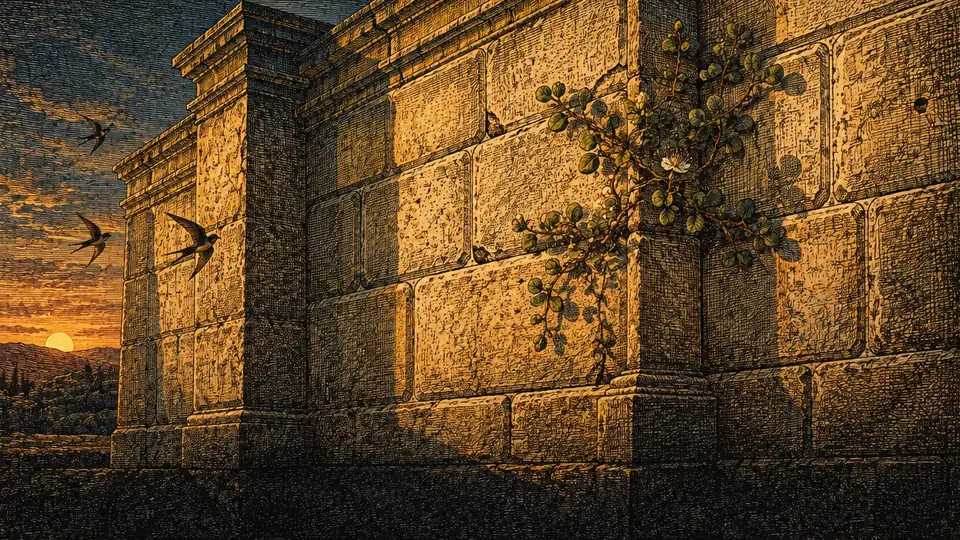
Over the cave stands a great walled building of fitted stone, built by Herod the Great two thousand years ago and still almost whole. Jews and Muslims both revere it, as the Cave of the Patriarchs and as the Ibrahimi Mosque, and it is divided between them today. The cave beneath has rarely been entered in modern times.
And after this, Abraham buried Sarah his wife in the cave of the field of Machpelah before Mamre: the same is Hebron in the land of Canaan.
Genesis 23:19, KJV
Where it happened
Hebron (site by tradition).
Hebron is known. The cave of Machpelah has been honored for two thousand years under the great walled building there.
Every story stands at its place on the Worldwide Watch map: the Bible’s world, on the map.
More from the fathers
Genesis 12 to 50
Sources and editorial method
Research and editorial references used for this page include:
- The King James Bible, as published by bible-api.com
- The Book of Enoch, translated by R. H. Charles (1917), Project Gutenberg
Every story is told from the King James Bible, and from the Book of Enoch in R. H. Charles’s translation (1917) where a story names it. Every quotation was checked word for word against those texts. Where a place is not known, the page says so. The paintings and the narration were made for the house.

