
The Passover
In the last plague, the blood of a lamb on the doorposts marked the houses the destroyer would pass over. That night Pharaoh let Israel go.
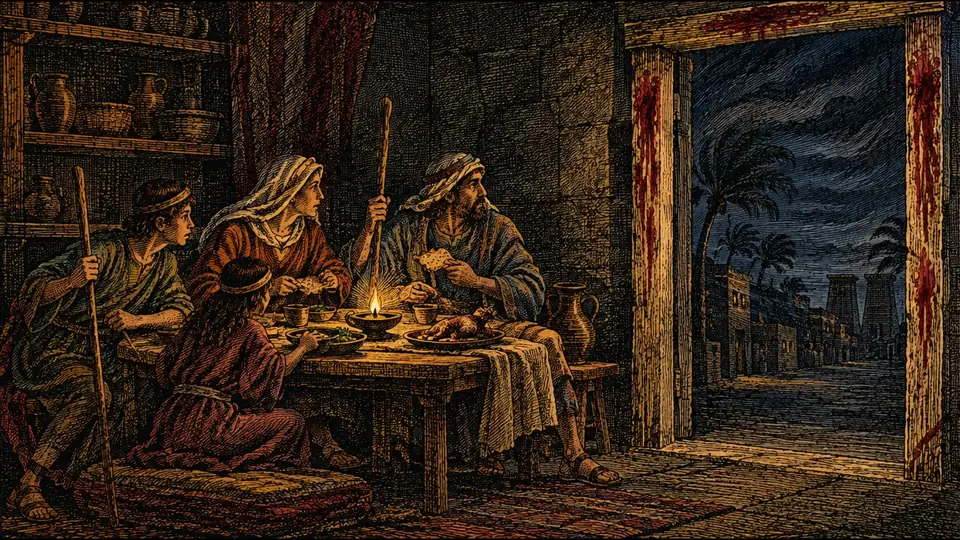
Press play: the paintings change with the story and the words come as the narrator reads them. The whole story is written out below.
Now playing: The Passover
The whole story
Nine plagues had not moved Pharaoh: water turned to blood, frogs, lice, flies, the murrain of the cattle, boils, hail, locusts and three days of darkness. For the last, each household took a lamb without blemish, killed it at evening, struck its blood on the doorposts and ate it roasted with unleavened bread and bitter herbs, dressed for a journey.
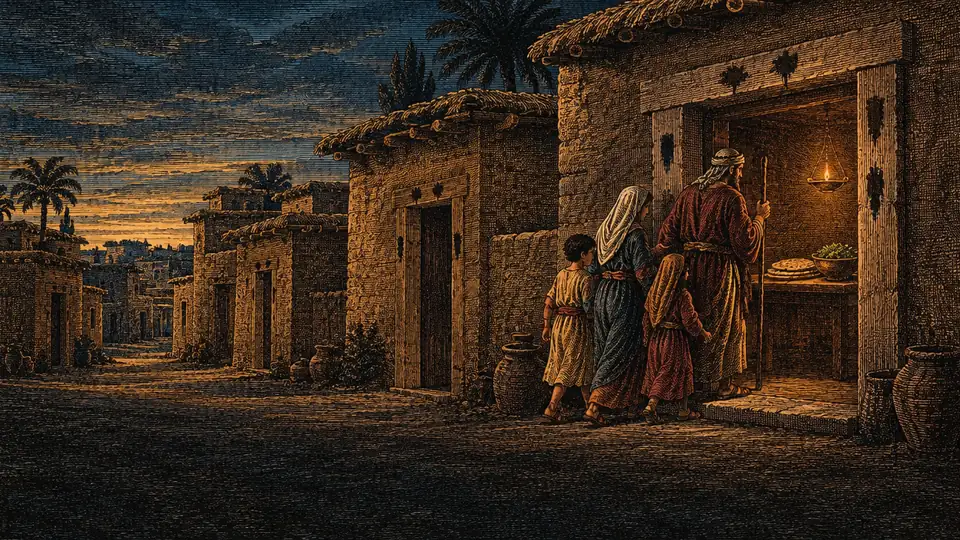
At midnight the LORD smote all the firstborn in the land of Egypt, from the firstborn of Pharaoh to the firstborn of the captive in the dungeon, and there was a great cry. Pharaoh called for Moses and Aaron by night and told them to go, and the people left in haste, carrying their dough before it was leavened.
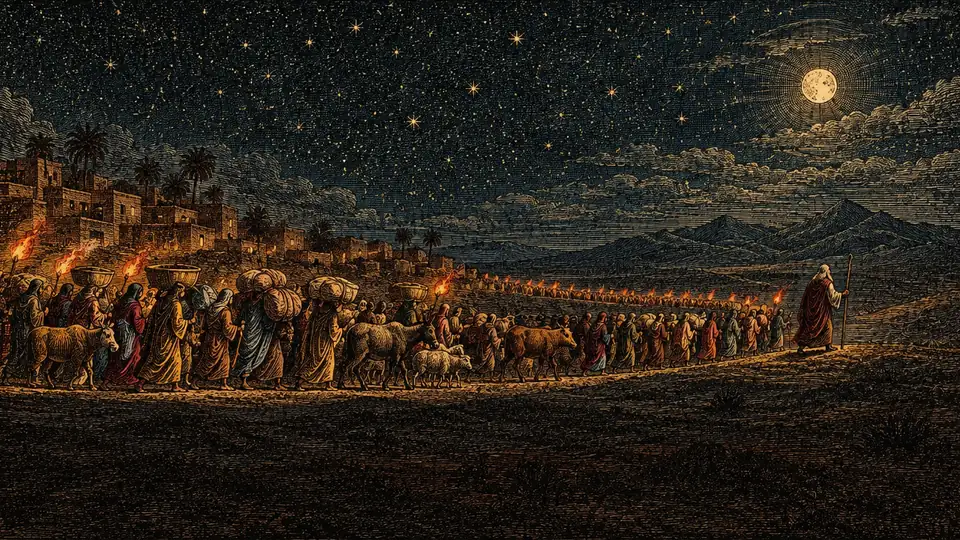
Israel was told to keep the night as a feast for ever, and Jewish families still keep the Passover each spring, asking why this night is different from all other nights. Jesus ate his last supper at the Passover, and the apostle Paul wrote, “Christ our passover is sacrificed for us” (1 Corinthians 5:7).
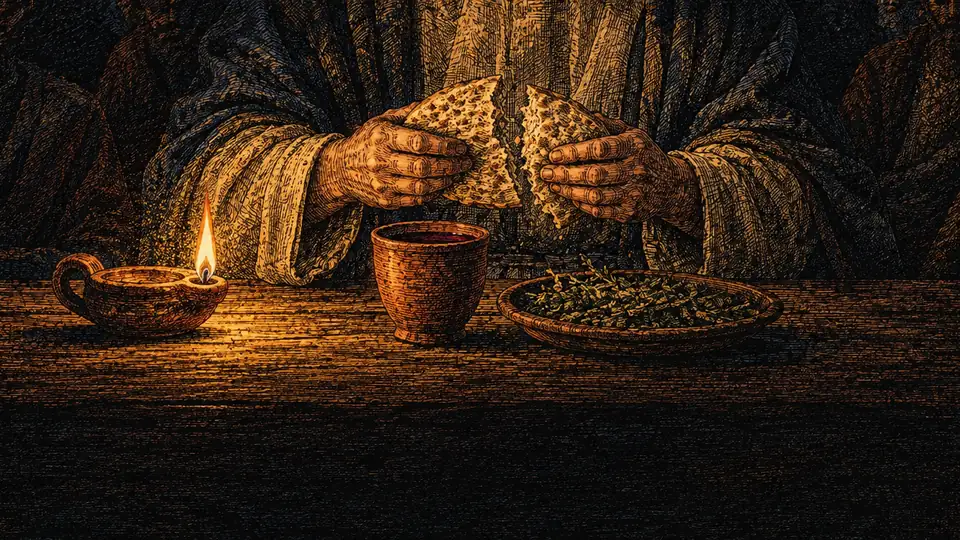
And the blood shall be to you for a token upon the houses where ye are: and when I see the blood, I will pass over you, and the plague shall not be upon you to destroy you, when I smite the land of Egypt.
Exodus 12:13, KJV
Where it happened
Egypt: the land of Goshen, The eastern Nile delta (site likely).
Goshen lay in the eastern Nile delta; most place it along the Wadi Tumilat, where the mark stands.
Every story stands at its place on the Worldwide Watch map: the Bible’s world, on the map.
More from the Exodus
Exodus to Joshua
Sources and editorial method
Research and editorial references used for this page include:
- The King James Bible, as published by bible-api.com
- The Book of Enoch, translated by R. H. Charles (1917), Project Gutenberg
Every story is told from the King James Bible, and from the Book of Enoch in R. H. Charles’s translation (1917) where a story names it. Every quotation was checked word for word against those texts. Where a place is not known, the page says so. The paintings and the narration were made for the house.

