
Michael and the body of Moses
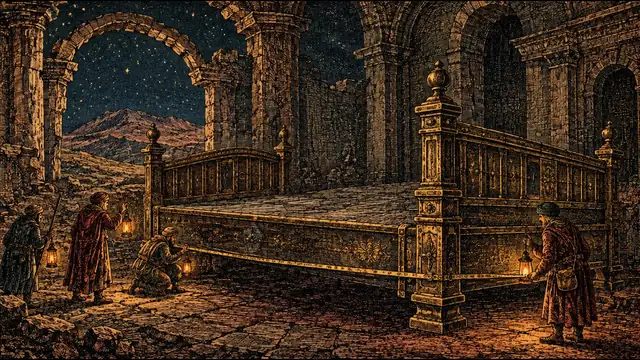
Moses died on Mount Nebo and God buried him, and no man knows his grave. The letter of Jude adds a hidden scene: the archangel Michael disputing with the devil about the body of Moses.
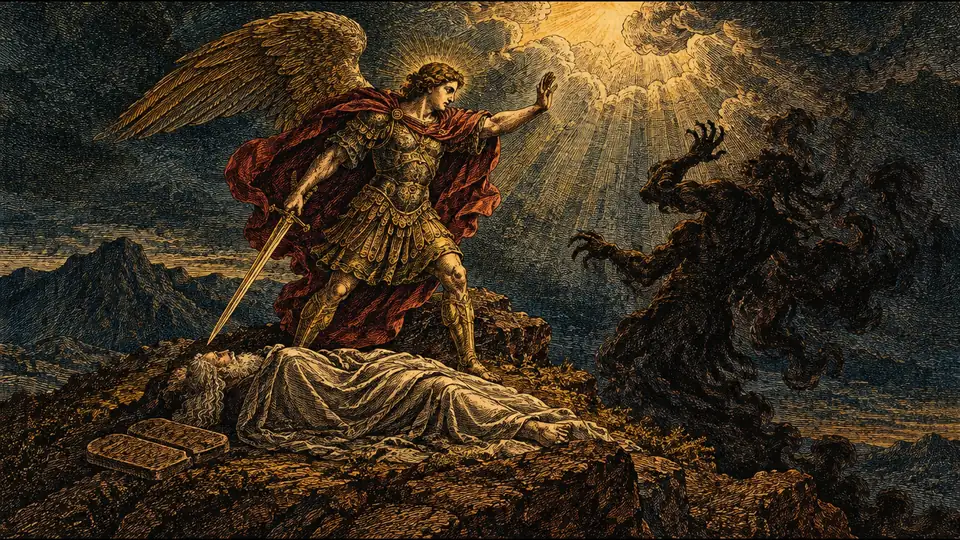
Press play: the paintings change with the story and the words come as the narrator reads them. The whole story is written out below.
Now playing: Michael and the body of Moses
The whole story
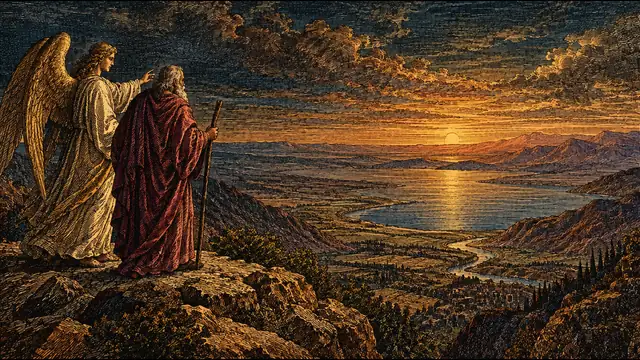
Deuteronomy says only that Moses died in the land of Moab, and that the LORD “buried him in a valley in the land of Moab, over against Beth-peor: but no man knoweth of his sepulchre unto this day” (Deuteronomy 34:6). He was a hundred and twenty years old, his eye not dim nor his strength gone.
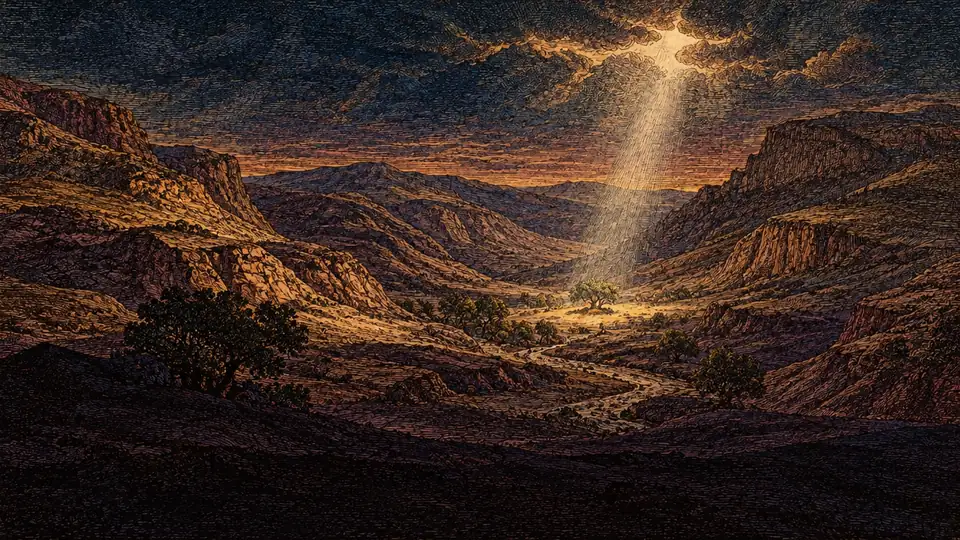
Jude’s line comes from somewhere older than his letter. Early church writers such as Origen said it was drawn from a book called the Assumption of Moses, which survives only in part, its ending with the dispute lost. Later retellings say the devil claimed the body, accusing Moses of killing the Egyptian, and Michael would not answer with railing but left the judgment to God.
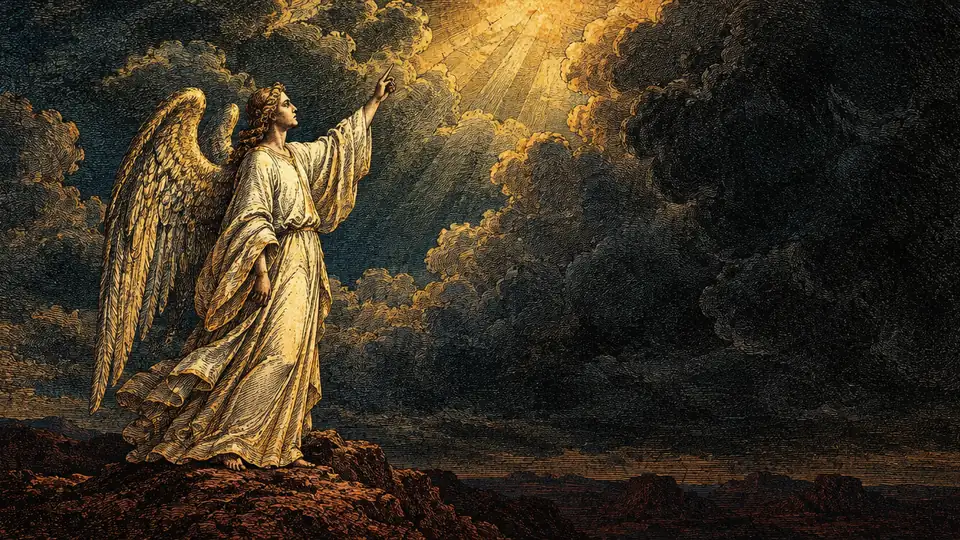
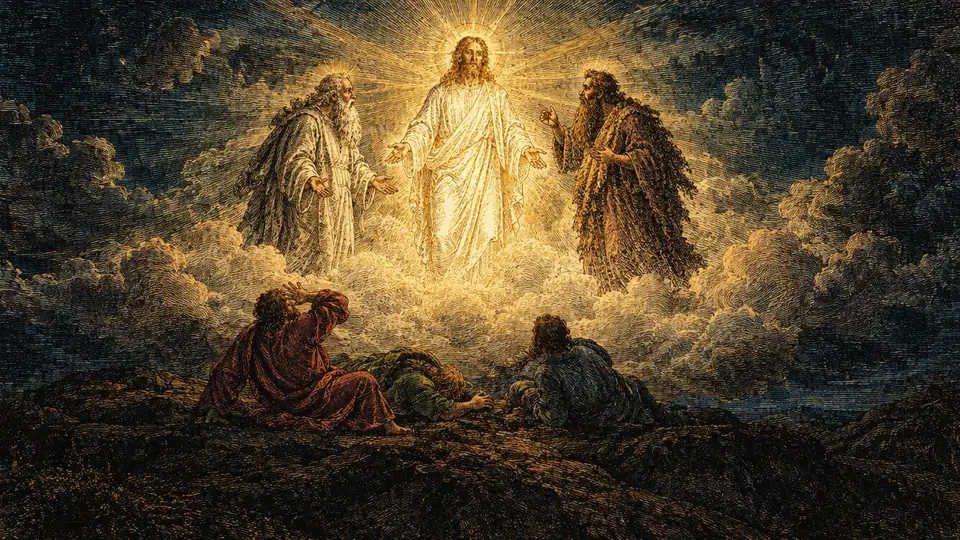
Michael appears in the Bible as the great prince who stands for Daniel’s people, and as the leader of the angels against the dragon in Revelation. Moses himself appears again, alive and in glory, with Elijah on the mount of the transfiguration, which many readers have taken as a sign that his grave did not hold him.
Yet Michael the archangel, when contending with the devil he disputed about the body of Moses, durst not bring against him a railing accusation, but said, The Lord rebuke thee.
Jude 1:9, KJV
Where it happened
Mount Nebo, Jordan (site by tradition).
The ridge of Nebo, west of Madaba in Jordan, looks across the Jordan valley to Jericho.
Every story stands at its place on the Worldwide Watch map: the Bible’s world, on the map.
More from the Exodus
Exodus to Joshua
Sources and editorial method
Research and editorial references used for this page include:
- The King James Bible, as published by bible-api.com
- The Book of Enoch, translated by R. H. Charles (1917), Project Gutenberg
Every story is told from the King James Bible, and from the Book of Enoch in R. H. Charles’s translation (1917) where a story names it. Every quotation was checked word for word against those texts. Where a place is not known, the page says so. The paintings and the narration were made for the house.

