
Moses sees the land
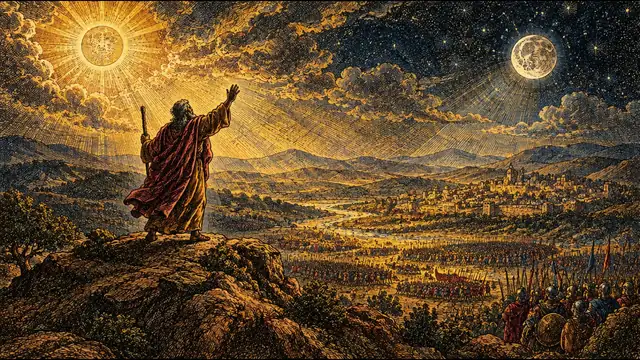
From the top of Nebo, God showed Moses the whole land promised to Abraham. Moses died there in Moab, and no man knows his grave.
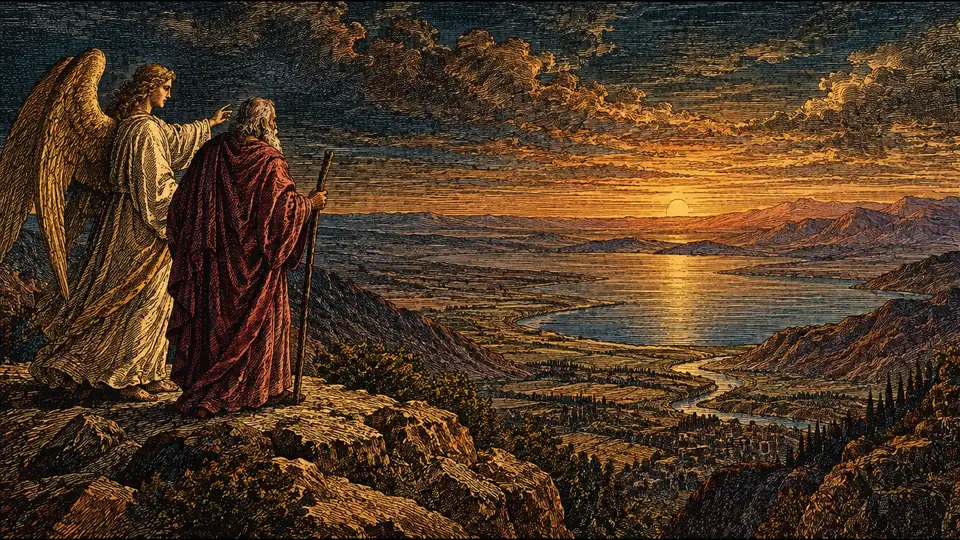
Press play: the paintings change with the story and the words come as the narrator reads them. The whole story is written out below.
Now playing: Moses sees the land
The whole story
Moses had been told he would not enter the land, because he struck the rock at Meribah in anger instead of speaking to it. At the end of the forty years he gave Israel his last words in the plains of Moab, the book of Deuteronomy, and blessed each tribe. Then he went up from the plains to the top of Pisgah, over against Jericho.
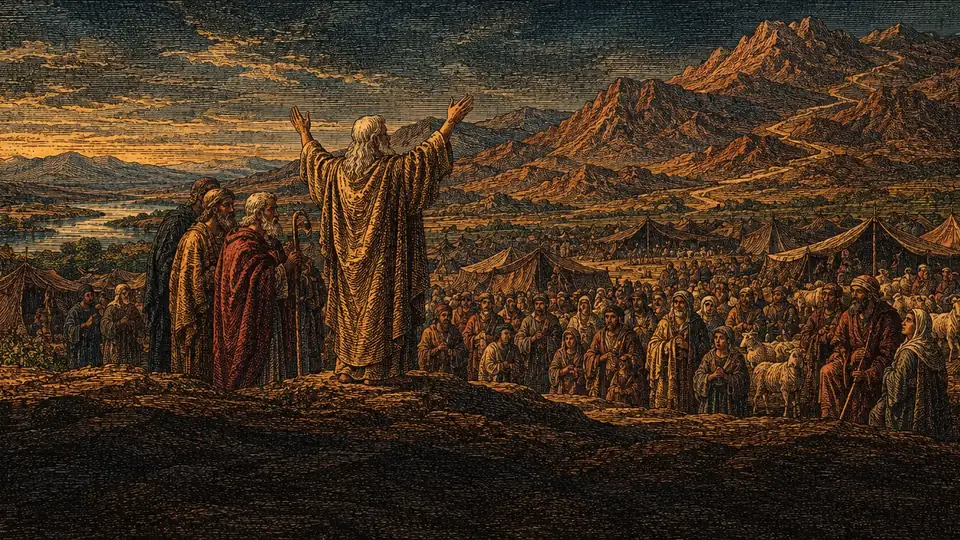
From there the LORD showed him all the land, from Gilead to Dan, unto the utmost sea, and the plain of Jericho, the city of palm trees. Israel wept for him thirty days, and the book closes on him: there arose not a prophet since in Israel like unto Moses, “whom the LORD knew face to face” (Deuteronomy 34:10).
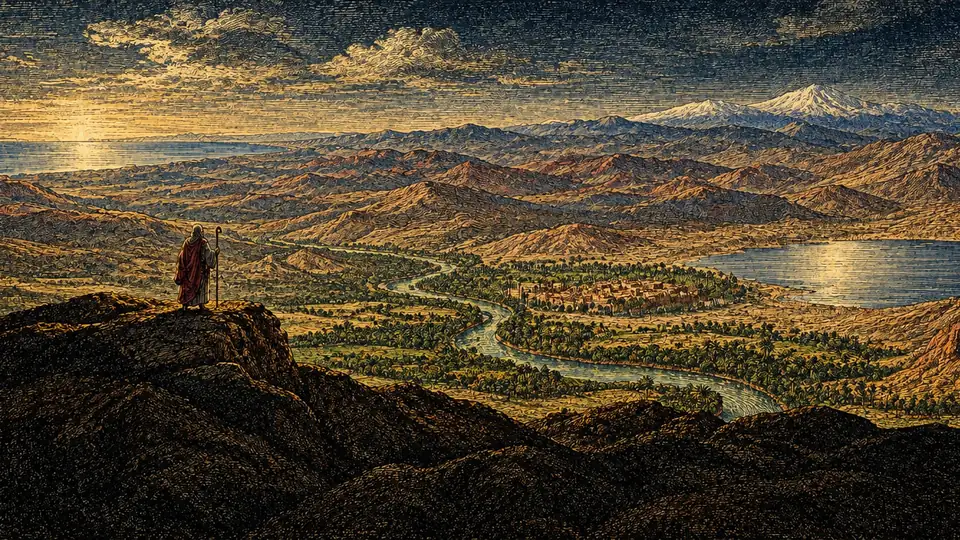
On Mount Nebo today, a church built over the remains of a Byzantine basilica keeps fine mosaic floors, and a bronze sculpture recalls the serpent Moses lifted up in the wilderness. On a clear day the view reaches across the Dead Sea to Jericho and the hills of Jerusalem.
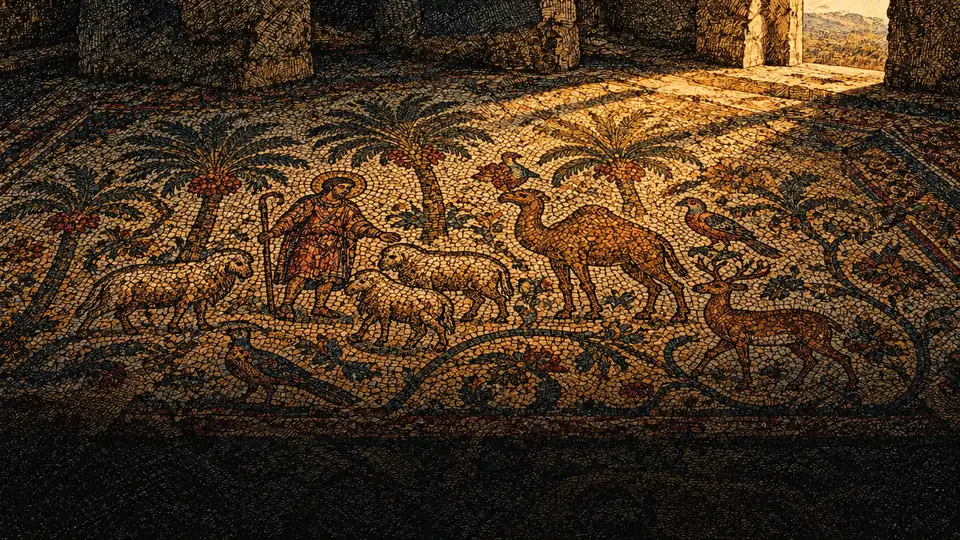
And the LORD said unto him, This is the land which I sware unto Abraham, unto Isaac, and unto Jacob, saying, I will give it unto thy seed: I have caused thee to see it with thine eyes, but thou shalt not go over thither.
Deuteronomy 34:4, KJV
Where it happened
Mount Nebo, Jordan (site by tradition).
The ridge of Nebo, west of Madaba in Jordan, looks across the Jordan valley to Jericho.
Every story stands at its place on the Worldwide Watch map: the Bible’s world, on the map.
More from the Exodus
Exodus to Joshua
Sources and editorial method
Research and editorial references used for this page include:
- The King James Bible, as published by bible-api.com
- The Book of Enoch, translated by R. H. Charles (1917), Project Gutenberg
Every story is told from the King James Bible, and from the Book of Enoch in R. H. Charles’s translation (1917) where a story names it. Every quotation was checked word for word against those texts. Where a place is not known, the page says so. The paintings and the narration were made for the house.

