
The iron bed of Og
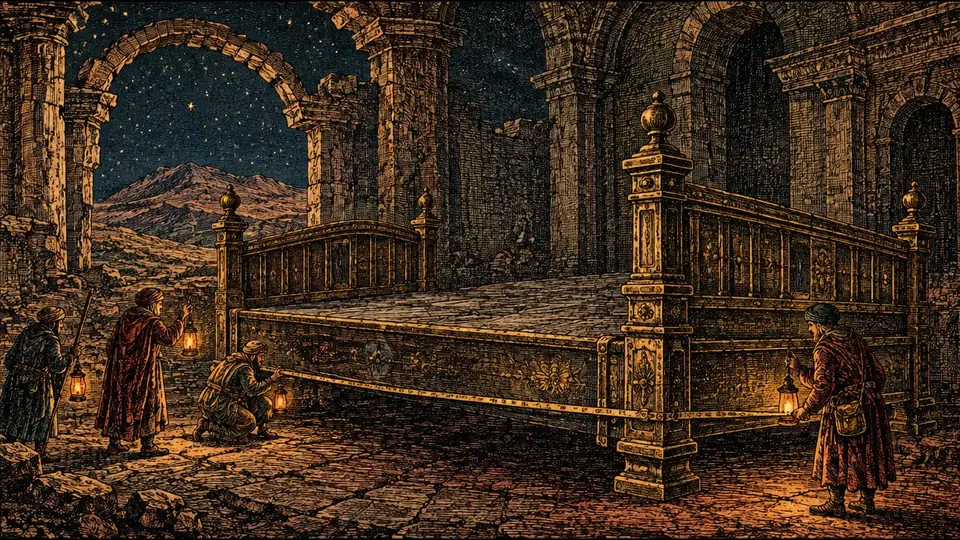
Og, king of Bashan, came out against Israel at Edrei and fell. Of all the giants, Deuteronomy says, he alone was left, and his iron bedstead, nine cubits long, could still be seen at Rabbath of Ammon.
Press play: the paintings change with the story and the words come as the narrator reads them. The whole story is written out below.
Now playing: The iron bed of Og
The whole story
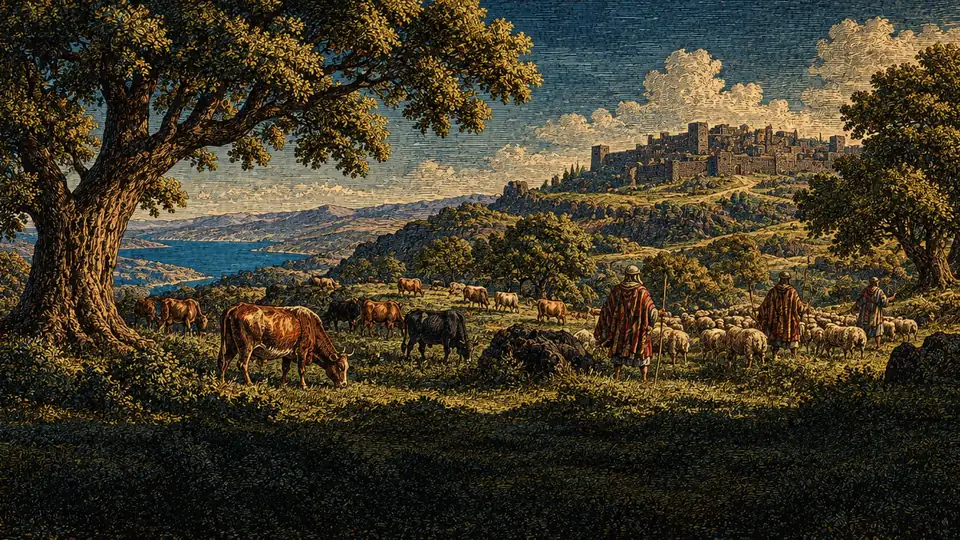
Bashan was the high, fertile plateau east of the Sea of Galilee, famous for its oaks and its cattle, with sixty walled cities. Og ruled it from Ashtaroth and Edrei. Moses took all his land and gave it to half the tribe of Manasseh, and for centuries afterward Israel sang of Sihon king of the Amorites, “And Og the king of Bashan” (Psalm 136:20).
Nine cubits is about thirteen feet, and four cubits about six. Some readers think the iron bed was a coffin of black basalt, the dark iron-rich stone of Bashan, and that its size honored a king rather than measured him. The great stone dolmens of the Golan and northern Jordan, tombs far older than Israel, have often been set beside the Bible’s talk of the giants of those lands.
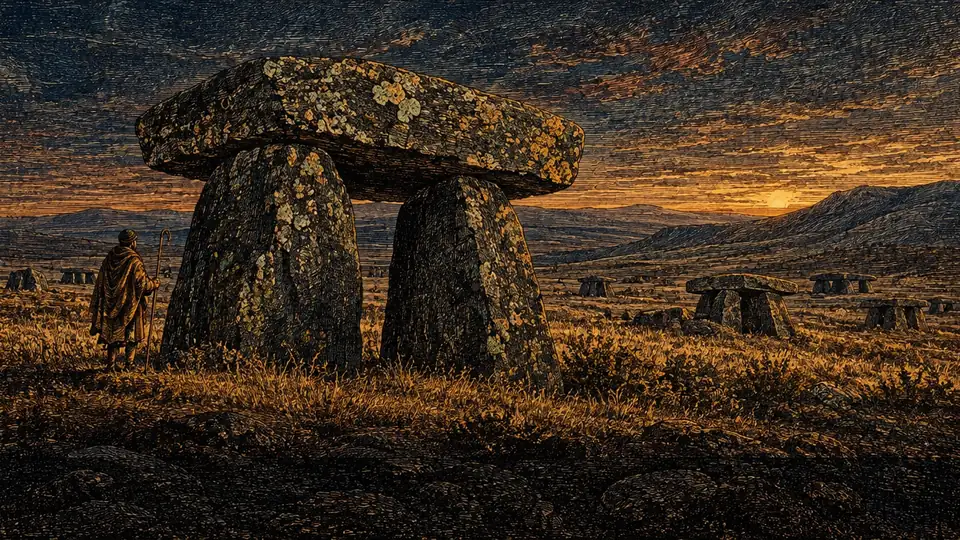
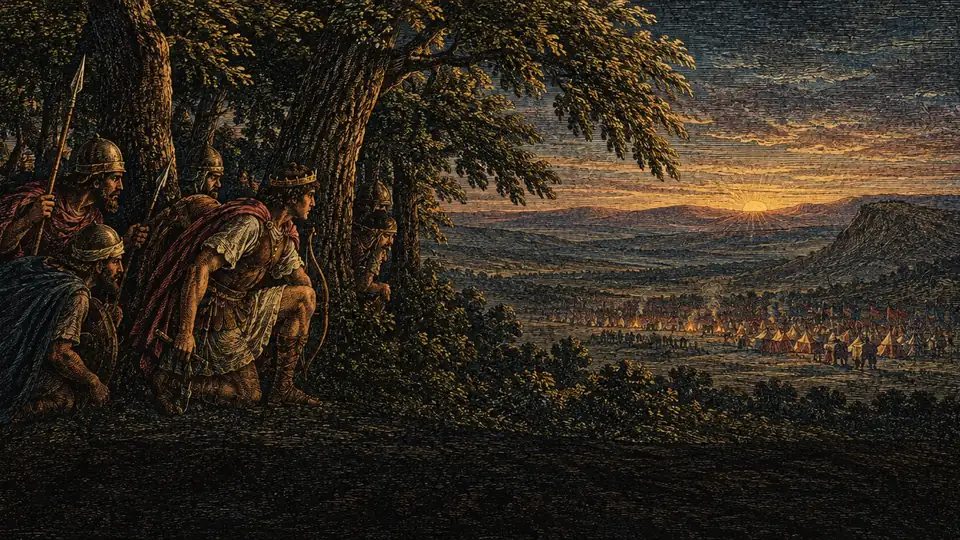
Deuteronomy names the old peoples there as giants too: the Emims and the Zamzummims, a people great, and many, and tall, as the Anakims, all counted among the Rephaim. Their memory lingers in the valley of Rephaim near Jerusalem, where David later fought the Philistines twice.
For only Og king of Bashan remained of the remnant of giants; behold, his bedstead was a bedstead of iron; is it not in Rabbath of the children of Ammon? nine cubits was the length thereof, and four cubits the breadth of it, after the cubit of a man.
Deuteronomy 3:11, KJV
Where it happened
Rabbath of the children of Ammon, The Citadel, Amman, Jordan.
Rabbah, the Ammonite capital, lies under the citadel hill of Amman; where Og’s bed was kept, nobody knows.
Every story stands at its place on the Worldwide Watch map: the Bible’s world, on the map.
More from the Exodus
Exodus to Joshua
Sources and editorial method
Research and editorial references used for this page include:
- The King James Bible, as published by bible-api.com
- The Book of Enoch, translated by R. H. Charles (1917), Project Gutenberg
Every story is told from the King James Bible, and from the Book of Enoch in R. H. Charles’s translation (1917) where a story names it. Every quotation was checked word for word against those texts. Where a place is not known, the page says so. The paintings and the narration were made for the house.

