
The law at Sinai
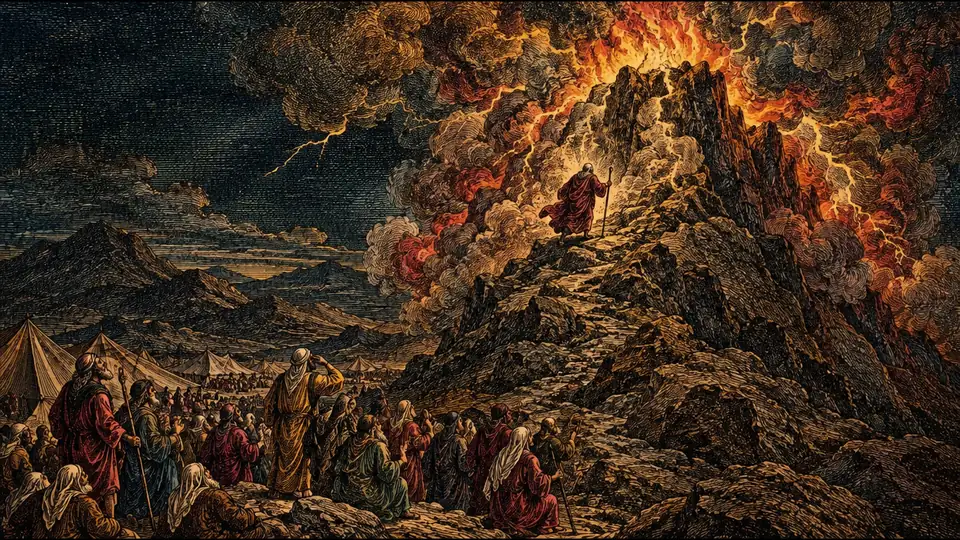
God came down on Mount Sinai in fire and smoke and gave the ten commandments, written on tables of stone.
Press play: the paintings change with the story and the words come as the narrator reads them. The whole story is written out below.
Now playing: The law at Sinai
The whole story
In the third month after leaving Egypt, Israel camped before the mountain. On the third day there were thunders and lightnings, a thick cloud, and the voice of the trumpet exceeding loud, and the mountain smoked and quaked. God spoke the ten commandments to all the people, and they stood afar off and asked Moses to speak to them instead.
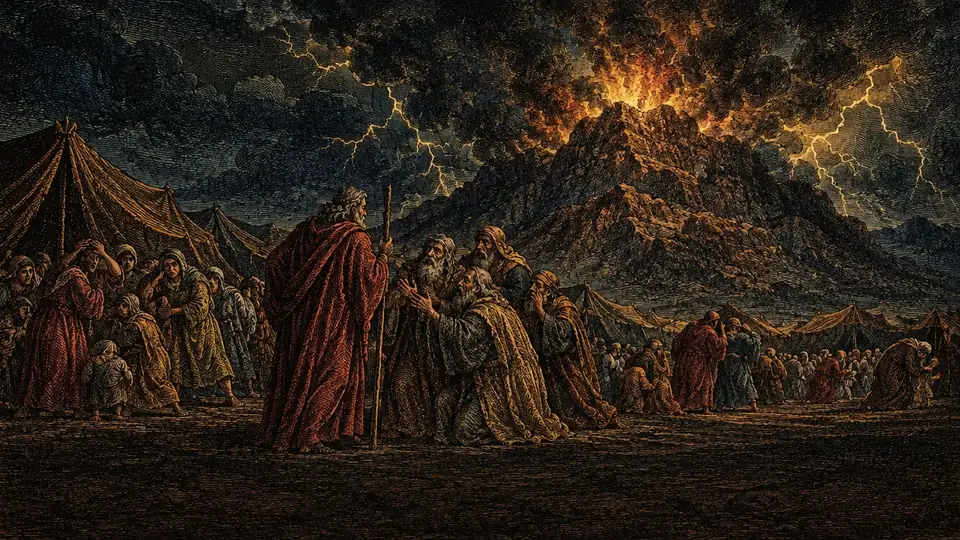
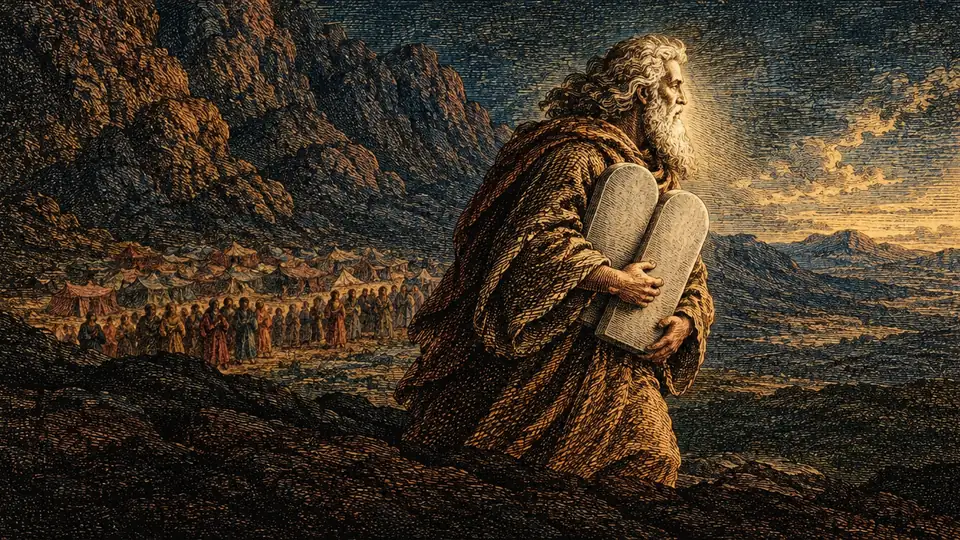
Moses went up into the cloud and stayed forty days and forty nights, receiving the law and the pattern of the tabernacle. Below, the people made a golden calf, and Moses, coming down, broke the tables of stone at the foot of the mountain. He went up again and came down with new tables, his face shining so that the people were afraid to come near him.
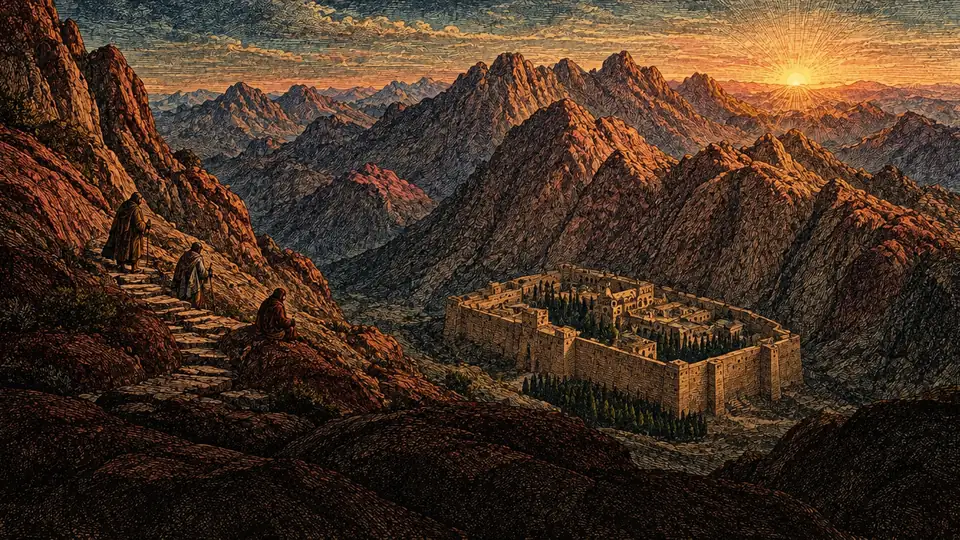
The Monastery of Saint Catherine has stood at the foot of Jebel Musa since the sixth century, built by the emperor Justinian, and keeps a bush said to be the burning bush where God first spoke to Moses. Pilgrims climb thousands of stone steps to the summit before dawn to watch the sun rise over the mountains of the peninsula.
Thou shalt have no other gods before me.
Exodus 20:3, KJV
Where it happened
Mount Sinai, Jebel Musa, Sinai peninsula (site by tradition).
Jebel Musa, in the south of the Sinai peninsula, has been honored as the mount since the fourth century; scholars have proposed others in Sinai and in Arabia.
Every story stands at its place on the Worldwide Watch map: the Bible’s world, on the map.
More from the Exodus
Exodus to Joshua
Sources and editorial method
Research and editorial references used for this page include:
- The King James Bible, as published by bible-api.com
- The Book of Enoch, translated by R. H. Charles (1917), Project Gutenberg
Every story is told from the King James Bible, and from the Book of Enoch in R. H. Charles’s translation (1917) where a story names it. Every quotation was checked word for word against those texts. Where a place is not known, the page says so. The paintings and the narration were made for the house.

