
Sun, stand thou still
When five Amorite kings attacked Gibeon, Joshua marched all night to its rescue. In the battle he spoke to the LORD, and the sun stood still upon Gibeon, and the moon in the valley of Ajalon.
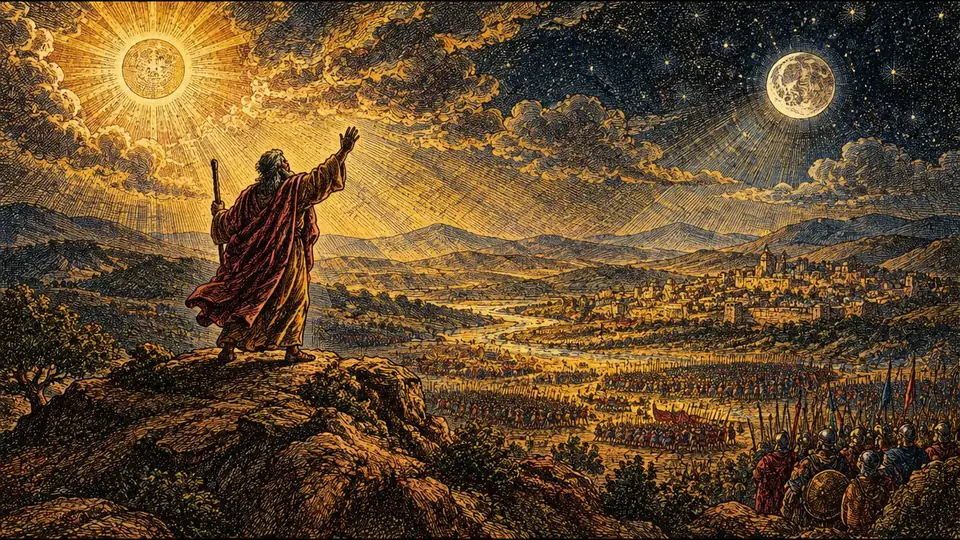
Press play: the paintings change with the story and the words come as the narrator reads them. The whole story is written out below.
Now playing: Sun, stand thou still
The whole story
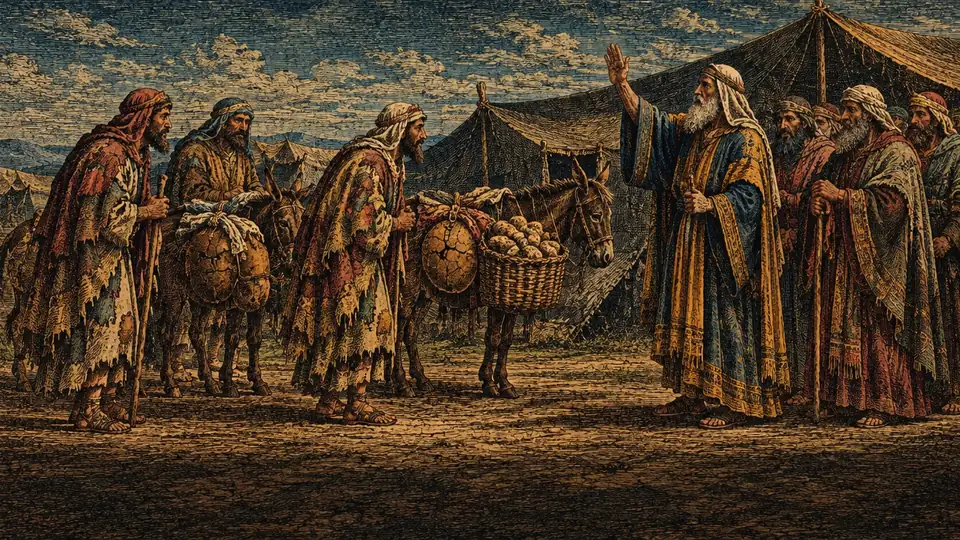
Gibeon had made peace with Israel by a trick, its men coming in worn clothes with dry and moldy bread, as if from a far country. When the kings of Jerusalem, Hebron, Jarmuth, Lachish and Eglon besieged it, Joshua kept his oath. Great stones fell from heaven on the fleeing armies, and “they were more which died with hailstones than they whom the children of Israel slew with the sword” (Joshua 10:11).
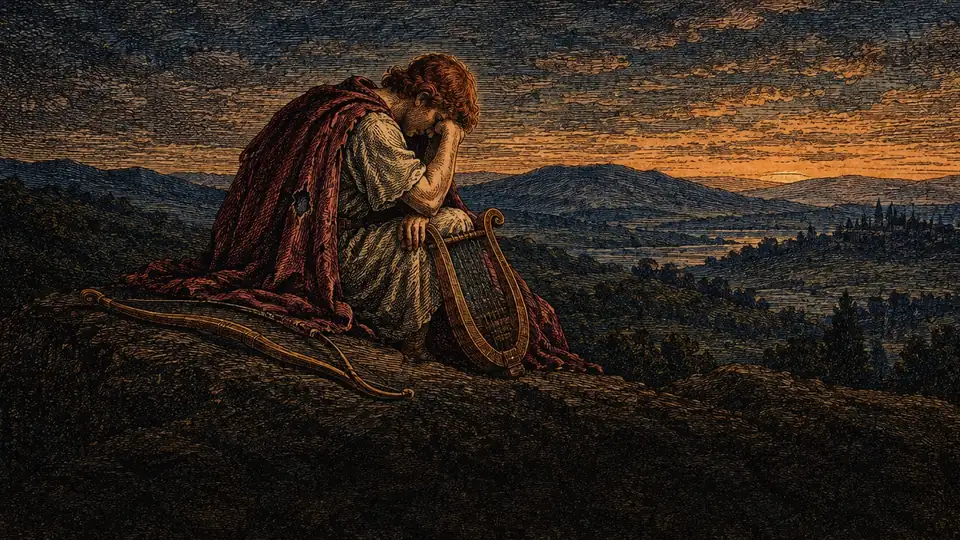
The account says it is written in the book of Jasher, the book of the upright, an old collection of songs now lost; the second book of Samuel quotes the same book for David’s lament over Saul and Jonathan. The books called Jasher that are printed today are much later works, not the one the Bible names.
Readers have long asked what happened in the sky. Some take it as a miracle in plain words, the day lengthened; others read the old poem as asking the sun to be silent, a darkening storm that brought the hail; others as a sign in the heavens seen that morning. The book adds only that “there was no day like that before it or after it” (Joshua 10:14).
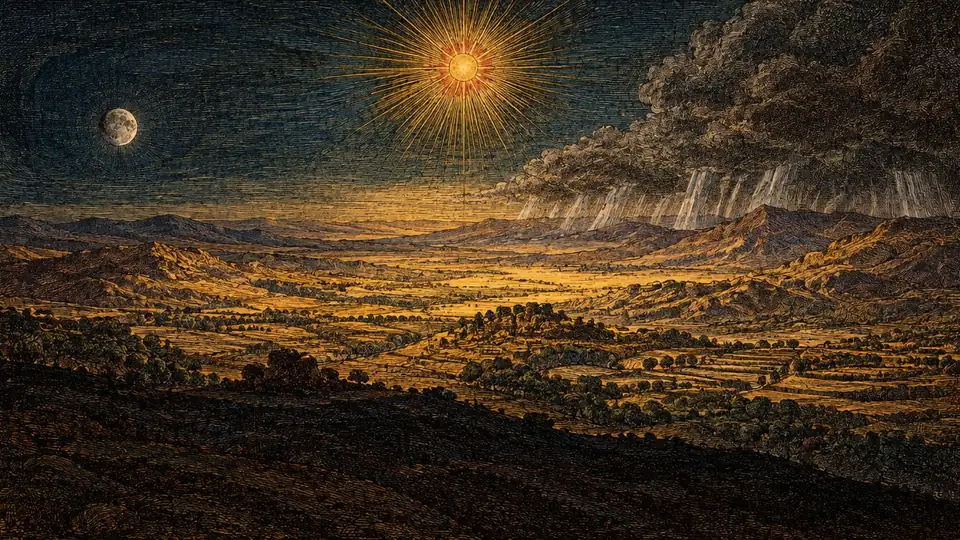
And the sun stood still, and the moon stayed, until the people had avenged themselves upon their enemies. Is not this written in the book of Jasher? So the sun stood still in the midst of heaven, and hasted not to go down about a whole day.
Joshua 10:13, KJV
Where it happened
Gibeon, El-Jib, north of Jerusalem.
El-Jib keeps the old name; jar handles stamped with Gibeon’s name were found by its great rock-cut pool.
Every story stands at its place on the Worldwide Watch map: the Bible’s world, on the map.
More from the Exodus
Exodus to Joshua
Sources and editorial method
Research and editorial references used for this page include:
- The King James Bible, as published by bible-api.com
- The Book of Enoch, translated by R. H. Charles (1917), Project Gutenberg
Every story is told from the King James Bible, and from the Book of Enoch in R. H. Charles’s translation (1917) where a story names it. Every quotation was checked word for word against those texts. Where a place is not known, the page says so. The paintings and the narration were made for the house.

