
Perilous Times
Paul wrote his last letter from a Roman prison, and in it he described what people would become in the last days: lovers of their own selves, lovers of money, lovers of pleasures more than lovers of God. Many believers read that list as a portrait of our own age. Here is what each word means, what we see now, and how to stand.
Read without fear: "God hath not given us the spirit of fear" (2 Timothy 1:7).
On this page 6 parts · 6 min
This know also, that in the last days perilous times shall come.
2 Timothy 3:1, KJV
What Paul wrote
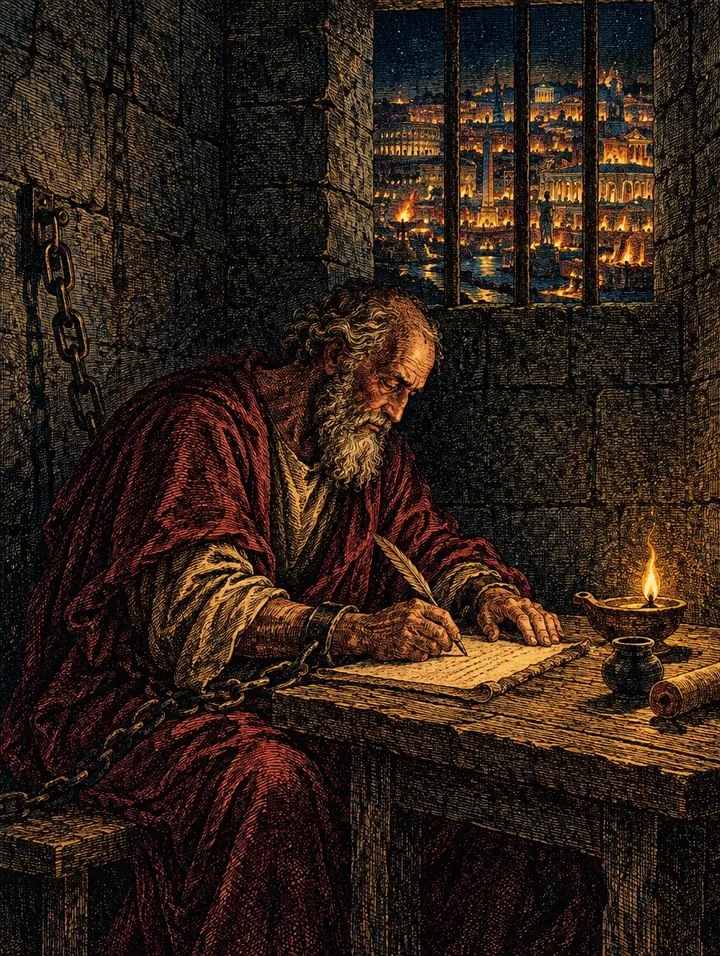
Paul's second letter to Timothy was his last. He was in chains in Rome and knew that "the time of my departure is at hand" (2 Timothy 4:6). Into that letter he put a warning for every generation after him: "This know also, that in the last days perilous times shall come" (2 Timothy 3:1). The Greek word for perilous, chalepos, means hard, harsh, hard to bear; Matthew uses it of the two men possessed with devils, "exceeding fierce" (Matthew 8:28).
Then he gave the reason the times turn hard. Not wars or famines this time, but people: "For men shall be lovers of their own selves, covetous, boasters, proud, blasphemers, disobedient to parents, unthankful, unholy, Without natural affection, trucebreakers, false accusers, incontinent, fierce, despisers of those that are good, Traitors, heady, highminded, lovers of pleasures more than lovers of God; Having a form of godliness, but denying the power thereof: from such turn away" (2 Timothy 3:2-5).
The list begins and ends with love gone wrong. It opens with love of self and love of money, and it closes with love of pleasure put above love of God. Everything between grows from that root.
The marks, one by one
Lovers of their own selves
Self at the centre: my feelings, my image, my rights first. The Greek is philautoi, and it heads the list because the rest grows from it.
Covetous
Literally lovers of money, philarguroi, the word Luke uses of the Pharisees who scoffed at Jesus (Luke 16:14).
Boasters
People who make themselves out to be more than they are: the empty brag.
Proud
Showing themselves above others. "God resisteth the proud, but giveth grace unto the humble" (James 4:6).
Blasphemers
Speaking evil of God and of people: contempt in the mouth.
Disobedient to parents
Honour broken at home. "Honour thy father and mother" is "the first commandment with promise" (Ephesians 6:2).
Unthankful
Taking every gift as owed. Paul traces the fall of a whole culture to people who "glorified him not as God, neither were thankful" (Romans 1:21).
Unholy
Nothing treated as sacred: no reverence for God, for life, for marriage or for the dead.
Without natural affection
The love that should come naturally in a family, gone cold. The Greek astorgoi appears again in Romans 1:31.
Trucebreakers
People who will not be reconciled or keep an agreement: implacable.
False accusers
Slanderers. The Greek is diaboloi, the word that gives us "devil".
Incontinent
Without self-control, ruled by appetite.
Fierce
Savage, untamed, quick to cruelty.
Despisers of those that are good
Hostile to goodness itself, and to the people who practise it.
Traitors
Betrayers of friends, family or trust.
Heady
Reckless, rushing ahead without a thought.
Highminded
Puffed up, swollen with conceit.
Lovers of pleasures more than lovers of God
Pleasure on God's throne: entertainment, comfort and appetite first, and God fitted in around them.
A form of godliness
Religion kept as an outward shape, its power denied: the look of faith without the life of it.
Go deeper: the signs Jesus named, and what we see now.
Opening the members’ pages…
Members read on
Read the rest of Perilous Times
Your 7 free days open every page of Faith Over Fear, and the whole Almanac with them.
Still to read on this page About 2 min
- What we see now
- From such turn away: how to stand
- Your birth details, about a minute
- Your 7 free days begin
- Back here, every page open
$0 today, then $12/month after 7 days. Cancel anytime.
Already a member? Log in
What we see now
Paul gave a list much like this one for the pagan world of his own day (Romans 1:29-31), and he expected Timothy to meet such people in the church (2 Timothy 3:5-6). Every age has had them. What many believers notice now is the scale, and the change in what is praised: traits a culture once called vices are now sold as virtues.
Some of the marks can even be measured. In 2023 the United States Surgeon General declared loneliness and isolation an epidemic, reporting that about half of American adults experience loneliness: a world "without natural affection" in an age of constant connection. In 2021 Gallup reported that membership of a church, synagogue or mosque had fallen below half of Americans for the first time in its eight decades of asking, to 47%, from 70% in 1999. And in 2013 the word of the year chosen by Oxford Dictionaries was "selfie".
None of this sets a date, and none of it should make us proud. The list in 2 Timothy 3 describes the human heart without God, which is why it reads like the headlines and, on an honest day, like our own hearts too.
From such turn away: how to stand
Paul's instruction is short: "from such turn away" (2 Timothy 3:5). He does not tell Timothy to rage at the culture or to despair of it. He tells him to keep his distance from the pattern, and to keep going in what he had learned: "But continue thou in the things which thou hast learned and hast been assured of" (2 Timothy 3:14), because "All scripture is given by inspiration of God" (2 Timothy 3:16).
In the parable of the ten virgins, all ten carried lamps, and only five had oil (Matthew 25:1-13). A form of godliness is a lamp without oil. The answer to each mark on the list is the life of the Spirit, kept day by day.
Love God first
The list ends with pleasure loved more than God; the cure begins with the first commandment: "Thou shalt love the Lord thy God with all thy heart" (Matthew 22:37).
Look to others
Against love of self: "in lowliness of mind let each esteem other better than themselves. Look not every man on his own things, but every man also on the things of others" (Philippians 2:3-4).
Give thanks
Against the unthankful: "In every thing give thanks" (1 Thessalonians 5:18).
Honour your family
Against cold hearts at home: honour father and mother (Ephesians 6:2), for "if any provide not for his own, and specially for those of his own house, he hath denied the faith" (1 Timothy 5:8).
Keep your word
Against trucebreakers and traitors: "let your yea be yea; and your nay, nay" (James 5:12).
Self-control
Against the incontinent and the fierce, the fruit of the Spirit ends in "temperance" (Galatians 5:23).
Power, not only form
Against a form of godliness: real prayer, real repentance, real love. "For the kingdom of God is not in word, but in power" (1 Corinthians 4:20).
Look in the mirror first
Each mark is a temptation in every heart. Read the list as a prayer before you read it as a verdict: "Search me, O God, and know my heart" (Psalm 139:23).
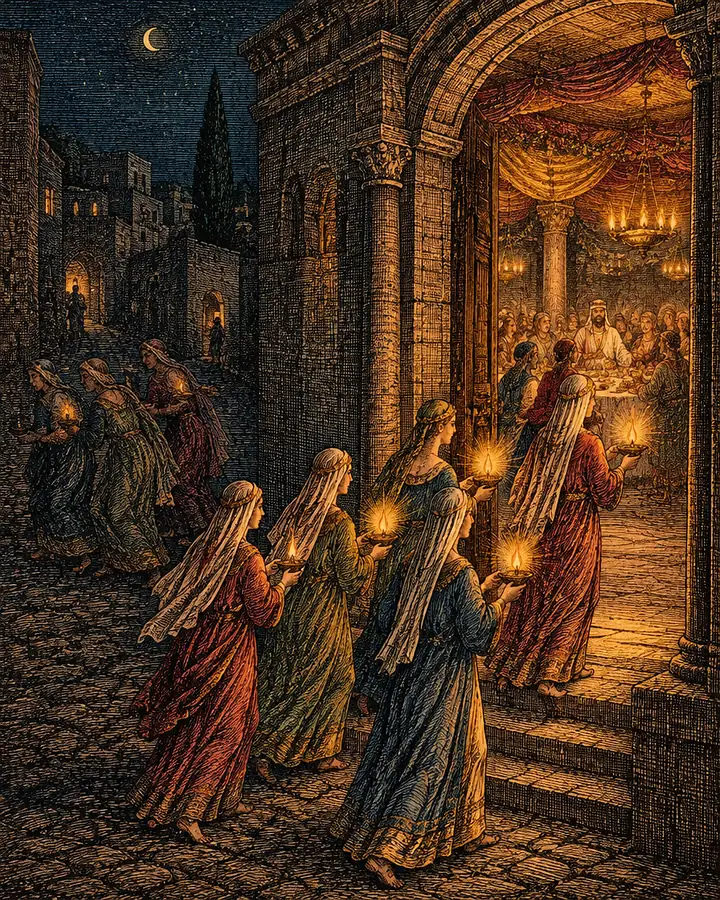
and they that were ready went in with him to the marriage: and the door was shutMatthew 25:10
Common questions
What does 2 Timothy 3:1-5 mean?
Paul warns that "in the last days perilous times shall come", and that the hardness of those times comes from what people become: lovers of themselves, of money and of pleasure more than of God, with a form of godliness but no power. He tells Timothy to turn away from that pattern and to hold on to Scripture (2 Timothy 3:14-17).
What does "lovers of their own selves" mean?
It translates one Greek word, philautoi: people whose love is turned inward on themselves. It heads Paul's list because the other marks, from covetousness to pride to ingratitude, grow out of it.
What does "without natural affection" mean in the Bible?
It translates astorgoi: people without the natural love that binds a family together, such as the love of parents for children and of children for parents. Paul uses the same word in Romans 1:31.
What does "having a form of godliness, but denying the power thereof" mean?
It describes religion kept as an outward shape, with the words, the habits and the name, while the power that changes a life is refused. Jesus' parable of the ten virgins pictures the same thing: lamps without oil (Matthew 25:1-13).
Is 2 Timothy 3 a sign that we are in the end times?
Many believers read it that way, because the traits Paul lists seem more widespread and more celebrated now than ever. The New Testament also says the last days began at Pentecost (Acts 2:17), and Paul expected Timothy to meet such people in his own time (2 Timothy 3:5-6). Either way the call is the same: turn away from the pattern, and continue in the Scriptures. We set no date.
Sources and editorial method
Research and editorial references used for this page include:
- BibleGateway: 2 Timothy 3 (KJV) - Quoted on this page in the King James Version.
- BibleGateway: 2 Timothy 4:6 (KJV) - Quoted on this page in the King James Version.
- BibleGateway: Matthew 8:28 (KJV) - Quoted on this page in the King James Version.
- BibleGateway: Luke 16:14 (KJV) - Quoted on this page in the King James Version.
- BibleGateway: James 4:6 (KJV) - Quoted on this page in the King James Version.
- BibleGateway: Ephesians 6:1-3 (KJV) - Quoted on this page in the King James Version.
- BibleGateway: Romans 1:21-32 (KJV) - Quoted on this page in the King James Version.
- BibleGateway: Matthew 25:1-13 (KJV) - Quoted on this page in the King James Version.
- BibleGateway: Matthew 22:37 (KJV) - Quoted on this page in the King James Version.
- BibleGateway: Philippians 2:3-4 (KJV) - Quoted on this page in the King James Version.
- BibleGateway: 1 Thessalonians 5:18 (KJV) - Quoted on this page in the King James Version.
- BibleGateway: 1 Timothy 5:8 (KJV) - Quoted on this page in the King James Version.
- BibleGateway: James 5:12 (KJV) - Quoted on this page in the King James Version.
- BibleGateway: Galatians 5:22-23 (KJV) - Quoted on this page in the King James Version.
- BibleGateway: 1 Corinthians 4:20 (KJV) - Quoted on this page in the King James Version.
- BibleGateway: Psalm 139:23-24 (KJV) - Quoted on this page in the King James Version.
- BibleGateway: Acts 2:17 (KJV) - Quoted on this page in the King James Version.
- US Surgeon General: Our Epidemic of Loneliness and Isolation (2023) - About half of US adults report loneliness.
- Gallup: U.S. Church Membership Falls Below Majority for First Time (2021) - 47% in 2020, from 70% in 1999.
- Oxford Languages: Word of the Year 2013 - "Selfie".
Scripture is quoted from the King James Version. The few present-day facts were checked in November 2026. These pages teach from Scripture: they set no date, name no living person as a sign, call no disaster a verdict on its victims, and blame no people for the world's troubles. The paintings are illustrations made for The Great Almanac with AI image tools, in the house's engraved style.

