
Bread and Circuses
A Roman poet complained that his people, who once gave out armies and consulships, now wanted only two things: bread and circuses. Jesus said the days before the flood looked much the same, eating and drinking, buying and building. Here is what both warnings mean for us.
Read without fear: "God hath not given us the spirit of fear" (2 Timothy 1:7).
On this page 6 parts · 4 min
The thing that hath been, it is that which shall be; and that which is done is that which shall be done: and there is no new thing under the sun.
Ecclesiastes 1:9, KJV
Bread and games
Early in the second century the Roman poet Juvenal wrote a bitter line about his own people. The citizens who once handed out commands, consulships and legions, he said, now longed eagerly for just two things: bread and circuses (Satire 10). Rome fed its crowds with free or cheap grain and filled its days with chariot races and games. The Colosseum opened in AD 80 with a hundred days of spectacles.
Historians still argue about why the Western Empire fell; in 476 its last emperor was deposed, and no single cause explains it. Wars on its borders, debased money, plague and civil wars all played their part. But Juvenal's line has lasted because it names something every comfortable people faces: the temptation to be kept quiet by full stomachs and constant entertainment while the foundations crack.
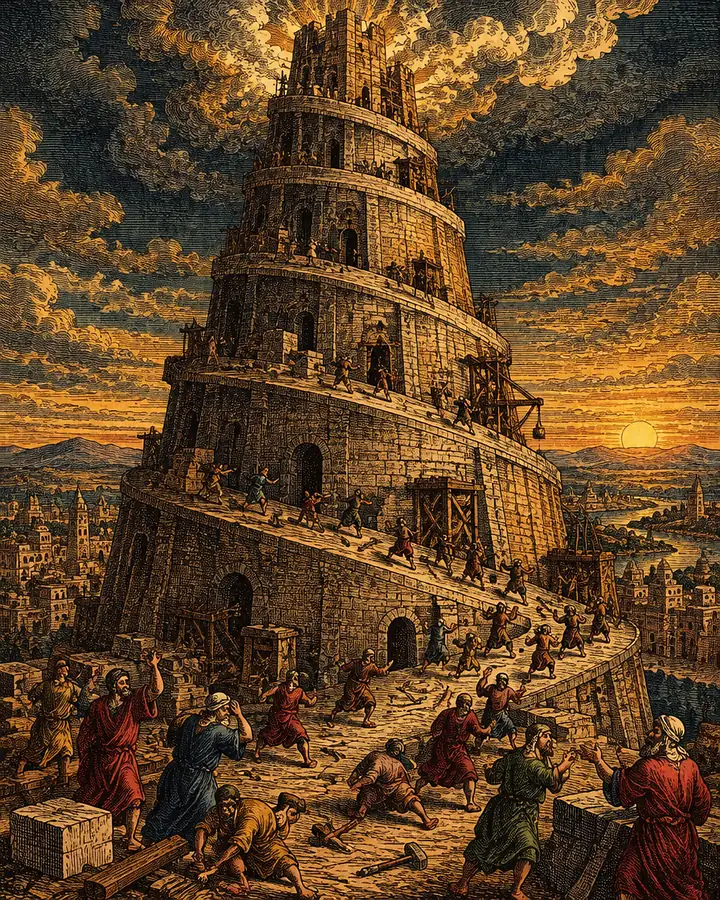
Go to, let us build us a city and a tower, whose top may reach unto heaven; and let us make us a nameGenesis 11:4
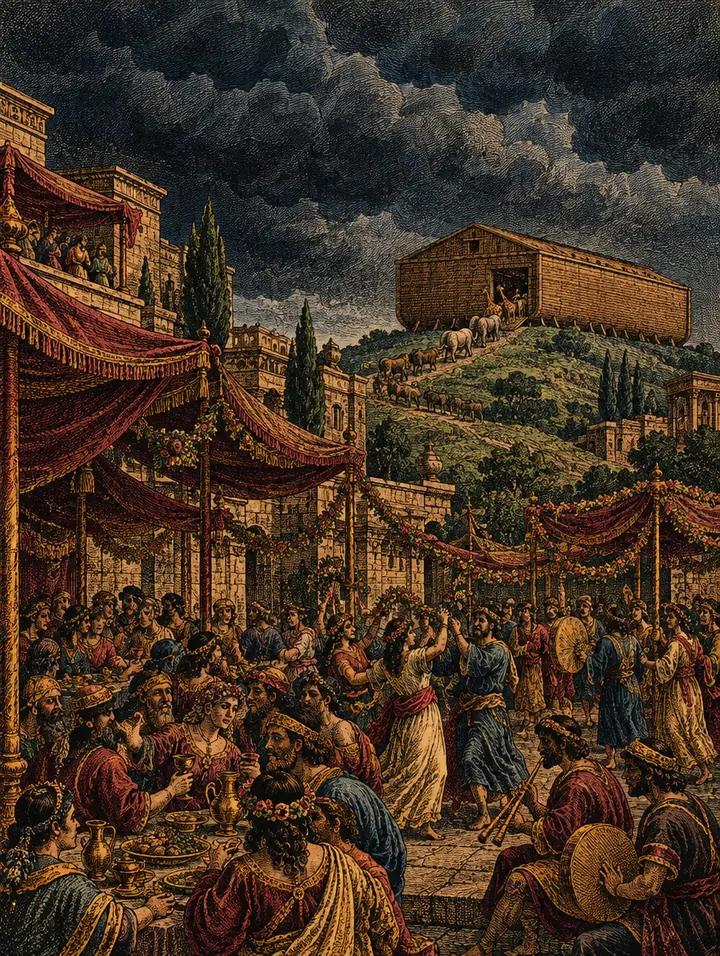
As it was in the days of Noah
Jesus described the world before his return in the same terms: "And as it was in the days of Noe, so shall it be also in the days of the Son of man. They did eat, they drank, they married wives, they were given in marriage, until the day that Noe entered into the ark, and the flood came, and destroyed them all" (Luke 17:26-27).
Notice what he does not say. Eating, drinking and weddings are not sins; Jesus turned water into wine at a wedding (John 2:1-11). The danger was that ordinary life had become everything. Matthew adds that they "knew not until the flood came" (Matthew 24:39). They were not ignorant because no one told them; Noah was "a preacher of righteousness" (2 Peter 2:5). They were ignorant because they were not listening.
Paul gives the same picture: "when they shall say, Peace and safety; then sudden destruction cometh upon them" (1 Thessalonians 5:3). And Peter warns of scoffers who say, "all things continue as they were from the beginning of the creation" (2 Peter 3:4).
Opening the members’ pages…
Members read on
Read the rest of Bread and Circuses
Your 7 free days open every page of Faith Over Fear, and the whole Almanac with them.
Still to read on this page About 1 min
- Remember Lot's wife
- How to stay awake
- Your birth details, about a minute
- Your 7 free days begin
- Back here, every page open
$0 today, then $12/month after 7 days. Cancel anytime.
Already a member? Log in
Remember Lot's wife
In the same passage Jesus named the days of Lot: "they did eat, they drank, they bought, they sold, they planted, they builded" (Luke 17:28). Then he gave one of the shortest warnings in the Gospels: "Remember Lot's wife" (Luke 17:32).
She was led out of Sodom by the hand of an angel, yet "his wife looked back from behind him, and she became a pillar of salt" (Genesis 19:26). Her body left the city; her heart did not. The warning is not for people outside the faith but for those who have heard the call and still love what they are leaving.
In a culture of endless feeds and entertainment, looking back is easy. Each of us has a city we are tempted to turn around for.
How to stay awake
Keep a sabbath of the mind
Set aside time each week with no screens, for worship, rest and the people you love. Rome never stopped its games; you can stop yours.
Redeem the time
"See then that ye walk circumspectly, not as fools, but as wise, Redeeming the time, because the days are evil" (Ephesians 5:15-16). Choose what fills your evenings before the feed chooses for you.
Watch and be sober
"Therefore let us not sleep, as do others; but let us watch and be sober" (1 Thessalonians 5:6). Sober means clear-headed: not drunk on wine, and not drunk on outrage either.
Call evil evil, gently
Isaiah warned, "Woe unto them that call evil good, and good evil" (Isaiah 5:20). Know what is right by Scripture, not by what is popular, and say so with kindness.
Build the ark you were given
Noah obeyed in the ordinary work of building, year after year (Hebrews 11:7). Faithfulness in your family, your work and your church is your ark.
Hope, not gloom
"Wherefore we receiving a kingdom which cannot be moved, let us have grace" (Hebrews 12:28). Rome fell, and the church outlived it. Empires end; the kingdom of God does not.
Common questions
What does "bread and circuses" mean?
It comes from the Roman poet Juvenal, who wrote in his tenth Satire, early in the second century, that the Roman people had stopped caring about public duty and wanted only "bread and circuses": free food and entertainment. Today it describes keeping people content and distracted with comfort and spectacle.
What did Jesus mean by "as it was in the days of Noah"?
In Luke 17:26-27 and Matthew 24:37-39 Jesus said that people before the flood went on eating, drinking and marrying, absorbed in ordinary life, until the flood came. He warned that his return would find many in the same state: busy, comfortable and not listening.
Why did Lot's wife turn into a pillar of salt?
As the angels led Lot's family out of Sodom, she looked back, against the command they had been given, and "became a pillar of salt" (Genesis 19:17, 26). Jesus used her as a warning to those who leave the world in body but still long for it in heart (Luke 17:32).
Are modern nations repeating the fall of Rome?
Many writers have compared modern nations with Rome, and Ecclesiastes 1:9 says there is "no new thing under the sun". The lesson Scripture draws is not about any one nation but about every heart: comfort and distraction can lull a people to sleep, and watchfulness and repentance keep it awake.
Sources and editorial method
Research and editorial references used for this page include:
- BibleGateway: Ecclesiastes 1:9 (KJV) - Quoted on this page in the King James Version.
- BibleGateway: Luke 17:26-32 (KJV) - Quoted on this page in the King James Version.
- BibleGateway: Matthew 24:37-39 (KJV) - Quoted on this page in the King James Version.
- BibleGateway: Genesis 19:15-26 (KJV) - Quoted on this page in the King James Version.
- BibleGateway: John 2:1-11 (KJV) - Quoted on this page in the King James Version.
- BibleGateway: 2 Peter 2:5 (KJV) - Quoted on this page in the King James Version.
- BibleGateway: 2 Peter 3:3-4 (KJV) - Quoted on this page in the King James Version.
- BibleGateway: 1 Thessalonians 5:2-6 (KJV) - Quoted on this page in the King James Version.
- BibleGateway: Ephesians 5:15-16 (KJV) - Quoted on this page in the King James Version.
- BibleGateway: Isaiah 5:20 (KJV) - Quoted on this page in the King James Version.
- BibleGateway: Hebrews 11:7 (KJV) - Quoted on this page in the King James Version.
- BibleGateway: Hebrews 12:27-28 (KJV) - Quoted on this page in the King James Version.
- Wikipedia: Bread and circuses - Juvenal's phrase in his tenth Satire, and how it has been used since.
- Wikipedia: Colosseum - Its opening in AD 80 under Titus, with a hundred days of games.
Scripture is quoted from the King James Version. The few present-day facts were checked in November 2026. These pages teach from Scripture: they set no date, name no living person as a sign, call no disaster a verdict on its victims, and blame no people for the world's troubles. The paintings are illustrations made for The Great Almanac with AI image tools, in the house's engraved style.

