
Do Not Worry
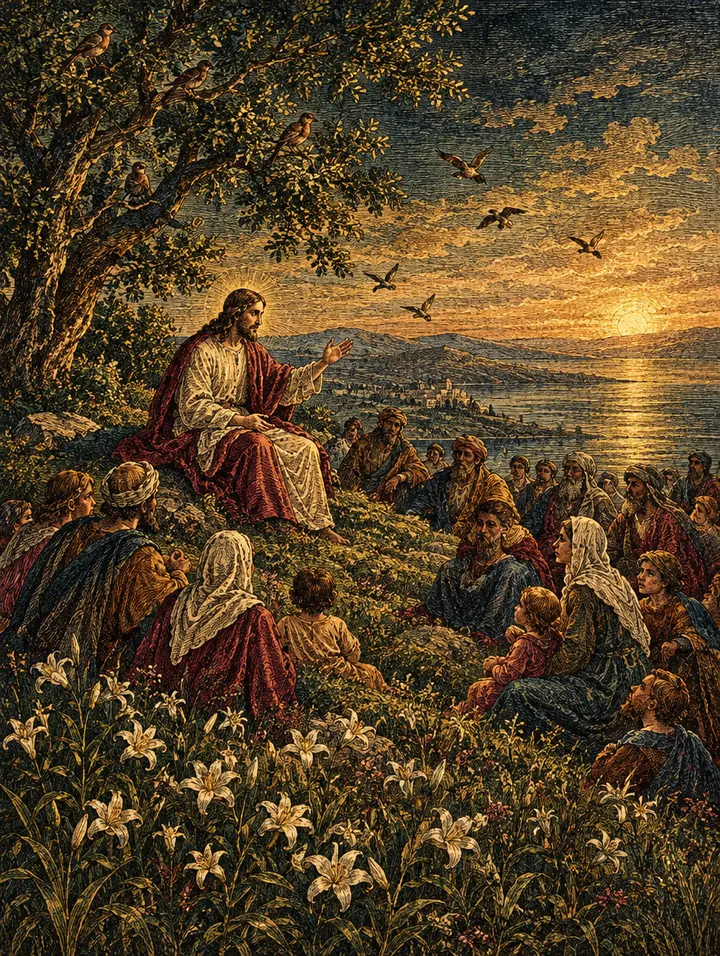
When the shelves empty and the prices climb, the first thing fear grabs is the pantry. Jesus spoke to that fear on a hillside in Galilee. He did not tell his hearers to be careless. He told them to be free.
Read without fear: "God hath not given us the spirit of fear" (2 Timothy 1:7).
On this page 6 parts · 4 min
But seek ye first the kingdom of God, and his righteousness; and all these things shall be added unto you.
Matthew 6:33, KJV
What Jesus said on the hillside
In the Sermon on the Mount, Jesus named the three things every household worries about: food, drink and clothing. "Take no thought for your life, what ye shall eat, or what ye shall drink; nor yet for your body, what ye shall put on. Is not the life more than meat, and the body than raiment?" (Matthew 6:25).
"Take no thought" in the English of the King James Version means do not be anxious. The Greek word, merimnao, describes a mind pulled in pieces. Jesus is not forbidding planning. He is forbidding the worry that divides the heart.
Then he gave two pictures. "Behold the fowls of the air: for they sow not, neither do they reap, nor gather into barns; yet your heavenly Father feedeth them" (Matthew 6:26). "Consider the lilies of the field, how they grow; they toil not, neither do they spin: And yet I say unto you, That even Solomon in all his glory was not arrayed like one of these" (Matthew 6:28-29).
And he gave a reason that cuts worry at the root: "Which of you by taking thought can add one cubit unto his stature?" (Matthew 6:27). Worry adds nothing. It only takes.
Is storing food a lack of faith?
Some read Matthew 6 and conclude that a faithful household keeps nothing in the cupboard. Scripture does not say that. Joseph stored grain through seven years of plenty against seven years of famine, and Pharaoh called it the counsel of a man "in whom the Spirit of God is" (Genesis 41:38). Proverbs sends the idle to watch the ant, which "provideth her meat in the summer, and gathereth her food in the harvest" (Proverbs 6:8). And "a prudent man foreseeth the evil, and hideth himself" (Proverbs 22:3).
The difference is not in the cupboard but in the heart. The rich fool in Luke 12 also stored grain, and Jesus called him a fool, not for his barns but for trusting them: "Soul, thou hast much goods laid up for many years; take thine ease" (Luke 12:19). A household that keeps two weeks of food so that it can feed its neighbours in a storm is doing what Joseph did. A household that hoards in panic, and will not share, is doing what the rich fool did.
So stock the pantry if you are able, calmly and a little at a time, and then stop thinking about it.
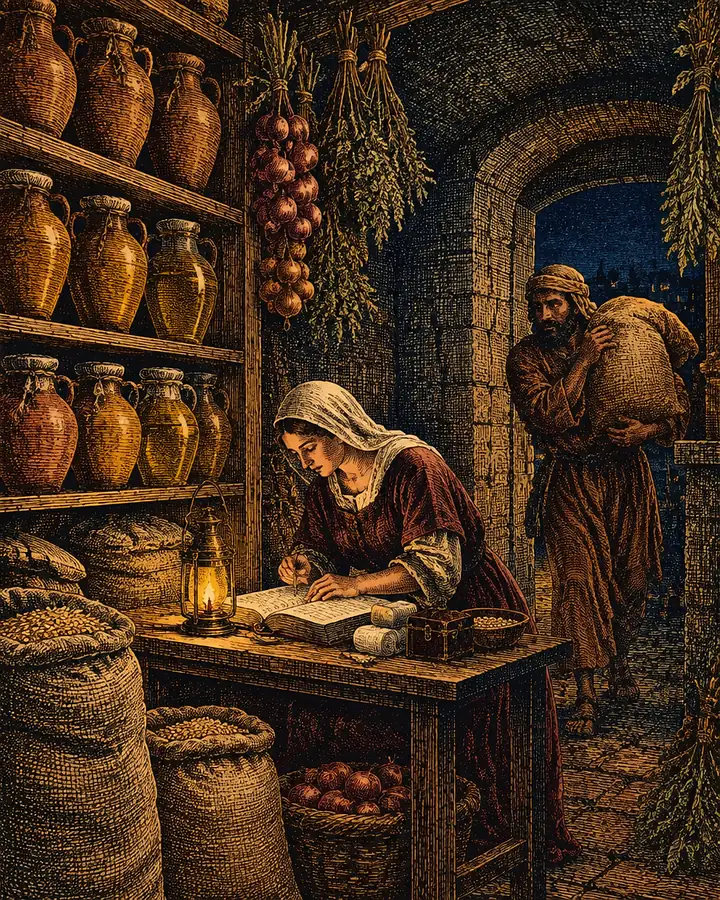
A prudent man foreseeth the evil, and hideth himselfProverbs 22:3
Go deeper: the physical preparation checklist, a calm financial plan.
Opening the members’ pages…
Members read on
Read the rest of Do Not Worry
Your 7 free days open every page of Faith Over Fear, and the whole Almanac with them.
Still to read on this page About 1 min
- Seek first: the order of the day
- When prices rise and shelves empty
- Your birth details, about a minute
- Your 7 free days begin
- Back here, every page open
$0 today, then $12/month after 7 days. Cancel anytime.
Already a member? Log in
Seek first: the order of the day
Jesus did not leave a gap where worry used to be. He filled it: "But seek ye first the kingdom of God, and his righteousness; and all these things shall be added unto you" (Matthew 6:33). The promise is about order. When God's kingdom comes first, the needs of the day are put in their place, and his care covers them.
"Your heavenly Father knoweth that ye have need of all these things" (Matthew 6:32). Worry assumes that no one is watching our needs. Faith rests on the fact that someone is.
Then the last line of the passage: "Take therefore no thought for the morrow: for the morrow shall take thought for the things of itself. Sufficient unto the day is the evil thereof" (Matthew 6:34). God gives grace for today's troubles, not tomorrow's. Borrowing tomorrow's fears spends strength we have not yet been given.
When prices rise and shelves empty
Pray for daily bread
Jesus taught us to ask, "Give us this day our daily bread" (Matthew 6:11). The prayer is for today. Pray it every morning, and thank him every evening.
Keep a calm reserve
Two weeks of water and food, bought a little at a time, is prudence, not panic. Buying it in a frightened crowd only empties the shelves for others.
Share before you are asked
In a shortage, a believer's pantry is the street's pantry. "He that hath pity upon the poor lendeth unto the LORD" (Proverbs 19:17).
Watch what you watch
A feed full of empty shelves fills the heart with fear. Look once, act sensibly, and turn back to the birds and the lilies.
Remember past provision
Write down three times God has provided for you. "I have been young, and now am old; yet have I not seen the righteous forsaken, nor his seed begging bread" (Psalm 37:25).
Give thanks
"In every thing give thanks" (1 Thessalonians 5:18). Gratitude is the answer to the panic of scarcity.
Common questions
What does "take no thought" mean in Matthew 6?
In the King James Version, "take no thought" means do not be anxious. Jesus is not forbidding planning or work; he is forbidding the anxious care that divides the heart and assumes God is not watching. The same Bible praises Joseph for storing grain and the ant for gathering in summer.
Is it wrong for a Christian to stockpile food?
Keeping a sensible reserve is wise stewardship, as Joseph showed in Egypt (Genesis 41) and Proverbs 22:3 commends. What Scripture warns against is hoarding in fear, trusting the store instead of God, and refusing to share, as the rich fool did in Luke 12:16-21.
How do I stop worrying about money and food?
Follow the order Jesus gave: seek God's kingdom first (Matthew 6:33), pray for today's bread (Matthew 6:11), take sensible steps once, and then leave tomorrow to tomorrow (Matthew 6:34). Philippians 4:6-7 adds prayer with thanksgiving, and the promise of a peace that keeps the heart.
What are the birds and the lilies in Matthew 6?
They are Jesus' two pictures of the Father's care. The birds do not farm, yet God feeds them (Matthew 6:26). The lilies do not spin cloth, yet they are dressed more finely than Solomon (Matthew 6:28-29). If God cares for these, Jesus says, he cares far more for his children.
Sources and editorial method
Research and editorial references used for this page include:
- BibleGateway: Matthew 6:25-34 (KJV) - Quoted on this page in the King James Version.
- BibleGateway: Matthew 6:11 (KJV) - Quoted on this page in the King James Version.
- BibleGateway: Genesis 41:33-38 (KJV) - Quoted on this page in the King James Version.
- BibleGateway: Proverbs 6:6-8 (KJV) - Quoted on this page in the King James Version.
- BibleGateway: Proverbs 22:3 (KJV) - Quoted on this page in the King James Version.
- BibleGateway: Luke 12:16-21 (KJV) - Quoted on this page in the King James Version.
- BibleGateway: Philippians 4:6-7 (KJV) - Quoted on this page in the King James Version.
- BibleGateway: Proverbs 19:17 (KJV) - Quoted on this page in the King James Version.
- BibleGateway: Psalm 37:25 (KJV) - Quoted on this page in the King James Version.
- BibleGateway: 1 Thessalonians 5:18 (KJV) - Quoted on this page in the King James Version.
Scripture is quoted from the King James Version. The few present-day facts were checked in November 2026. These pages teach from Scripture: they set no date, name no living person as a sign, call no disaster a verdict on its victims, and blame no people for the world's troubles. The paintings are illustrations made for The Great Almanac with AI image tools, in the house's engraved style.

