
Seven Women Shall Take Hold of One Man
"And in that day seven women shall take hold of one man." Few verses are quoted more often as a sign of our times, and few are read so far from their setting. Here is what Isaiah described, why it happened, and what it says to men and women now.
Read without fear: "God hath not given us the spirit of fear" (2 Timothy 1:7).
On this page 6 parts · 5 min
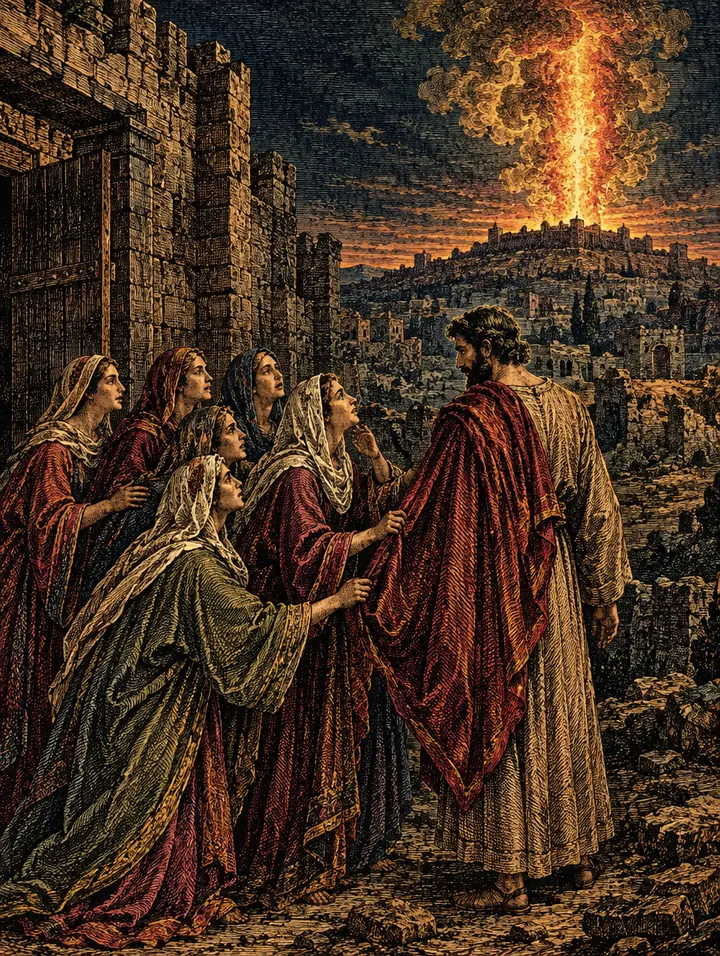
And in that day seven women shall take hold of one man, saying, We will eat our own bread, and wear our own apparel: only let us be called by thy name, to take away our reproach.
Isaiah 4:1, KJV
The setting: a proud city before its fall
Isaiah prophesied in Jerusalem in the eighth century before Christ, when the city was rich, proud and sure of itself. Chapter 3 opens with God taking away from Judah "The mighty man, and the man of war, the judge, and the prophet, and the prudent, and the ancient" (Isaiah 3:2), until "children are their oppressors, and women rule over them" (Isaiah 3:12): a picture of a society so hollowed out that no one with wisdom is left to lead.
Then Isaiah turns to "the daughters of Zion", who "are haughty, and walk with stretched forth necks and wanton eyes" (Isaiah 3:16), and he lists their finery: tinkling ornaments, chains, bracelets, rings, nose jewels and changeable suits of apparel (Isaiah 3:18-22). The charge is not that they were women, but that the whole city, its men and its women, had traded humility for display. And the judgment falls on the men first: "Thy men shall fall by the sword, and thy mighty in the war" (Isaiah 3:25).
Why seven women would take hold of one man
Chapter numbers were added to the Bible many centuries after Isaiah, and Isaiah 4:1 finishes the thought of chapter 3. With so many men killed in war, the women left alive outnumber the men seven to one.
In that world a woman without a husband or children bore a "reproach", a public shame; when Rachel's son was born she said, "God hath taken away my reproach" (Genesis 30:23). A woman alone also had little protection. So the women offer to provide their own food and clothing, the very things the law bound a husband to give (Exodus 21:10), and ask only to be called by his name.
It is a picture of a city after catastrophe, not a description of how women behave. The proud display of chapter 3 ends in seven women pleading for one man's name. That reversal is the point.
Opening the members’ pages…
Members read on
Read the rest of Seven Women Shall Take Hold of One Man
Your 7 free days open every page of Faith Over Fear, and the whole Almanac with them.
Still to read on this page About 2 min
- Then the Branch of the LORD
- What it says to men and women now
- Your birth details, about a minute
- Your 7 free days begin
- Back here, every page open
$0 today, then $12/month after 7 days. Cancel anytime.
Already a member? Log in
Then the Branch of the LORD
Isaiah does not end in ruin. The very next words are hope: "In that day shall the branch of the LORD be beautiful and glorious, and the fruit of the earth shall be excellent and comely for them that are escaped of Israel" (Isaiah 4:2). The Branch is a title the prophets give the coming King (Jeremiah 23:5; Zechariah 3:8), and Christians read it of Christ.
Those who remain are called holy, "When the Lord shall have washed away the filth of the daughters of Zion" (Isaiah 4:4), and over every home on Mount Zion God spreads "a cloud and smoke by day, and the shining of a flaming fire by night", a shelter "from storm and from rain" (Isaiah 4:5-6). The same day that strips away pride ends in cleansing and covering.
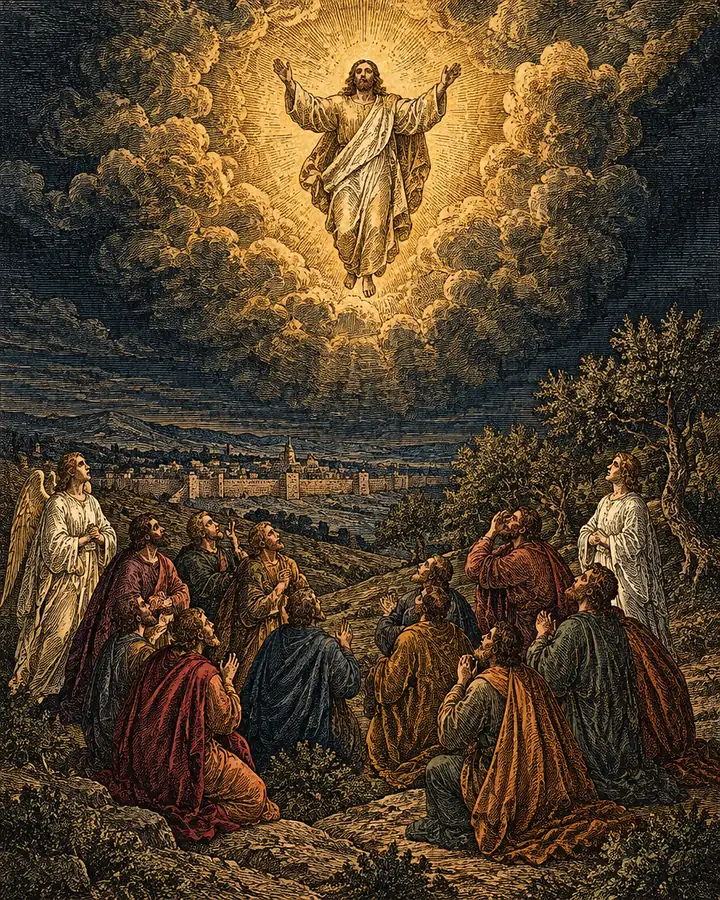
this same Jesus, which is taken up from you into heaven, shall so come in like manner as ye have seen him go into heavenActs 1:11
What it says to men and women now
Many believers see in Isaiah 4:1 a picture of our own time. Commitment has grown rare for men and women alike: marriage comes later or not at all, relationships begin without promises, and many who long for a faithful spouse cannot find one. Some read the verse as a prophecy of exactly that. Whether or not it points to our day, it shows where pride and display end, and it calls both men and women back to God's design.
Men: be worth holding on to
Isaiah's judgment began with the loss of "the mighty man… the judge, and the prophet, and the prudent" (Isaiah 3:2). Be one: faithful, steady, ready to protect and provide (1 Timothy 5:8). "Husbands, love your wives, even as Christ also loved the church" (Ephesians 5:25).
Women: strength and honour
"Strength and honour are her clothing; and she shall rejoice in time to come" (Proverbs 31:25). The daughters of Zion dressed for display; the woman of Proverbs 31 is praised for her character: "a woman that feareth the LORD, she shall be praised" (Proverbs 31:30).
Covenant, not convenience
"Marriage is honourable in all, and the bed undefiled" (Hebrews 13:4). Scripture's answer to relationships without promises is not contempt but covenant: a promise kept before God.
No contempt for either
Isaiah judged the pride of men and women alike. Blaming one sex for the age only repeats the pride the prophet condemned. "Honour all men" (1 Peter 2:17).
Single and whole
A single life is no reproach in Christ. Paul called it a gift (1 Corinthians 7:7-8), and Jesus himself never married. The reproach of Isaiah 4:1 is taken away in him.
Teach the next generation
Isaiah 3 began with a land that had lost its elders. Mentor and pray for young men and young women, as Paul asked of the older (Titus 2:3-8).
Common questions
What does Isaiah 4:1 mean?
Isaiah 4:1 describes Jerusalem after judgment: so many men have fallen in war (Isaiah 3:25) that seven women plead with one man to marry them, offering to provide their own food and clothing, only to be called by his name and so freed from the shame of being unmarried. It ends Isaiah's warning against the pride of the city, its men and its women alike.
Is Isaiah 4:1 about the end times?
In its first setting it warns of the devastation war would bring on Jerusalem. The words "in that day" also look ahead, and the next verses speak of the Branch of the LORD, whom Christians read as Christ (Isaiah 4:2-6). Many believers see a picture of our own time in it; the passage itself sets no date.
Who were the daughters of Zion in Isaiah 3?
The women of Jerusalem, whom Isaiah describes as "haughty" and dressed for display (Isaiah 3:16-22). They stand for a whole city that had traded humility for luxury, and the same chapter judges its men and its leaders.
What is the reproach in Isaiah 4:1?
In ancient Israel a woman without a husband or children often lived with public shame and little protection; Rachel said, "God hath taken away my reproach" when her son was born (Genesis 30:23). The women of Isaiah 4:1 ask for a husband's name to take that shame away.
Does the Bible approve of one man with seven wives?
No. Isaiah 4:1 describes a desperate plea after war, not a command or an ideal. From the beginning God's design was one man and one woman: "they twain shall be one flesh" (Matthew 19:5; Genesis 2:24).
Sources and editorial method
Research and editorial references used for this page include:
- BibleGateway: Isaiah 3 (KJV) - Quoted on this page in the King James Version.
- BibleGateway: Isaiah 4 (KJV) - Quoted on this page in the King James Version.
- BibleGateway: Genesis 30:23 (KJV) - Quoted on this page in the King James Version.
- BibleGateway: Exodus 21:10 (KJV) - Quoted on this page in the King James Version.
- BibleGateway: Jeremiah 23:5 (KJV) - Quoted on this page in the King James Version.
- BibleGateway: Zechariah 3:8 (KJV) - Quoted on this page in the King James Version.
- BibleGateway: 1 Timothy 5:8 (KJV) - Quoted on this page in the King James Version.
- BibleGateway: Ephesians 5:25 (KJV) - Quoted on this page in the King James Version.
- BibleGateway: Proverbs 31:25-30 (KJV) - Quoted on this page in the King James Version.
- BibleGateway: Hebrews 13:4 (KJV) - Quoted on this page in the King James Version.
- BibleGateway: 1 Peter 2:17 (KJV) - Quoted on this page in the King James Version.
- BibleGateway: 1 Corinthians 7:7-8 (KJV) - Quoted on this page in the King James Version.
- BibleGateway: Titus 2:3-8 (KJV) - Quoted on this page in the King James Version.
- BibleGateway: Matthew 19:4-6 (KJV) - Quoted on this page in the King James Version.
- BibleGateway: Genesis 2:24 (KJV) - Quoted on this page in the King James Version.
Scripture is quoted from the King James Version. The few present-day facts were checked in November 2026. These pages teach from Scripture: they set no date, name no living person as a sign, call no disaster a verdict on its victims, and blame no people for the world's troubles. The paintings are illustrations made for The Great Almanac with AI image tools, in the house's engraved style.

