
Set Apart
Following Jesus closely can cost friendships and strain families, and Jesus said as much. Yet the same Jesus told his servants not to pull up the tares themselves. Here is how to be set apart and still full of love.
Read without fear: "God hath not given us the spirit of fear" (2 Timothy 1:7).
On this page 6 parts · 5 min
Wherefore come out from among them, and be ye separate, saith the Lord, and touch not the unclean thing; and I will receive you.
2 Corinthians 6:17, KJV
The wheat and the tares
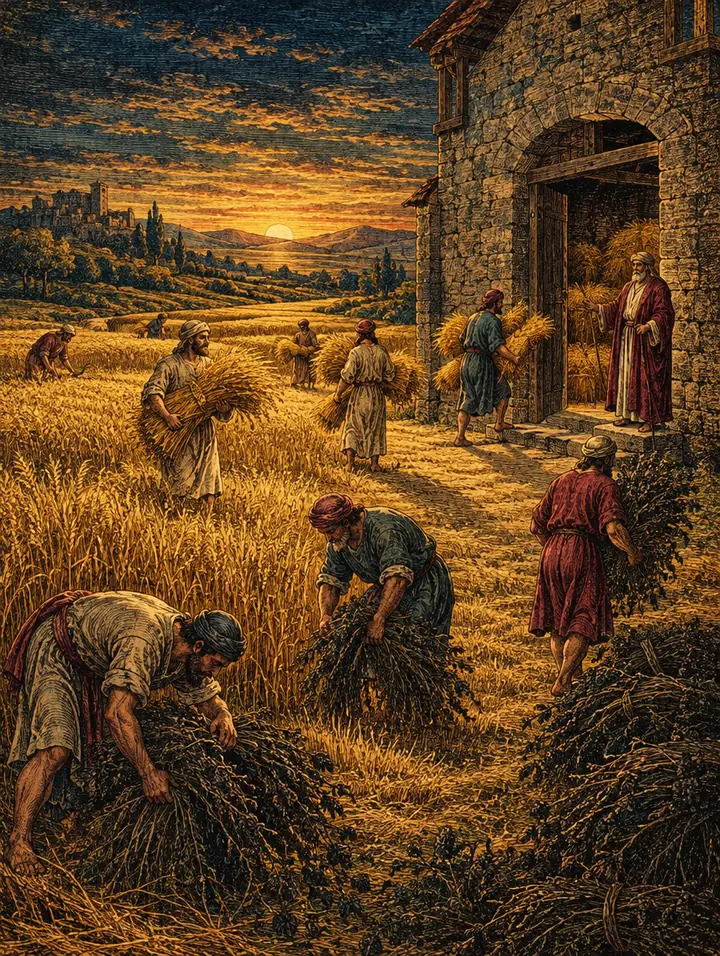
Jesus told of a farmer who sowed good seed, and of an enemy who came by night and sowed tares among the wheat. When the servants saw the weeds, they asked, "Wilt thou then that we go and gather them up? But he said, Nay; lest while ye gather up the tares, ye root up also the wheat with them. Let both grow together until the harvest" (Matthew 13:28-30).
The tares were probably darnel, a weed that looks almost exactly like wheat until the grain appears. That is the point of the parable. Real and false grow side by side in this world, and even in the church, and they can look alike for a long time. Jesus explains that the harvest is "the end of the world" and that "the reapers are the angels" (Matthew 13:39), not the servants.
So the parable gives two instructions at once. Know that tares are real. And do not appoint yourself the reaper. Separating wheat from tares is God's work, at the harvest.
Known by their fruits
If we are not to uproot the tares, we are still told to recognise false teachers. "Beware of false prophets, which come to you in sheep's clothing, but inwardly they are ravening wolves. Ye shall know them by their fruits" (Matthew 7:15-16). John says, "believe not every spirit, but try the spirits whether they are of God" (1 John 4:1).
Fruit takes time to show, and it is seen in character more than in knowledge. Paul warned of people "having a form of godliness, but denying the power thereof" (2 Timothy 3:5), and of a time when people "will not endure sound doctrine; but after their own lusts shall they heap to themselves teachers, having itching ears" (2 Timothy 4:3). A teacher who knows many verses but sows fear, pride, division or contempt for others is showing his fruit. So is one whose predictions fail: "if the thing follow not, nor come to pass, that is the thing which the LORD hath not spoken" (Deuteronomy 18:22).
Test yourself by the same rule. The fruit of the Spirit is "love, joy, peace, longsuffering, gentleness, goodness, faith, Meekness, temperance" (Galatians 5:22-23), and "though I… understand all mysteries, and all knowledge… and have not charity, I am nothing" (1 Corinthians 13:2).
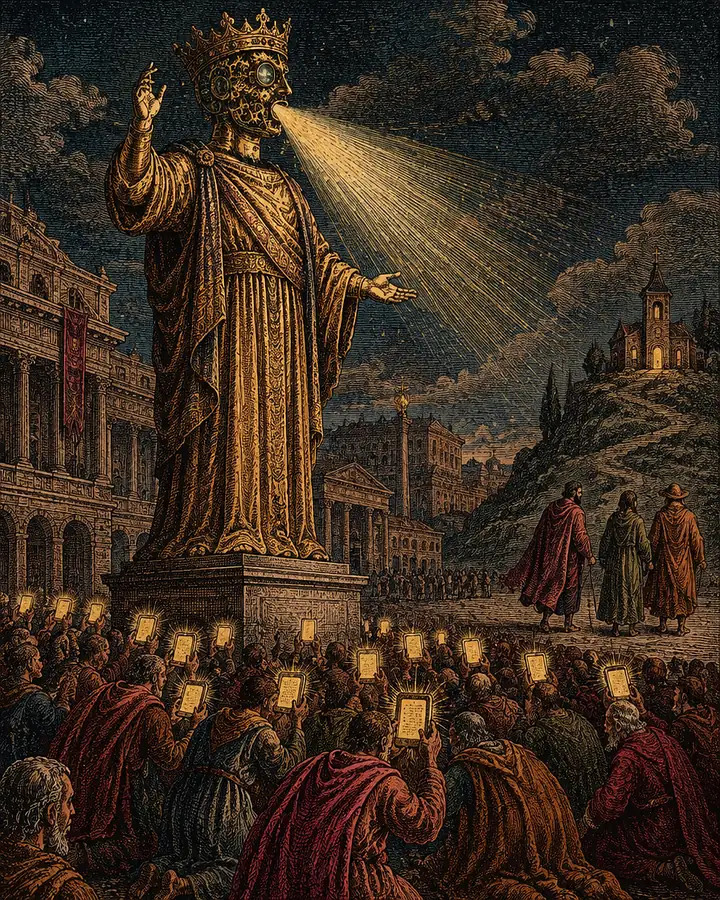
And he had power to give life unto the image of the beast, that the image of the beast should both speakRevelation 13:15
Opening the members’ pages…
Members read on
Read the rest of Set Apart
Your 7 free days open every page of Faith Over Fear, and the whole Almanac with them.
Still to read on this page About 2 min
- When family and friends turn away
- Set apart, but not alone
- Your birth details, about a minute
- Your 7 free days begin
- Back here, every page open
$0 today, then $12/month after 7 days. Cancel anytime.
Already a member? Log in
When family and friends turn away
Jesus did not promise that following him would keep every relationship whole. "For I am come to set a man at variance against his father, and the daughter against her mother… And a man's foes shall be they of his own household" (Matthew 10:35-36). Even his own brothers did not believe in him at first (John 7:5), and in Nazareth he said, "A prophet is not without honour, but in his own country, and among his own kin, and in his own house" (Mark 6:4).
When it happens, Scripture gives two instructions that hold each other in balance. Stay faithful: "We ought to obey God rather than men" (Acts 5:29). And stay loving: "Honour thy father and thy mother" (Exodus 20:12), and "If it be possible, as much as lieth in you, live peaceably with all men" (Romans 12:18). Distance is sometimes needed for safety or for peace, but bitterness never is.
Remember that his brothers came to believe: James became a leader of the church in Jerusalem (Acts 15:13; Galatians 1:19). Prayer for family is never wasted.
Set apart, but not alone
To be set apart in Scripture is to belong to God, not to withdraw from everyone. Jesus prayed for his followers, "I pray not that thou shouldest take them out of the world, but that thou shouldest keep them from the evil" (John 17:15).
Leave what is unclean, not who
"Come out from among them" (2 Corinthians 6:17) is about idols and sin. Jesus ate with sinners and was called their friend (Luke 7:34).
Stay in fellowship
"Not forsaking the assembling of ourselves together… and so much the more, as ye see the day approaching" (Hebrews 10:25). If a church has gone wrong, find a faithful one; do not go it alone.
Choose your company
"He that walketh with wise men shall be wise: but a companion of fools shall be destroyed" (Proverbs 13:20). Friends shape us.
Love your enemies
"Love your enemies, bless them that curse you, do good to them that hate you" (Matthew 5:44). Being set apart never licenses contempt.
Judge yourself first
"First cast out the beam out of thine own eye" (Matthew 7:5). Humility is the mark of the wheat.
Leave the harvest to God
The reapers are angels, and the Lord of the harvest knows his own: "The Lord knoweth them that are his" (2 Timothy 2:19).
Common questions
What is the meaning of the parable of the wheat and tares?
In Matthew 13:24-30 and 36-43, Jesus teaches that the children of the kingdom and the children of the evil one grow together in the world until the end, and that God, not his servants, separates them at the harvest. It warns against both naivety and self-appointed judging.
What does "come out from among them, and be ye separate" mean?
2 Corinthians 6:14-18 calls believers to break with idolatry and sin and to belong wholly to God. It does not mean cutting off every unbeliever: Jesus prayed that his followers would stay in the world but be kept from evil (John 17:15).
How can I tell a false teacher?
By their fruit (Matthew 7:15-20): their character, their teaching measured against Scripture, and whether their words come true (Deuteronomy 18:22). Watch for pride, greed, fear-mongering, contempt for others and predictions that fail.
What should I do when my family rejects my faith?
Stay faithful and keep loving. Honour your parents where you can (Exodus 20:12), live at peace as far as it depends on you (Romans 12:18), and keep praying. Jesus' own brothers did not believe at first, and later led the church.
Sources and editorial method
Research and editorial references used for this page include:
- BibleGateway: Matthew 13:24-30 (KJV) - Quoted on this page in the King James Version.
- BibleGateway: Matthew 13:36-43 (KJV) - Quoted on this page in the King James Version.
- BibleGateway: Matthew 7:1-20 (KJV) - Quoted on this page in the King James Version.
- BibleGateway: 1 John 4:1 (KJV) - Quoted on this page in the King James Version.
- BibleGateway: 2 Timothy 3:1-5 (KJV) - Quoted on this page in the King James Version.
- BibleGateway: 2 Timothy 4:3-4 (KJV) - Quoted on this page in the King James Version.
- BibleGateway: Deuteronomy 18:22 (KJV) - Quoted on this page in the King James Version.
- BibleGateway: Galatians 5:22-23 (KJV) - Quoted on this page in the King James Version.
- BibleGateway: 1 Corinthians 13:1-7 (KJV) - Quoted on this page in the King James Version.
- BibleGateway: Matthew 10:34-36 (KJV) - Quoted on this page in the King James Version.
- BibleGateway: John 7:5 (KJV) - Quoted on this page in the King James Version.
- BibleGateway: Mark 6:4 (KJV) - Quoted on this page in the King James Version.
- BibleGateway: Acts 5:29 (KJV) - Quoted on this page in the King James Version.
- BibleGateway: Exodus 20:12 (KJV) - Quoted on this page in the King James Version.
- BibleGateway: Romans 12:18 (KJV) - Quoted on this page in the King James Version.
- BibleGateway: Acts 15:13 (KJV) - Quoted on this page in the King James Version.
- BibleGateway: Galatians 1:19 (KJV) - Quoted on this page in the King James Version.
- BibleGateway: John 17:15-16 (KJV) - Quoted on this page in the King James Version.
- BibleGateway: 2 Corinthians 6:14-18 (KJV) - Quoted on this page in the King James Version.
- BibleGateway: Luke 7:34 (KJV) - Quoted on this page in the King James Version.
- BibleGateway: Hebrews 10:24-25 (KJV) - Quoted on this page in the King James Version.
- BibleGateway: Proverbs 13:20 (KJV) - Quoted on this page in the King James Version.
- BibleGateway: Matthew 5:44 (KJV) - Quoted on this page in the King James Version.
- BibleGateway: 2 Timothy 2:19 (KJV) - Quoted on this page in the King James Version.
Scripture is quoted from the King James Version. The few present-day facts were checked in November 2026. These pages teach from Scripture: they set no date, name no living person as a sign, call no disaster a verdict on its victims, and blame no people for the world's troubles. The paintings are illustrations made for The Great Almanac with AI image tools, in the house's engraved style.

