
Put Not Your Trust in Princes
Every election season brings two temptations: to hope too much in a leader, or to despair that the wrong one could win. Scripture answers both. God rules over the rulers, and his people are told where to put their trust.
Read without fear: "God hath not given us the spirit of fear" (2 Timothy 1:7).
On this page 6 parts · 4 min
Put not your trust in princes, nor in the son of man, in whom there is no help.
Psalm 146:3, KJV
God rules over the rulers
Daniel served under the most powerful kings on earth, and he never mistook them for the One in charge. "He changeth the times and the seasons: he removeth kings, and setteth up kings" (Daniel 2:21). Nebuchadnezzar himself was driven out to eat grass like the oxen until he learned "that the most High ruleth in the kingdom of men, and giveth it to whomsoever he will" (Daniel 4:32-33).
That truth cuts both ways. No ruler has ever risen beyond God's reach: "The king's heart is in the hand of the LORD, as the rivers of water: he turneth it whithersoever he will" (Proverbs 21:1). And God sometimes gives a people the rulers they ask for, as he did when Israel demanded a king like the nations (1 Samuel 8:7). A nation's leaders can be a mercy or a warning; either way, they are never the last word.
Why Scripture says not to trust princes
"It is better to trust in the LORD than to put confidence in princes" (Psalm 118:9). The psalmist gives the reason: "His breath goeth forth, he returneth to his earth; in that very day his thoughts perish" (Psalm 146:4). Every leader is mortal, limited and fallible, however strong a campaign makes them look.
This is why Christians on every side of politics are wise to hold their hopes loosely. No candidate can save a nation's soul, and none can stop God's purposes. A believer can vote, campaign and argue with a clear conscience, as long as no leader becomes a saviour and no opponent becomes a devil.
Opening the members’ pages…
Members read on
Read the rest of Put Not Your Trust in Princes
Your 7 free days open every page of Faith Over Fear, and the whole Almanac with them.
Still to read on this page About 2 min
- Render unto Caesar, and unto God
- In an election season
- Your birth details, about a minute
- Your 7 free days begin
- Back here, every page open
$0 today, then $12/month after 7 days. Cancel anytime.
Already a member? Log in
Render unto Caesar, and unto God
When Jesus was asked whether it was right to pay taxes to Rome, he asked whose image was on the coin. "Render therefore unto Caesar the things which are Caesar's; and unto God the things that are God's" (Matthew 22:21). The coin carried Caesar's image; we carry God's.
Paul, writing to Christians in Rome, told them to be "subject unto the higher powers" and to pay their taxes (Romans 13:1-7), and to pray "for kings, and for all that are in authority; that we may lead a quiet and peaceable life" (1 Timothy 2:1-2). Jeremiah told the exiles in Babylon to "seek the peace of the city" where they lived and to pray for it (Jeremiah 29:7).
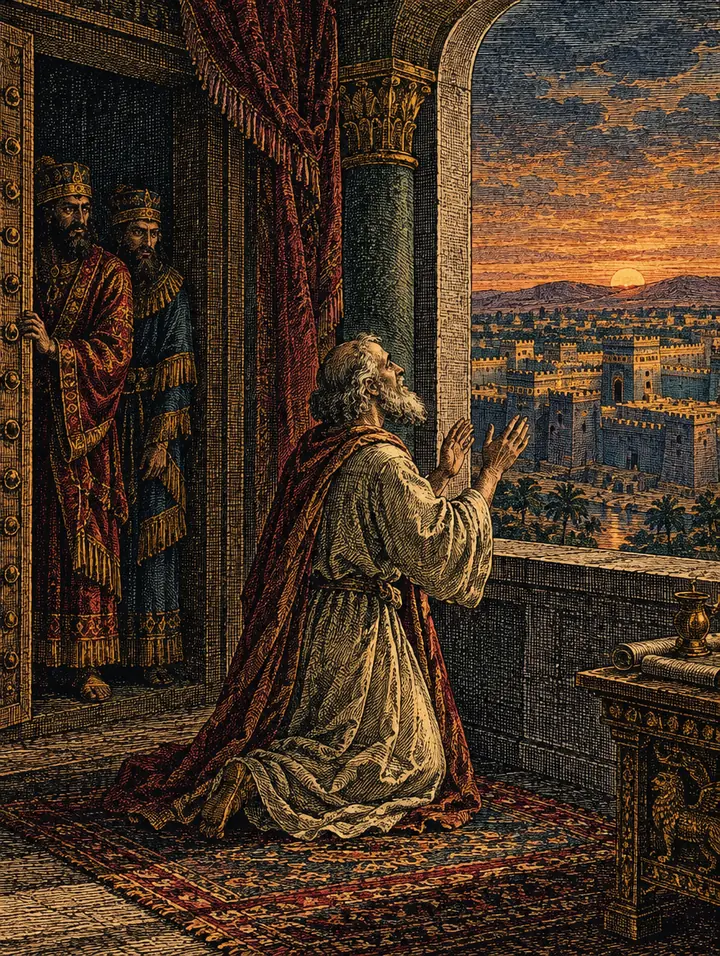
There is a limit, and Scripture marks it. When the authorities ordered the apostles to stop preaching, Peter answered, "We ought to obey God rather than men" (Acts 5:29). When the king set up a golden image, three young men said, "we will not serve thy gods" (Daniel 3:18), and Daniel went on praying at his open window when prayer was forbidden (Daniel 6:10).
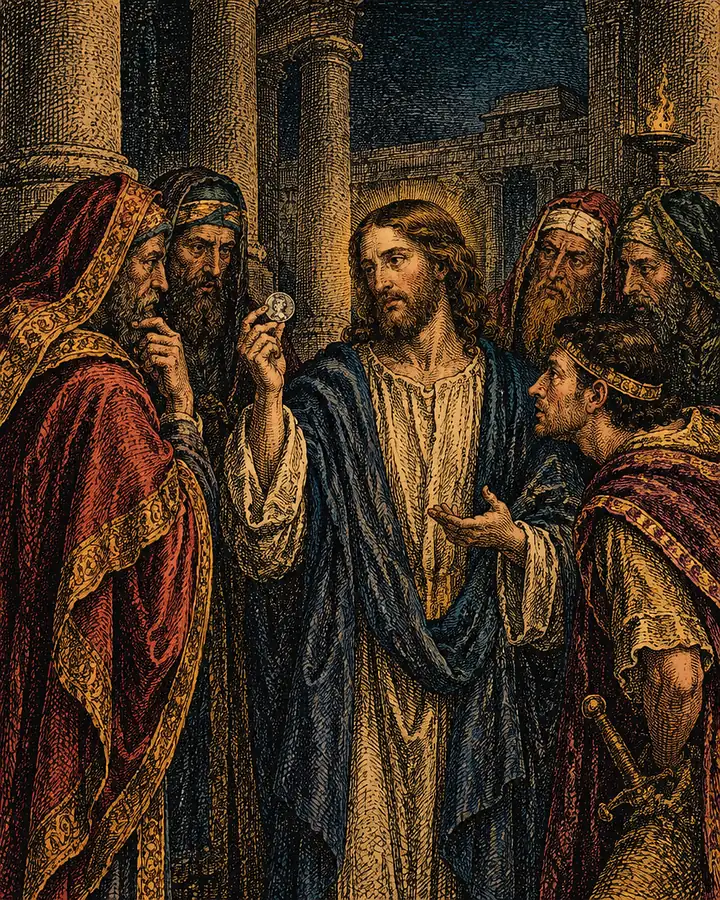
Whose is this image and superscription?Matthew 22:20
In an election season
Pray for every candidate
Prayer "for kings, and for all that are in authority" (1 Timothy 2:2) includes the ones you would never vote for.
Vote with a clear conscience
Weigh character and policies by Scripture, cast your vote, and leave the result to God.
No saviour, no devil
Speak of every leader with honesty and respect, even in disagreement. "Honour the king" was written to Christians under hostile rulers (1 Peter 2:17).
Beware of blaming a people
Scripture puts the real war in the unseen realm, "against principalities, against powers" (Ephesians 6:12). A teaching that blames one nation, race or faith for the world's troubles is a snare, not a revelation.
Keep your citizenship straight
"For our conversation is in heaven" (Philippians 3:20). Your first loyalty is to a kingdom that no election can win or lose.
Seek the city's peace
Serve your town whoever governs it: help a neighbour, support a school, feed the hungry (Jeremiah 29:7).
Common questions
Does God choose who becomes president or king?
Scripture says God "removeth kings, and setteth up kings" (Daniel 2:21) and rules over all earthly power (Romans 13:1). That does not mean he approves of every ruler or every act; sometimes he gives a nation the leaders it asks for, as with Israel's demand for a king (1 Samuel 8:7). It does mean that no ruler is beyond his reach.
What does Psalm 146:3 mean?
"Put not your trust in princes, nor in the son of man, in whom there is no help." Rulers are mortal, and their plans die with them (Psalm 146:4). Our hope belongs to God, "which keepeth truth for ever" (Psalm 146:6).
Should Christians vote?
The Bible neither commands nor forbids voting, which did not exist in its modern form, but it calls believers to seek the good of the city where they live (Jeremiah 29:7) and to act justly. Many Christians see voting as part of that, done prayerfully and without putting their hope in a candidate.
What does Romans 13 teach about government?
Romans 13:1-7 teaches that governing authority comes from God, that Christians should obey the law and pay taxes, and that rulers are meant to punish evil and reward good. Other passages show the limit: when a ruler commands what God forbids, "we ought to obey God rather than men" (Acts 5:29).
Are leaders just puppets of hidden powers?
Scripture does speak of spiritual powers behind the kingdoms of this world (Daniel 10:13; Ephesians 6:12), but it never teaches believers to blame a hidden human group or a particular people for the world's evil. Its answer is that God rules over every power, seen and unseen, and that Christ has already "spoiled principalities and powers" (Colossians 2:15).
Sources and editorial method
Research and editorial references used for this page include:
- BibleGateway: Psalm 146:3-6 (KJV) - Quoted on this page in the King James Version.
- BibleGateway: Psalm 118:8-9 (KJV) - Quoted on this page in the King James Version.
- BibleGateway: Daniel 2:21 (KJV) - Quoted on this page in the King James Version.
- BibleGateway: Daniel 4:32-33 (KJV) - Quoted on this page in the King James Version.
- BibleGateway: Proverbs 21:1 (KJV) - Quoted on this page in the King James Version.
- BibleGateway: 1 Samuel 8:6-7 (KJV) - Quoted on this page in the King James Version.
- BibleGateway: Matthew 22:17-21 (KJV) - Quoted on this page in the King James Version.
- BibleGateway: Romans 13:1-7 (KJV) - Quoted on this page in the King James Version.
- BibleGateway: 1 Timothy 2:1-2 (KJV) - Quoted on this page in the King James Version.
- BibleGateway: Jeremiah 29:7 (KJV) - Quoted on this page in the King James Version.
- BibleGateway: Acts 5:29 (KJV) - Quoted on this page in the King James Version.
- BibleGateway: Daniel 3:16-18 (KJV) - Quoted on this page in the King James Version.
- BibleGateway: Daniel 6:10 (KJV) - Quoted on this page in the King James Version.
- BibleGateway: 1 Peter 2:17 (KJV) - Quoted on this page in the King James Version.
- BibleGateway: Ephesians 6:12 (KJV) - Quoted on this page in the King James Version.
- BibleGateway: Philippians 3:20 (KJV) - Quoted on this page in the King James Version.
- BibleGateway: Daniel 10:13 (KJV) - Quoted on this page in the King James Version.
- BibleGateway: Colossians 2:15 (KJV) - Quoted on this page in the King James Version.
Scripture is quoted from the King James Version. The few present-day facts were checked in November 2026. These pages teach from Scripture: they set no date, name no living person as a sign, call no disaster a verdict on its victims, and blame no people for the world's troubles. The paintings are illustrations made for The Great Almanac with AI image tools, in the house's engraved style.

