
Are Disasters God's Judgment?
After every flood, fire and earthquake someone asks whether God was punishing the people who died. Jesus was asked that question once, about a tower that fell on eighteen people. His answer is the place to begin.
Read without fear: "God hath not given us the spirit of fear" (2 Timothy 1:7).
On this page 6 parts · 5 min
I tell you, Nay: but, except ye repent, ye shall all likewise perish.
Luke 13:5, KJV
What Jesus said about the tower of Siloam
Some people once came to Jesus with a terrible story: Pilate had killed worshippers from Galilee while they were offering sacrifices. Jesus answered the question they had not asked aloud: "Suppose ye that these Galilaeans were sinners above all the Galilaeans, because they suffered such things? I tell you, Nay" (Luke 13:2-3).
Then he raised a disaster of his own, a building that collapsed in Jerusalem: "those eighteen, upon whom the tower in Siloam fell, and slew them, think ye that they were sinners above all men that dwelt in Jerusalem? I tell you, Nay" (Luke 13:4-5).
Twice Jesus refused to read a catastrophe as proof that its victims were worse than anyone else. And twice he turned the question around: "except ye repent, ye shall all likewise perish." A disaster is not a verdict on the people it struck. It is a reminder to everyone who hears of it that life is short, and that all of us need to turn to God.
What the rest of Scripture shows
The Bible does tell of judgments sent by God: the flood in Noah's day, fire on Sodom, plagues on Egypt. But each came with a word from God beforehand, through a prophet or an angel, saying what was coming and why. No one today has been given that word about a particular storm, and Scripture warns hard against speaking for God when he has not spoken: "if the thing follow not, nor come to pass, that is the thing which the LORD hath not spoken" (Deuteronomy 18:22).
It also shows the other side. Job was "perfect and upright, and one that feared God, and eschewed evil" (Job 1:1), yet a great wind brought a house down on his children (Job 1:19). His friends insisted he must have sinned, and God rebuked them for it (Job 42:7). When the disciples asked whose sin had made a man blind, Jesus said, "Neither hath this man sinned, nor his parents" (John 9:3). And God "sendeth rain on the just and on the unjust" (Matthew 5:45).
Scripture names the deeper cause in one line: since the fall, "the whole creation groaneth and travaileth in pain together until now" (Romans 8:22). Earthquakes and floods belong to a world not yet made new, which is why Jesus counted them among "the beginning of sorrows" (Matthew 24:7-8).
Opening the members’ pages…
Members read on
Read the rest of Are Disasters God's Judgment?
Your 7 free days open every page of Faith Over Fear, and the whole Almanac with them.
Still to read on this page About 2 min
- The Lord was not in the earthquake
- How to answer a disaster
- Your birth details, about a minute
- Your 7 free days begin
- Back here, every page open
$0 today, then $12/month after 7 days. Cancel anytime.
Already a member? Log in
The Lord was not in the earthquake
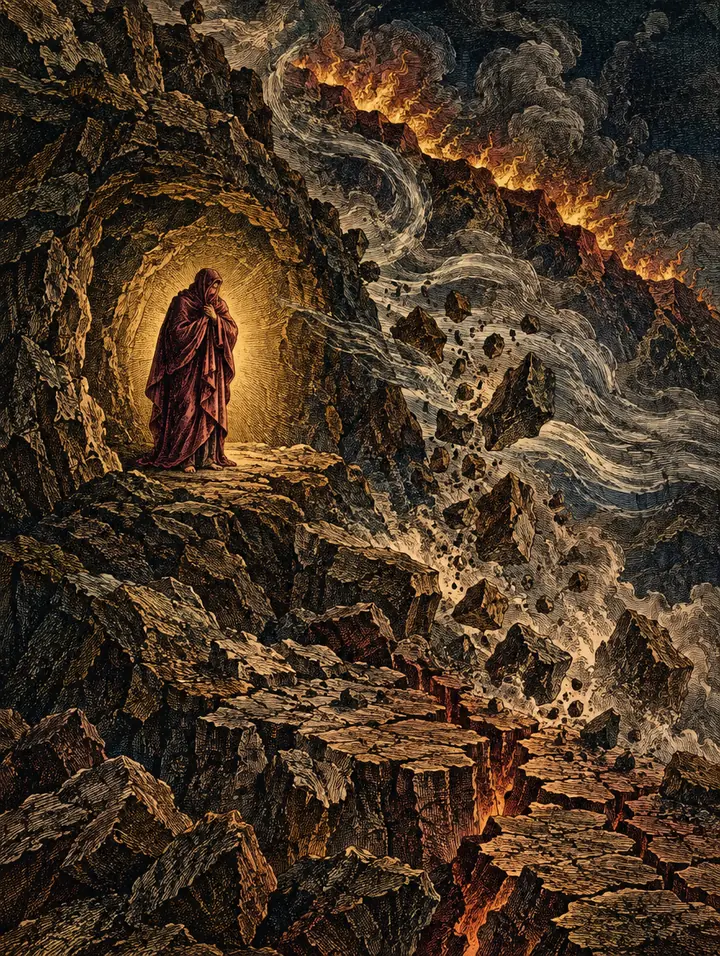
When Elijah stood on Mount Horeb, "a great and strong wind rent the mountains, and brake in pieces the rocks before the LORD; but the LORD was not in the wind: and after the wind an earthquake; but the LORD was not in the earthquake: And after the earthquake a fire; but the LORD was not in the fire: and after the fire a still small voice" (1 Kings 19:11-12).
God is Lord of the storm; Jesus stilled one with a word (Mark 4:39). But this passage teaches that God's voice is not to be read off the weather. He speaks in his Word and by his Spirit, quietly, to the heart. The question to ask after a disaster is not "whom is God punishing?" but "what is God saying to me, and how can I help?"
How to answer a disaster
Weep with those who weep
"Rejoice with them that do rejoice, and weep with them that weep" (Romans 12:15). The first Christian answer to a disaster is grief and prayer, never triumph.
Never rejoice at judgment
When James and John wanted to call down fire on a village that had turned Jesus away, he rebuked them: "Ye know not what manner of spirit ye are of. For the Son of man is not come to destroy men's lives, but to save them" (Luke 9:55-56). God himself says, "I have no pleasure in the death of the wicked" (Ezekiel 33:11).
Help with your hands
Give to trusted relief agencies, give blood, volunteer, or take in a family. The Samaritan did not ask whose fault the wound was (Luke 10:33-34).
Let it humble you, not harden you
Jesus used the tower of Siloam to call his hearers to repentance (Luke 13:5). Let every disaster remind you how fragile life is, and turn you toward God.
Prepare your own house
Wise preparation for storms and power cuts is love for your family and your neighbours. Water, food, light and a plan are the beginning.
Hold on to the promise
After the flood God set his bow in the cloud, "a token of a covenant between me and the earth" (Genesis 9:13), and the story ends where "there shall be no more death, neither sorrow, nor crying" (Revelation 21:4).
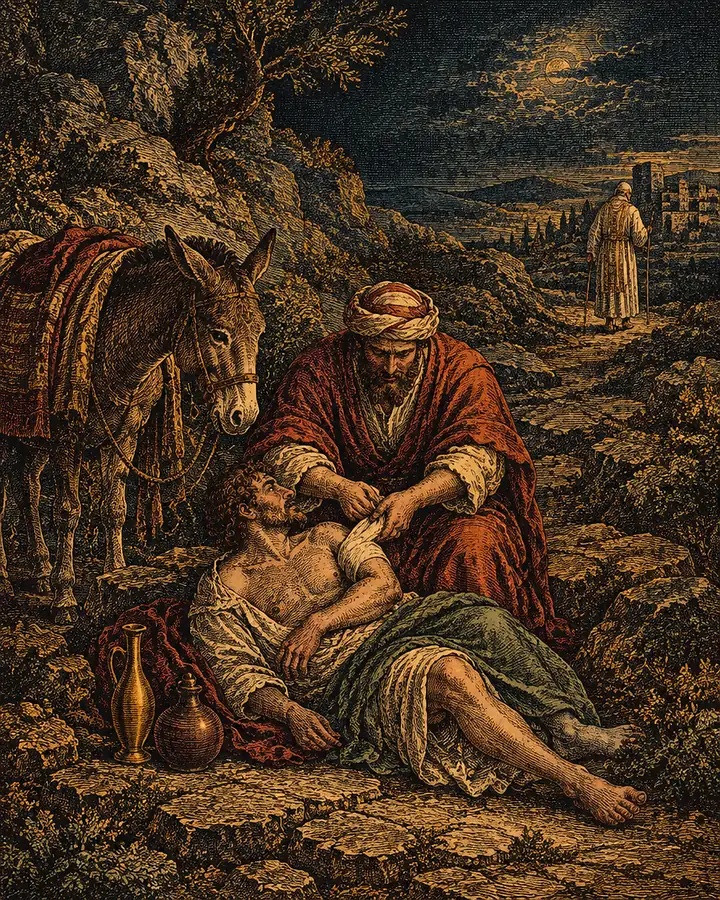
Which now of these three, thinkest thou, was neighbour unto him that fell among the thieves?Luke 10:36
Go deeper: the physical preparation checklist, neighbours and a family plan.
Common questions
Are natural disasters God's judgment?
The Bible records judgments that God announced beforehand through his prophets, such as the flood and Sodom. But Jesus refused to say that people killed in a disaster were worse sinners than others (Luke 13:1-5), and Job and John 9 show that suffering is not proof of sin. No one today can say that a particular storm is a judgment on the people it struck.
What happened at the tower of Siloam?
Jesus mentions a tower in Siloam, in Jerusalem, that fell and killed eighteen people (Luke 13:4). He used it to teach that the victims were not worse sinners than anyone else, and that everyone needs to repent, because life can end without warning.
Why does God allow natural disasters?
Scripture says creation itself "groaneth and travaileth in pain" since the fall (Romans 8:22), waiting to be set free when God makes all things new (Revelation 21:1-5). God has not explained every disaster, as the book of Job shows, but he has shown his heart in Christ, who wept at a friend's grave (John 11:35) and promises to wipe away every tear.
How should Christians respond to a disaster?
With grief, prayer and practical help: weep with those who weep (Romans 12:15), give and volunteer, and never celebrate anyone's suffering. Jesus rebuked his disciples when they wanted fire from heaven on a village (Luke 9:54-56).
Are earthquakes a sign of the end times?
Jesus listed "earthquakes, in divers places" among "the beginning of sorrows" (Matthew 24:7-8). Earthquakes have shaken every century, so they are a call to be ready rather than a clock. Our End Times section sets out the signs as believers read them, without setting a date.
Sources and editorial method
Research and editorial references used for this page include:
- BibleGateway: Luke 13:1-5 (KJV) - Quoted on this page in the King James Version.
- BibleGateway: Deuteronomy 18:22 (KJV) - Quoted on this page in the King James Version.
- BibleGateway: Job 1 (KJV) - Quoted on this page in the King James Version.
- BibleGateway: Job 42:7 (KJV) - Quoted on this page in the King James Version.
- BibleGateway: John 9:1-3 (KJV) - Quoted on this page in the King James Version.
- BibleGateway: Matthew 5:45 (KJV) - Quoted on this page in the King James Version.
- BibleGateway: Romans 8:22 (KJV) - Quoted on this page in the King James Version.
- BibleGateway: Matthew 24:7-8 (KJV) - Quoted on this page in the King James Version.
- BibleGateway: 1 Kings 19:11-12 (KJV) - Quoted on this page in the King James Version.
- BibleGateway: Mark 4:39 (KJV) - Quoted on this page in the King James Version.
- BibleGateway: Romans 12:15 (KJV) - Quoted on this page in the King James Version.
- BibleGateway: Luke 9:51-56 (KJV) - Quoted on this page in the King James Version.
- BibleGateway: Ezekiel 33:11 (KJV) - Quoted on this page in the King James Version.
- BibleGateway: Luke 10:30-37 (KJV) - Quoted on this page in the King James Version.
- BibleGateway: Genesis 9:13 (KJV) - Quoted on this page in the King James Version.
- BibleGateway: Revelation 21:1-5 (KJV) - Quoted on this page in the King James Version.
- BibleGateway: John 11:35 (KJV) - Quoted on this page in the King James Version.
Scripture is quoted from the King James Version. The few present-day facts were checked in November 2026. These pages teach from Scripture: they set no date, name no living person as a sign, call no disaster a verdict on its victims, and blame no people for the world's troubles. The paintings are illustrations made for The Great Almanac with AI image tools, in the house's engraved style.

