
Astrological timing
Transit Window
Direct answer
There is no single universal window for a transit. Its duration depends on the moving planet’s speed, aspect angle, target motion, selected orb, and retrograde loops. Publish the orb and all exact passes so the date range can be reproduced.
A transit window is the span during which a moving planet remains within a chosen orb of an aspect to a natal or other reference point. It begins at orb entry, peaks at exactness, and ends when the bodies separate beyond that orb.
Quick facts
| Phase | Meaning |
|---|---|
| Orb entry | Angular distance first becomes equal to or smaller than the declared orb. |
| Applying | The aspect error is shrinking toward exactness. |
| Exact pass | The angular relationship reaches the specified aspect angle. |
| Separating | The aspect error grows after exactness. |
| Orb exit | Angular distance moves beyond the declared orb. |
Transit Window means the period during which a transit is close enough to matter.
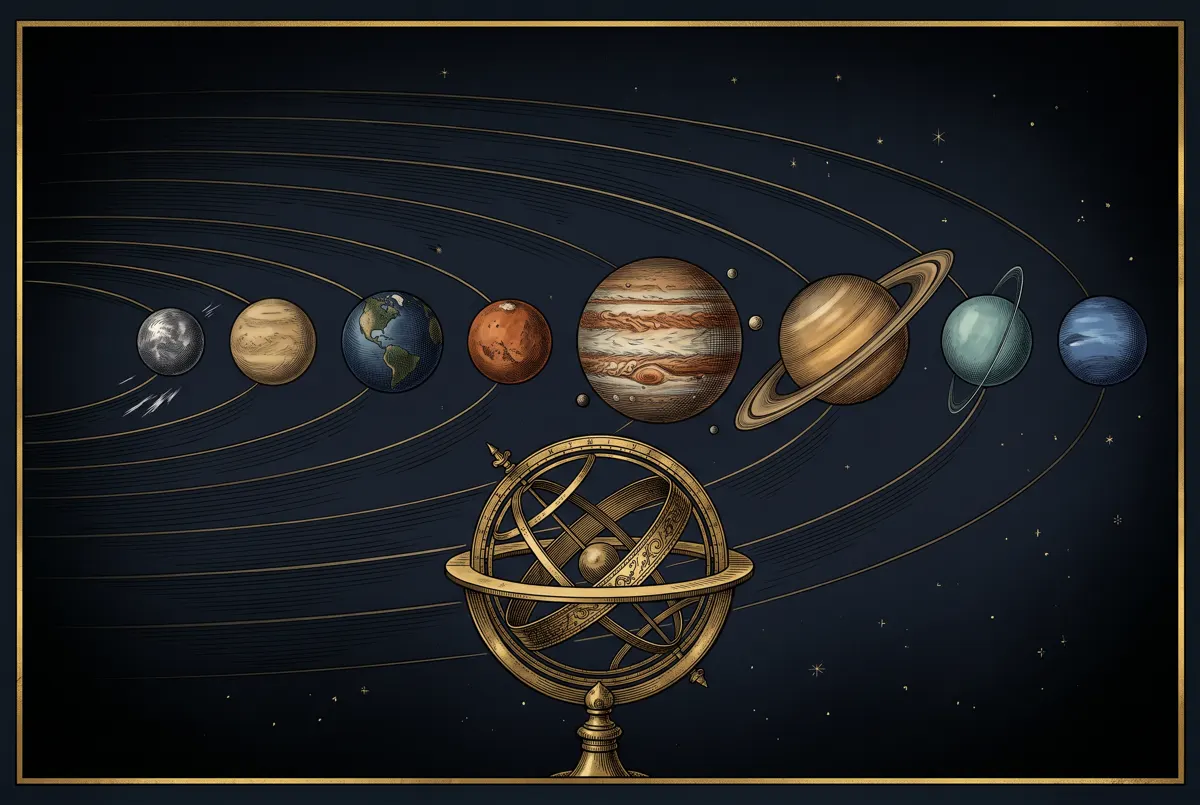
The orbit map distinguishes physical bodies, calculated points, and symbolic cycles where possible.
What does your own chart say about you?
Choose love, work or purpose for a personal insight and a useful next step. Your reading uses your own birth details.
Walk through Alex’s whole example first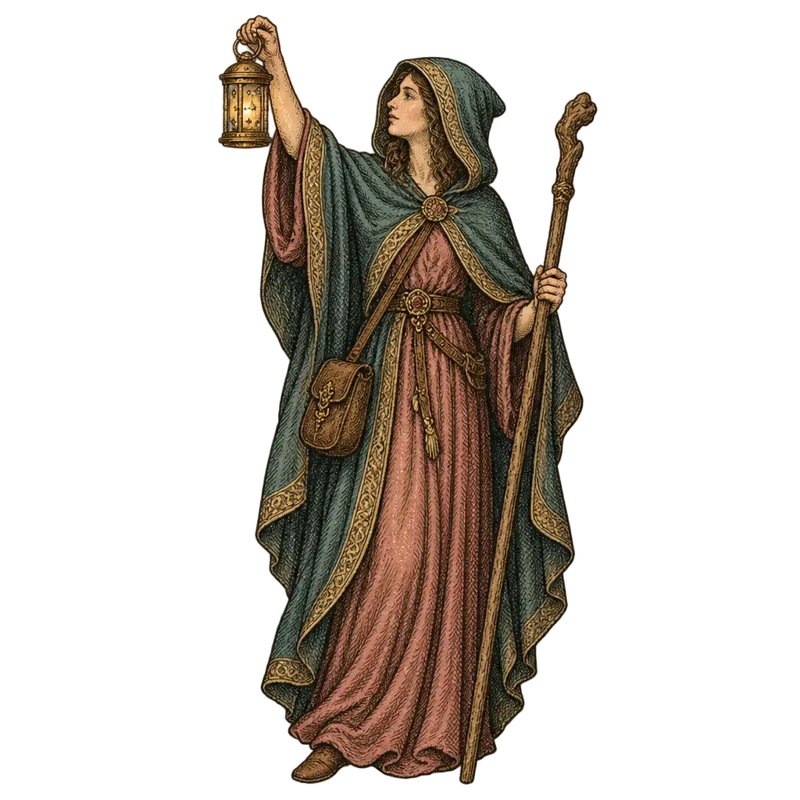
 The Road of AgesSee the turning points of your whole life, from your birth date
Free first look
The Road of AgesSee the turning points of your whole life, from your birth date
Free first look
Prefer to explore first?
 The Road of AgesThe turning points of your whole life, from your own chart
Walk my road
The Road of AgesThe turning points of your whole life, from your own chart
Walk my road
A window is a rule, not an extra celestial event
The exact aspect is an astronomical geometry calculated at a moment; the surrounding window is an interpretive convention. If Saturn is approaching a square to a natal Sun and the chosen orb is two degrees, the window opens when the aspect error falls to two degrees and closes after the final relevant pass when it exceeds two degrees. Choosing three degrees creates a longer window. Neither boundary is visible in space as a new event, so a calendar should never present an undeclared orb as objective fact.
A one-minute story
The Wandering Stars
How the moving planets were watched, named and found, and what a transit is.

How to calculate entry, exactness, and exit
Convert both bodies to longitudes, calculate the signed angular relationship appropriate to the aspect, and solve across time for the chosen error thresholds. Daily samples may miss a fast lunar pass, while linear interpolation can fail near a station. Reliable software searches iteratively at sufficiently small intervals and handles the 0°/360° boundary. Note whether the target is fixed at its natal longitude or is also moving, as in transit-to-transit work. Report dates with time zone, zodiac, ephemeris, and precision appropriate to the input birth data.
Why one transit can create several windows or one long arc
Retrograde motion may produce a direct pass, retrograde pass, and final direct pass across the same natal degree. Depending on speed and orb, the planet may leave orb between passes, creating separate windows, or remain within orb through the entire loop. List each entry, exact hit, station, and exit rather than choosing only the most dramatic date. Astrologers often read the sequence as introduction, review, and integration, but that narrative is symbolic and should be checked against events rather than imposed retrospectively.
Choosing orbs and using windows responsibly
Slow outer-planet transits are often given wider orbs than brief minor aspects, but schools differ. A wider range offers context while increasing the chance that ordinary events seem to fit; a tighter range improves timing specificity while potentially missing gradual processes. State one consistent policy and distinguish a background period from exact peaks. A transit window cannot guarantee marriage, crisis, death, profit, or any other event. Use it to schedule reflection and observe themes, while basing consequential decisions on evidence, consent, resources, and qualified advice.
Sources and editorial method
Research and editorial references used for this page include:
- Astrodienst Astrowiki: Transit - Reference overview of transit comparison and astrological timing.
- NASA JPL: Horizons system manual - Technical source for reproducible time-dependent positions and coordinate settings.
These references support the factual, historical, textual, or interpretive claims on this page. Interpretive traditions are identified as such, and factual claims are kept separate from symbolic claims.
Related reading
Track this timing window
Transit Window in a book is one thing; Transit Window in your own birth chart is your life. The Oracle casts your real chart and tells you what it means for your love, your work, and your year ahead, in conversation, free.
Speak with the OracleThe Cosmic Codex reads a whole year of transits against your own chart, Transit Window included where it touches your love, your work, your timing. Open the Cosmic Codex
More in Transits & Cycles
- Waxing Moon
- Eclipse Portal
- Jupiter Cycle
- Mars Cycle
- Outer Planet Transit
- Pre-Shadow Period
- Saturn Cycle
- Synodic Return
From the reference page to your own chart
Every word here
is in your own chart.
- Your chart and numbers, read for you in about a minute
- Ask the Oracle anything about them
- Every personal tool and daily guidance
Free reading, no card needed. Optional membership: payment details required, 7 days free, then $12/month. Cancel before it renews and you pay nothing.
Common questions
How long does a transit window last?
From hours for fast bodies and tight orbs to months or longer for slow planets with retrograde passes. Duration must be calculated, not assigned from a generic table.
Is the exact transit always the strongest day?
Many astrologers prioritize exactness, but lived events may cluster near stations, triggers from faster bodies, or contextual dates. Symbolic intensity is not a measurable physical quantity.
Should separate retrograde passes be combined?
Only if the planet remains inside the declared orb. Otherwise show distinct windows while noting that they belong to one larger transit series.