
Zecharia Sitchin
1920 to 2010
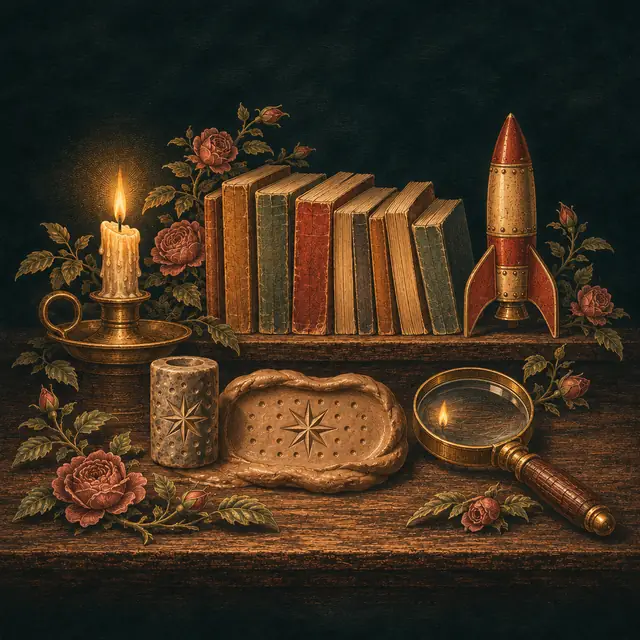
Who was Zecharia Sitchin, and what is truly known of them?
What is known
Writer born at Baku and raised in Palestine under the British mandate, who took a degree in economic history in London, worked as a journalist in Israel and from 1952 as a shipping executive in New York. The 12th Planet (1976) and the six books after it claim that Sumerian tablets record a people from a further planet, Nibiru, who came to mine gold and bred mankind as labourers. The books sold in the millions and were translated into more than twenty languages. He had no training in Assyriology and held no academic post in it.
The teaching
Taught from his Earth Chronicles, from The 12th Planet (1976) to The End of Days (2007), read beside the tablets they cite.
The story at the centre
Sitchin's books tell one long story. A twelfth member of the solar system, Nibiru, travels a long orbit of thirty-six hundred years; in the beginning it struck a world called Tiamat, and from the wreck came the earth and the belt of broken rock. From Nibiru came the Anunnaki, who landed in Mesopotamia hundreds of thousands of years ago to mine gold, made the first humans as workers by joining their own genes to those of an early human, and were remembered as gods. That centre of the story, and what the tablets themselves tell, are taught on the lost worlds art's branch Ancient astronauts. What follows is the rest of what he built on it, each part with the plain fact beside it.
Twelve lights
He counts twelve: the sun, the moon, the nine planets known when he wrote, and Nibiru. He finds the number on an Akkadian cylinder seal in Berlin, which shows a star ringed by eleven dots, and reads it as a picture of the solar system drawn by people who knew of a planet we do not.
The plain fact: the figure at the centre of the seal is a star, drawn as stars are drawn on such seals and not as the sun is drawn, and the peoples of Mesopotamia counted seven moving lights in the sky, the sun and the moon with the five planets the eye can see.
Words read as rockets
His method is to read old words in new senses. The Sumerian mu and the Hebrew shem, which he takes to be one word, he reads as a sky vehicle, so that the builders of Babel, who wished to make themselves a shem, were building a tower to launch one; the Anunnaki are, in his reading, those who came down from heaven to earth, and the Nefilim of Genesis the same visitors.
The plain fact: mu in Sumerian means name, and also year; shem in Hebrew means name, and the builders of Babel wished to make a name for themselves. The Anunnaki are the great gods of the Sumerian pantheon, the offspring of An, the sky, and in thousands of texts these words keep their ordinary meanings.
The stairway to heaven
His second book makes the quest for immortality a journey to a spaceport. The pharaohs' hope of rising after death to the stars, Gilgamesh's search for the plant of life and the tales of a land of the living are, in his reading, memories of a real place: a landing field the Anunnaki built in the Sinai after the flood, approached along a corridor marked by Mount Ararat and by the pyramids of Giza, which were raised as beacons. He held too that the painted marks naming Khufu in the chambers above the King's Chamber were forged by the explorer who opened them in 1837.
The plain fact: the Pyramid Texts and the epic tell of the journey of the soul and of a hero's grief in the language of their own religion. The marks at Giza are quarry marks left by the work gangs, some of them in places no one could reach once the blocks were set, and papyri found at Wadi al-Jarf record the shipping of limestone for Khufu's pyramid in his own reign.
The wars of the gods
The third book reads the myths and epics of the Near East as the record of wars among the Anunnaki: the line of Enki against the line of Enlil, wars over the pyramids, the ambitions of Marduk. About 2024 before Christ, he wrote, the gods Nergal and Ninurta loosed weapons of terrible power to destroy the spaceport in Sinai and the cities of the plain, and the evil wind that the laments of Sumer describe was the cloud of that blast, blowing east and laying Sumer waste.
The plain fact: the Lament for Ur tells of the fall of the city to enemies from the east, which it pictures as a storm sent by Enlil; the burning of Sodom and Gomorrah belongs to Genesis; and no trace of such weapons lies in the ground of either land.
The end of days
His later books carry the story into science and the future. Genesis Revisited sets the findings of the space probes and of genetics beside the tablets and claims that they bear the tablets out; his last book reads the ages of the zodiac as the clock of the Anunnaki's comings and goings, and looks for their return at the close of the present age. The plain fact: the probes found nothing that the tablets foretold, and the genes of our species tell of a long descent in Africa with no hand of engineers in it.
What the story takes away
The deepest fault in the story lies in what it takes away. Every wonder it gives to visitors, the pyramids, the cities, writing and law, is a work the peoples of Sumer, Babylon and Egypt made for themselves, and their own tablets and inscriptions name the kings who built and the scribes who wrote. The lost worlds art's branch How the monuments were built teaches how it was done.
Orders and memberships
No order or lodge is documented. He held no post in a university or museum and belonged to no learned society of Assyriologists; his following was one of readers.
The legend
That his translations are accepted. Scholars of cuneiform reject them: the words he reads as rockets and spacemen have ordinary, attested meanings, the seal he took for a map of the planets shows a star among dots, and in Babylonian texts Nibiru is a name tied to the god Marduk and usually to Jupiter. The scare that Nibiru would strike in 2012 came from other writers. Critics add that such theories take from ancient peoples the credit for their own works.
Their works
- The 12th PlanetBook, 1976
His first book, claiming that Sumerian tablets record a people from a further planet, Nibiru, who came to mine gold and bred mankind as labourers. It sold in the millions. Scholars of cuneiform reject his translations.
Ask the Oracle about it - The Stairway to HeavenBook, 1980
The second of his Earth Chronicles, claiming that ancient monuments were landing sites for the visitors from Nibiru. It builds on the first book. Its claims are rejected by archaeologists.
Ask the Oracle about it - The Wars of Gods and MenBook, 1985
The third of his Earth Chronicles, reading the myths and epics of the ancient Near East as records of wars fought among the visitors from Nibiru. It is his own telling of the old stories. Scholars of the period reject it.
Ask the Oracle about it - Genesis RevisitedBook, 1990
A book setting his theories beside the space science and genetics of his day, and claiming that modern findings bear out what he read in the tablets. Scientists do not agree. It was among the most read of his books.
Ask the Oracle about it - The End of DaysBook, 2007
The last book of his Earth Chronicles, on what he described as the coming return of the visitors from Nibiru and the close of an age. It was written near the end of his life. Its claims are his own and have no support from scholars.
Ask the Oracle about it
How the house tells a life
This life is told from the record, with what is documented, what is legend and what was forged kept apart. A membership in an order is stated only where documents show it. A person’s chart explains none of their deeds.
The arts it feeds
Lives near it in time
Lives and legends
Dion FortuneManly P. HallIsrael RegardieFranz BardonHelen SchucmanJack ParsonsRobert MonroePierre PlantardDoreen ValienteFulcanelliJane RobertsAnton LaVeyThe whole tree

