
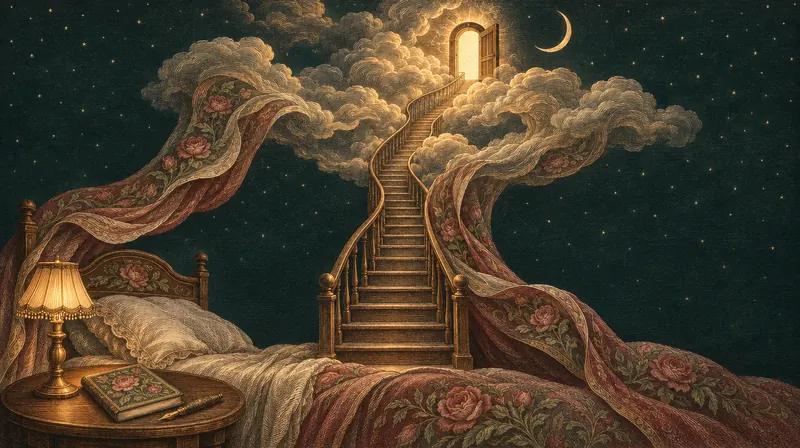
How do I read a dream beside the Moon and my chart?
What it is
The house sets each dream beside the Moon of the night it came: its phase, the sign it was in, and the dreamer's own Moon sign. In astrology the Moon stands for feeling, memory, the body and the night. Used this way the Moon is a filing system and a prompt. Over some months a dreamer can see whether their vivid dreams gather near the full Moon, or whether a theme returns when the Moon is in one sign.
The teaching
As the astrology of the Moon, with the medieval lunaries teaches it.
The Moon in astrology
In astrology the Moon is the light of the night and the planet of the inner life: feeling, mood, memory, instinct, habit, the rhythms of the body, home, the mother and the past. Where the Sun shows the self one sets out to become, the Moon shows the self one returns to, what one needs in order to feel safe and how one reacts before thinking. By old association it is also the planet of sleep and dreams. It rules Cancer and is exalted in Taurus; it is in its detriment in Capricorn and in its fall in Scorpio.
The lunaries' count
The dream lunaries read a dream by the day of the Moon on which it came. Their reckoning is simple and can still be kept: the count begins with the new Moon, and the days run on from the first to the thirtieth, after which the next new Moon begins it again. Each day had its verdict, whether a dream dreamt then would come true, and how soon. The house keeps the count, which tells a dreamer where in the Moon's month a dream fell, and leaves the verdicts behind: a dream is read here as a mirror, never as a forecast.
The waxing Moon
Astrologers who follow Dane Rudhyar divide the Moon's monthly cycle into eight phases, read as a cycle of growth from seed to harvest and back to seed. The new Moon, when Sun and Moon are joined and the Moon is dark, is a beginning: impulse, instinct, something not yet seen. A dream of the new Moon can be read for what is starting in one's life before one knows it.
The crescent, when the first thin light appears, is the effort of breaking away from the past and gathering strength. Dreams of the crescent can be read for what is struggling to grow, and for what old habit is pulling it back.
The first quarter, the half Moon waxing, is a crisis in action, a time of decision and building. Its dreams can be read for what one is pushing against and what one is setting out to build.
The gibbous Moon, swelling toward full, is a time of refining, analysing and preparing. Its dreams can be read for what is being perfected, or worried over, as something nears completion.
The waning Moon
The full Moon, opposite the Sun and wholly lit, is fulfilment and illumination: what was begun comes to light, often in relationship with others, and feelings run high. Dreams at the full can be read for what is being seen clearly, or too clearly, at last.
The disseminating Moon, just past full, is the time of sharing what has been learned and passing it on. Its dreams can be read for what one has to give, to teach or to say.
The last quarter, the half Moon waning, is a crisis in consciousness, a turning away from old forms toward a new view of things. Its dreams can be read for what one is outgrowing.
The balsamic Moon, the last thin crescent before the dark, is release and ending, and also the seed of the next cycle. Its dreams can be read for what is being let go, and for what is quietly waiting to begin.
The Moon in the fire signs
In Aries the Moon is quick, warm and impatient: feelings flare and pass, needs are met by doing, and comfort comes from action and from being first. A dream on a night when the Moon is in Aries can be read with the question: where am I impatient, ready to fight, or eager to begin?
In Leo the Moon is generous, proud and warm-hearted: it needs to be seen, appreciated and loved, and feels safe in loyalty and in play. The question for such a night: where do I want to be seen, or fear being overlooked?
In Sagittarius the Moon is restless, hopeful and frank: it needs room, movement and meaning, and feels safe on the road and among ideas. The question for such a night: where do I want freedom, a wider view, or a truth spoken?
The Moon in the earth signs
In Taurus, its exaltation, the Moon is steady, patient and sensual: it needs comfort, security and the pleasures of the body, and holds its feelings long. The question for such a night: what do I want to keep, or fear to lose, or need to rest in?
In Virgo the Moon is careful, modest and useful: it feels safe when things are in order and when it can help, and it is prone to worry. The question for such a night: what am I trying to put right, or anxious of getting wrong?
In Capricorn, its detriment, the Moon is reserved and dutiful: it holds its feelings in check, seeks security in work, structure and achievement, and is slow to show need. The question for such a night: where am I carrying a responsibility, or holding back a feeling?
The Moon in the air signs
In Gemini the Moon is curious, changeable and talkative: it feels by thinking and speaking, needs variety and company, and its moods turn quickly. The question for such a night: what am I turning over in my mind, or wanting to say?
In Libra the Moon seeks harmony, fairness and partnership: it feels safe in good company and in balance, and shrinks from conflict. The question for such a night: where am I seeking peace, or weighing another's needs against my own?
In Aquarius the Moon is cool, independent and humane: it needs freedom and friendship, sets ideals above moods, and can stand back from its own feelings. The question for such a night: where do I want to stand apart, or to belong to something larger?
The Moon in the water signs
In Cancer, its own sign, the Moon is at home: tender, protective, rooted in family, memory and the past, with feelings that run deep and need a shell. The question for such a night: what does the dream say about home, family, or what I need to feel safe?
In Scorpio, its fall, the Moon is intense, private and loyal: its feelings are strong and hidden, slow to forgive, and drawn toward what is deepest and most changing. The question for such a night: what am I holding in, or ready to let go so that something can change?
In Pisces the Moon is dreamy, compassionate and open: it absorbs the moods of others, lives easily in imagination, and longs at times to escape. The question for such a night: what am I feeling on someone else's behalf, or longing to escape into?
Your own Moon
The dreamer's own Moon sign, the sign the Moon held at their birth, describes their emotional nature in the same terms, and it is the background against which every Moon of the night is read. A person with the Moon in Cancer may find houses and family in their dreams in any month; a person with the Moon in Aquarius may dream often of crowds and causes. Once a month the Moon returns to the place it held at one's birth, and astrologers watch that day, the lunar return, as a time when feelings come to the surface.
Using the Moon
The house sets beside each dream the Moon's phase and sign for that night, and the dreamer's own Moon. Over months a dreamer can count whether vivid dreams crowd near the full Moon, or whether a theme returns when the Moon passes one sign. The Moon here is a filing system and a set of questions. It forecasts nothing, and a reading that does not fit is set aside.
How it is practised
Date every entry in the dream notebook and add the Moon phase and the Moon's sign for that night; the house shows both. After two or three months, read back and count: which phases are crowded, which signs? Then use the sign as a question. If the Moon was in Cancer, did the dream touch home or family? If it does not fit, leave it. This sorts dreams and offers prompts. It predicts nothing.
Where it comes from
Tying dreams to the Moon is an old habit. Medieval dream books called lunaries went through the days of the lunar month one by one and said whether a dream on that day would prove true, soon or late. They circulated across Europe in Latin and in the common tongues, often beside the dream book that went under the name of Daniel. Astrology gave the Moon rule over the changing states of the mind, and almanacs carried the idea into modern times.
What is known, and what is not
On sleep there is some evidence. A small laboratory study in Basel in 2013 found that volunteers slept about twenty minutes less, and less deeply, around the full Moon, and a field study in 2021 found sleep starting later on the nights before it. Other studies found no effect. Nothing reliable links what a person dreams to the Moon's phase or sign: that part is the symbolism of astrology.
Its words
- Moon Phase
- The Moon's place in its monthly cycle from new to full and back, which the house notes beside each dream as a way of sorting them.
Ask the Oracle further
Is a vivid dream more likely near the full Moon, or is that only a story?What might my Moon sign say about what I meet in my dreams?
Before you practise
A dream is read here as a mirror of your waking life, never as a prediction. You are the judge of what fits. If nightmares come most nights, or replay something that happened to you, a doctor or therapist can help.
Its other branches
Keeping your dreamsImage and feelingRecurring dreamsJung’s wayNightmaresThe whole artSearch the tree

