
The Rapture
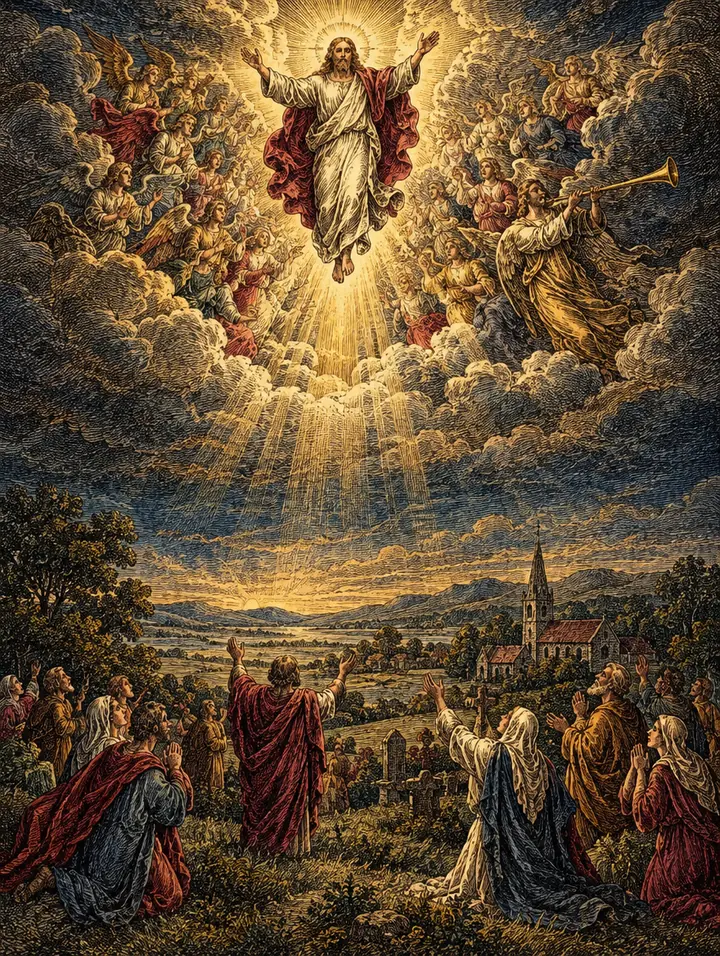
Paul told grieving believers in Thessalonica that the dead in Christ would rise and the living would be "caught up together with them in the clouds, to meet the Lord in the air". Christians agree that this is coming. They differ on when. Here is what Scripture says, every major view, and why no one can name the day.
No dates set: "of that day and hour knoweth no man" (Matthew 24:36).
On this page 6 parts · 5 min
Then we which are alive and remain shall be caught up together with them in the clouds, to meet the Lord in the air: and so shall we ever be with the Lord.
1 Thessalonians 4:17, KJV
What Paul wrote
The church in Thessalonica was young and grieving: some of its members had died, and the living feared the dead would miss the Lord's coming. Paul wrote, "I would not have you to be ignorant, brethren, concerning them which are asleep, that ye sorrow not, even as others which have no hope" (1 Thessalonians 4:13).
"For the Lord himself shall descend from heaven with a shout, with the voice of the archangel, and with the trump of God: and the dead in Christ shall rise first: Then we which are alive and remain shall be caught up together with them in the clouds, to meet the Lord in the air: and so shall we ever be with the Lord. Wherefore comfort one another with these words" (1 Thessalonians 4:16-18).
The word "rapture" is not in the English Bible. It comes from the Latin rapiemur, "we shall be caught up", in the old Latin Bible's rendering of verse 17; the Greek verb, harpazo, means to seize or snatch away. Paul describes the same moment in 1 Corinthians: "In a moment, in the twinkling of an eye, at the last trump: for the trumpet shall sound, and the dead shall be raised incorruptible, and we shall be changed" (1 Corinthians 15:52).
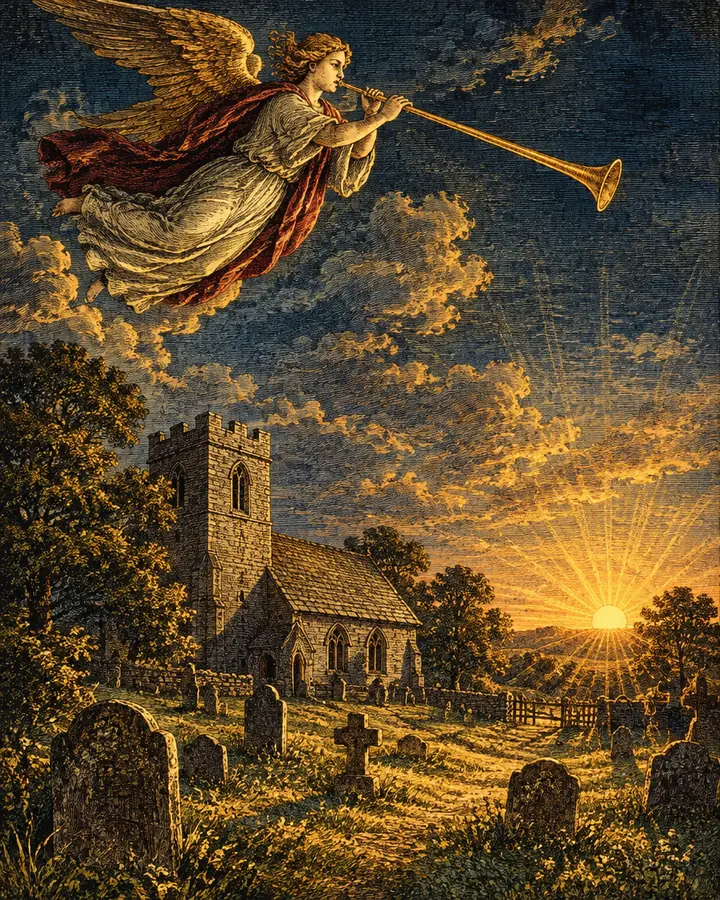
for the trumpet shall sound, and the dead shall be raised incorruptible, and we shall be changed1 Corinthians 15:52
When: four views
Before the tribulation
Christ comes for his church before a seven-year tribulation, then returns with it at the end. Widely taught since J. N. Darby in the 1830s and the Scofield Reference Bible, and popularized by the Left Behind novels.
In the middle
The church is caught up halfway through the tribulation, before its worst half, often tied to the abomination of desolation.
Before the wrath
The church endures the great tribulation but is taken before God's wrath is poured out in the trumpets and bowls of Revelation.
After the tribulation
The church passes through the tribulation, and Christ gathers his elect at his one visible return, "immediately after the tribulation of those days" (Matthew 24:29-31). Many early church fathers read it this way, and it is the order the Almanac's timeline follows.
Every view holds that Christ returns, that the dead in Christ rise, that the living are changed, and that no one knows the day. The difference is the order.
Go deeper: the prophetic timeline and its views.
Opening the members’ pages…
Members read on
Read the rest of The Rapture
Your 7 free days open every page of End Times Preparation, and the whole Almanac with them.
Still to read on this page About 2 min
- Why the Almanac reads it after the tribulation
- Three passages side by side
- How to live while we wait
- Your birth details, about a minute
- Your 7 free days begin
- Back here, every page open
$0 today, then $12/month after 7 days. Cancel anytime.
Already a member? Log in
Why the Almanac reads it after the tribulation
Three passages, read side by side, set the order. Jesus places the gathering "after the tribulation of those days", with "a great sound of a trumpet" (Matthew 24:29-31). Paul places the resurrection "at the last trump" (1 Corinthians 15:52), and tells the Thessalonians that the day of Christ does not come "except there come a falling away first, and that man of sin be revealed" (2 Thessalonians 2:3). And John sees "the first resurrection" after the beast and his image (Revelation 20:4-5).
If the trumpet of Matthew 24 is the last trump, and the resurrection follows the man of sin and the beast, then the gathering comes at the end of the tribulation, not before it. Those who hold the other views answer these passages carefully, and many godly teachers disagree. What matters for every believer is the same: be ready to stand, and do not build your faith on an escape before the hard days.
That last point is practical. A believer who expects to be gone before any trouble can be shaken badly when trouble comes. Jesus prepared his disciples for the opposite: "In the world ye shall have tribulation: but be of good cheer; I have overcome the world" (John 16:33).
How to live while we wait
Comfort one another
Paul ends his passage with its purpose: "Wherefore comfort one another with these words" (1 Thessalonians 4:18). The hope is given for grief, not for fear.
Look for the blessed hope
"Looking for that blessed hope, and the glorious appearing of the great God and our Saviour Jesus Christ" (Titus 2:13).
Be found faithful
The blessed servant is the one his lord finds "so doing" when he comes (Matthew 24:46): at work, honest and kind.
Stay awake and sober
"Therefore let us not sleep, as do others; but let us watch and be sober" (1 Thessalonians 5:6).
Purify your hope
"And every man that hath this hope in him purifieth himself, even as he is pure" (1 John 3:3).
Ignore the date-setters
Every date ever announced for it has failed, from 1844 to 1988 to 2011. "But of that day and hour knoweth no man" (Matthew 24:36).
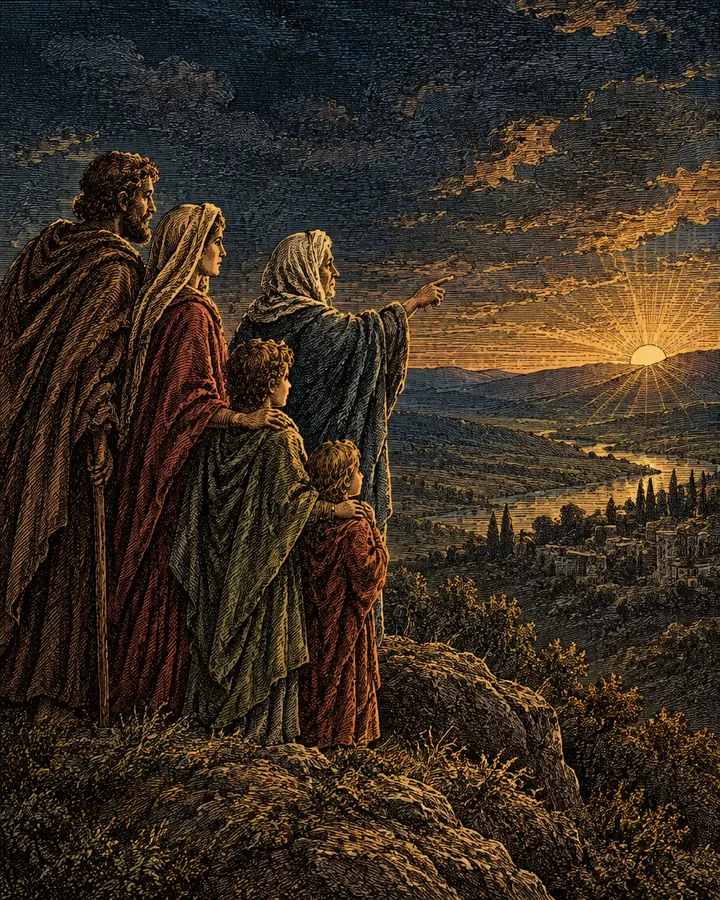
Looking for that blessed hope, and the glorious appearing of the great God and our Saviour Jesus ChristTitus 2:13
Common questions
What is the rapture in the Bible?
It is the moment Paul describes in 1 Thessalonians 4:16-17, when Christ descends, the dead in Christ rise, and living believers are "caught up together with them in the clouds, to meet the Lord in the air". The word comes from the Latin rapiemur, "we shall be caught up".
Is the rapture in the Bible?
The word is not in English Bibles, but the event is: 1 Thessalonians 4:16-17 and 1 Corinthians 15:51-52 describe believers caught up and changed "in the twinkling of an eye, at the last trump". Christians debate its timing, not its reality.
Does the rapture come before the tribulation?
Christians are divided. Pre-tribulation teaching says yes; mid-tribulation, pre-wrath and post-tribulation teaching say no. Jesus' own order in Matthew 24:29-31 places the gathering of his elect after the tribulation, and that is the reading the Almanac's timeline follows.
What is the last trump?
Paul says the dead are raised and the living changed "at the last trump" (1 Corinthians 15:52), and that the Lord descends "with the trump of God" (1 Thessalonians 4:16). Jesus says his angels gather the elect "with a great sound of a trumpet" after the tribulation (Matthew 24:31). Many readers take these as the same trumpet.
When is the rapture?
No one knows. Jesus said, "of that day and hour knoweth no man" (Matthew 24:36), and every date announced so far has failed. Scripture gives signs to watch and a call to be ready, never a date.
Sources and editorial method
Research and editorial references used for this page include:
- BibleGateway: 1 Thessalonians 4:13-18 (KJV) - Quoted on this page in the King James Version.
- BibleGateway: 1 Corinthians 15:51-52 (KJV) - Quoted on this page in the King James Version.
- BibleGateway: Matthew 24:29-46 (KJV) - Quoted on this page in the King James Version.
- BibleGateway: 2 Thessalonians 2:1-4 (KJV) - Quoted on this page in the King James Version.
- BibleGateway: Revelation 20:4-6 (KJV) - Quoted on this page in the King James Version.
- BibleGateway: John 16:33 (KJV) - Quoted on this page in the King James Version.
- BibleGateway: Titus 2:13 (KJV) - Quoted on this page in the King James Version.
- BibleGateway: 1 Thessalonians 5:6 (KJV) - Quoted on this page in the King James Version.
- BibleGateway: 1 John 3:3 (KJV) - Quoted on this page in the King James Version.
Scripture is quoted from the King James Version. Present-day facts were checked against current reporting in October 2026; where events are still unfolding, the page says what was known then. We describe how believers read the signs and never set a date. The paintings are illustrations made for The Great Almanac with AI image tools, in the house's engraved style.

