
The Antichrist
Few figures in Scripture draw more speculation, and few have been named more often by mistake. The Bible describes him in four places and names him in none. Here is what John, Paul, Daniel and Revelation say, why every guess so far has failed, and how believers are told to stand.
No dates set: "of that day and hour knoweth no man" (Matthew 24:36).
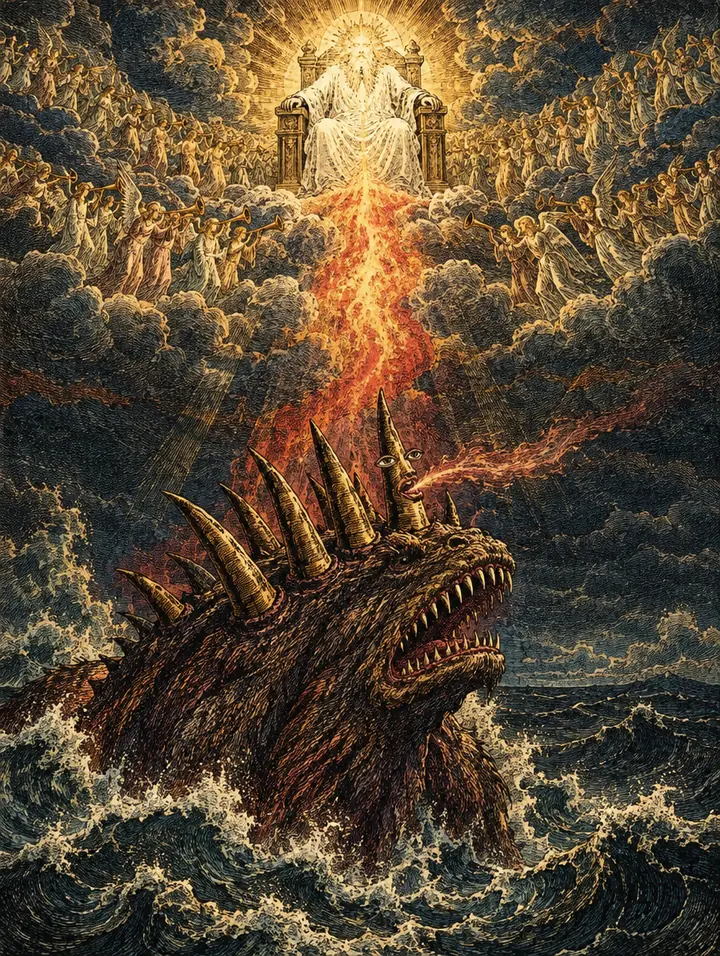
On this page 6 parts · 4 min
Little children, it is the last time: and as ye have heard that antichrist shall come, even now are there many antichrists; whereby we know that it is the last time.
1 John 2:18, KJV
Many antichrists: what John wrote
Only John uses the word, and only in his letters. "Who is a liar but he that denieth that Jesus is the Christ? He is antichrist, that denieth the Father and the Son" (1 John 2:22). "And every spirit that confesseth not that Jesus Christ is come in the flesh is not of God: and this is that spirit of antichrist, whereof ye have heard that it should come; and even now already is it in the world" (1 John 4:3).
The Greek anti means both against and in place of. An antichrist opposes Christ, or sets himself up as a substitute for him. John knew that believers expected one final antichrist, and he warned them that "even now are there many" (1 John 2:18): the spirit is already at work in every teaching that denies who Jesus is.
The man of sin: what Paul wrote
Paul gives the fullest portrait, without using John's word. The day of the Lord "shall not come, except there come a falling away first, and that man of sin be revealed, the son of perdition; Who opposeth and exalteth himself above all that is called God, or that is worshipped; so that he as God sitteth in the temple of God, shewing himself that he is God" (2 Thessalonians 2:3-4).
He comes "after the working of Satan with all power and signs and lying wonders" (2 Thessalonians 2:9), and something now "withholdeth" him until his time (2 Thessalonians 2:6-7). His end is already written: "whom the Lord shall consume with the spirit of his mouth, and shall destroy with the brightness of his coming" (2 Thessalonians 2:8).
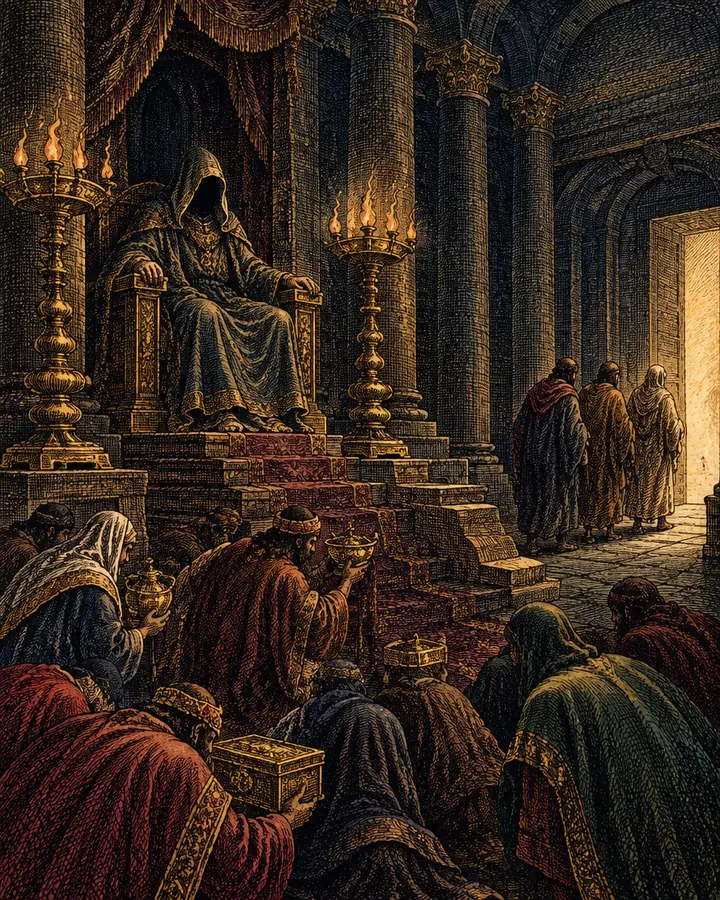
so that he as God sitteth in the temple of God, shewing himself that he is God2 Thessalonians 2:4
Opening the members’ pages…
Members read on
Read the rest of The Antichrist
Your 7 free days open every page of End Times Preparation, and the whole Almanac with them.
Still to read on this page About 2 min
- Daniel's little horn
- The beast from the sea
- The false prophet and the image
- Why no one should name him
- How to stand
- Your birth details, about a minute
- Your 7 free days begin
- Back here, every page open
$0 today, then $12/month after 7 days. Cancel anytime.
Already a member? Log in
The little horn and the beast
Daniel saw a fourth beast with ten horns, and among them "another little horn… and, behold, in this horn were eyes like the eyes of man, and a mouth speaking great things" (Daniel 7:8). "And he shall speak great words against the most High, and shall wear out the saints of the most High, and think to change times and laws" for "a time and times and the dividing of time" (Daniel 7:25). Then the judgment sits, "and they shall take away his dominion" (Daniel 7:26).
John saw a beast rise up out of the sea "having seven heads and ten horns" (Revelation 13:1), given "a mouth speaking great things and blasphemies" and power "to continue forty and two months" (Revelation 13:5), whom all the earth worships except those written in the Lamb's book of life (Revelation 13:8). A second beast, later called the false prophet (Revelation 19:20), makes an image of him and the mark without which no one may buy or sell (Revelation 13:11-17). Most readers take these passages as one final ruler seen from different sides.
Go deeper: the mark of the beast.
Why no one should name him
Through history believers have named the Antichrist with confidence: emperors, popes, conquerors, dictators and heads of state. Every one of them died, and the end did not come. Scripture never names him, and it gives no living person's name to guess. This site names no one, and teaches readers to be wary of anyone who does.
Test the spirits
"Believe not every spirit, but try the spirits whether they are of God" (1 John 4:1). The test is what a teacher says about Jesus Christ.
Expect deception, not a label
Paul warns of "signs and lying wonders" and "all deceivableness of unrighteousness" (2 Thessalonians 2:9-10). The danger is being deceived, not failing to guess a name.
Love the truth
Those deceived are the ones who "received not the love of the truth, that they might be saved" (2 Thessalonians 2:10). Hold to Scripture.
Refuse the worship
Like the three men before the golden image, the faithful refuse to bow, whatever it costs: "we will not serve thy gods" (Daniel 3:18).
Do not fear him
He is consumed "with the spirit of his mouth" (2 Thessalonians 2:8). The story belongs to the Lamb.
Keep yourself
"Little children, keep yourselves from idols" (1 John 5:21).
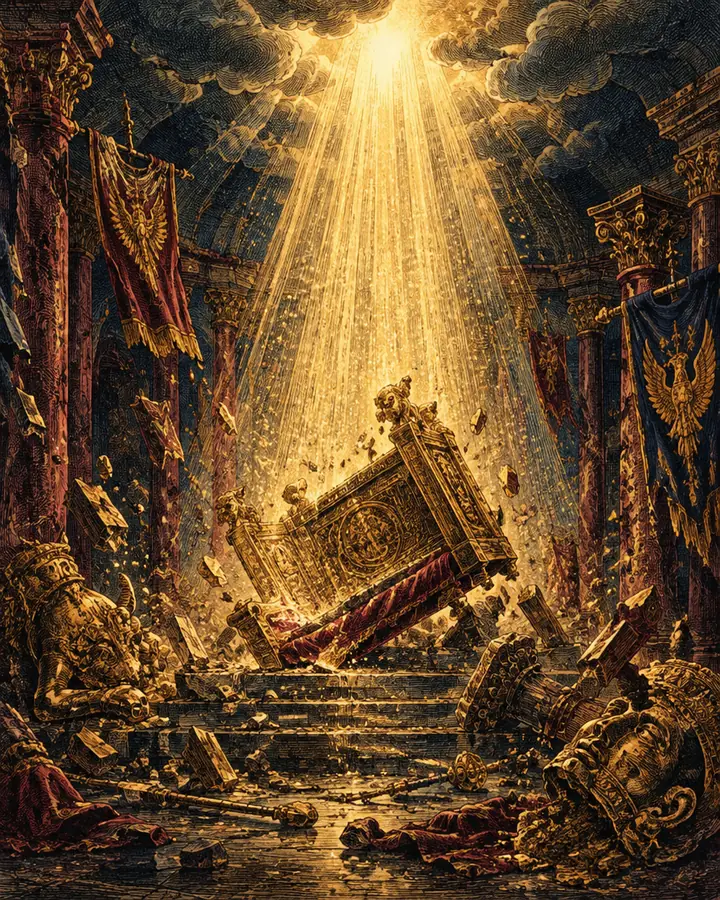
whom the Lord shall consume with the spirit of his mouth, and shall destroy with the brightness of his coming2 Thessalonians 2:8
Common questions
Who is the Antichrist in the Bible?
The Bible describes a final ruler who opposes God and demands worship: Paul's "man of sin" (2 Thessalonians 2:3-4), Daniel's "little horn" (Daniel 7:8, 25) and Revelation's beast from the sea (Revelation 13). John also says there are already "many antichrists": anyone who denies the Father and the Son (1 John 2:18, 22). Scripture does not name him.
Where is the word antichrist in the Bible?
Only in John's letters: 1 John 2:18, 2:22, 4:3 and 2 John 1:7. Paul's "man of sin" and Revelation's "beast" are other names most readers apply to the same figure.
What is the spirit of antichrist?
John calls it the spirit "that confesseth not that Jesus Christ is come in the flesh", already at work in his day (1 John 4:3). It is any teaching that denies who Jesus is, or puts something in his place.
What does "the son of perdition" mean?
It means one who belongs to destruction. Paul uses it of the man of sin (2 Thessalonians 2:3), and Jesus used it of Judas (John 17:12).
Is the Antichrist alive today?
No one can say. Paul says he is "revealed in his time" (2 Thessalonians 2:6), and every confident identification in history has proved wrong. The Almanac names no living person as the Antichrist.
Sources and editorial method
Research and editorial references used for this page include:
- BibleGateway: 1 John 2:18-22 (KJV) - Quoted on this page in the King James Version.
- BibleGateway: 1 John 4:1-3 (KJV) - Quoted on this page in the King James Version.
- BibleGateway: 1 John 5:21 (KJV) - Quoted on this page in the King James Version.
- BibleGateway: 2 John 1:7 (KJV) - Quoted on this page in the King James Version.
- BibleGateway: 2 Thessalonians 2 (KJV) - Quoted on this page in the King James Version.
- BibleGateway: Daniel 7 (KJV) - Quoted on this page in the King James Version.
- BibleGateway: Revelation 13 (KJV) - Quoted on this page in the King James Version.
- BibleGateway: Revelation 19:20 (KJV) - Quoted on this page in the King James Version.
- BibleGateway: Daniel 3:18 (KJV) - Quoted on this page in the King James Version.
- BibleGateway: John 17:12 (KJV) - Quoted on this page in the King James Version.
Scripture is quoted from the King James Version. Present-day facts were checked against current reporting in October 2026; where events are still unfolding, the page says what was known then. We describe how believers read the signs and never set a date. The paintings are illustrations made for The Great Almanac with AI image tools, in the house's engraved style.

