
Gog and Magog
Ezekiel saw a ruler called Gog lead a great army out of the far north against a people brought home to their land and living at rest, and saw God himself end the war on the mountains of Israel. Persia is on Ezekiel's list, and the war with Iran has sent many believers back to these chapters. Here is what they say, how believers read them, and what they never say.
No dates set: "of that day and hour knoweth no man" (Matthew 24:36).
On this page 6 parts · 6 min
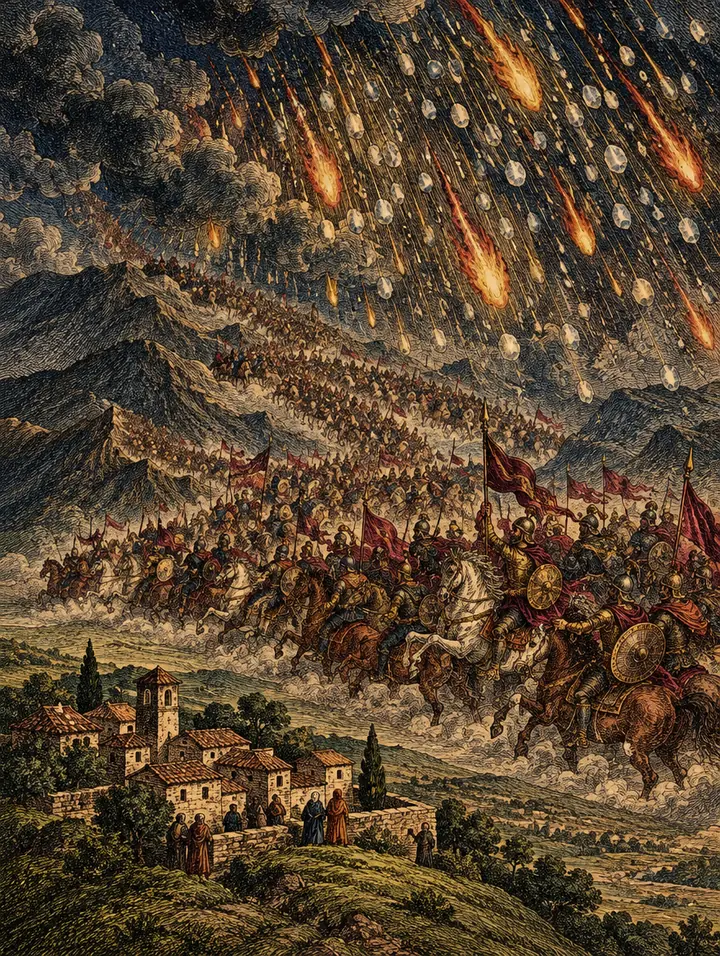
So will I make my holy name known in the midst of my people Israel; and I will not let them pollute my holy name any more: and the heathen shall know that I am the LORD, the Holy One in Israel.
Ezekiel 39:7, KJV
Who are Gog and Magog?
"Son of man, set thy face against Gog, the land of Magog, the chief prince of Meshech and Tubal, and prophesy against him" (Ezekiel 38:2). Gog is a ruler, named nowhere else in the prophets; Magog is his land, first named among the sons of Japheth beside Meshech and Tubal (Genesis 10:2). Ancient writers placed Magog in the far north, among the peoples beyond the Black Sea whom the Greeks called Scythians.
Where the King James Version reads "the chief prince", the Greek Septuagint took the Hebrew word rosh as a name, Ros, and many teachers have heard Russia in it. Most Hebrew scholars read it as "chief", its common meaning. What the text makes plain is the direction: Gog comes "from thy place out of the north parts… all of them riding upon horses, a great company, and a mighty army" (Ezekiel 38:15).
With him Ezekiel names a coalition from every side of the land:
Magog, Meshech and Tubal
Gog's own land and peoples, out of "the north parts" (Ezekiel 38:2, 15).
Persia
The old name of Iran, east of the land (Ezekiel 38:5).
Ethiopia and Libya
In Hebrew Cush and Put, the lands south and west of Egypt (Ezekiel 38:5).
Gomer and Togarmah
"Of the north quarters", often placed in what is now Turkey (Ezekiel 38:6).
Others stand aside and question the invader: "Sheba, and Dedan, and the merchants of Tarshish… shall say unto thee, Art thou come to take a spoil?" (Ezekiel 38:13). Many teachers read the coalition today as Russia, Iran and Turkey with their allies; others read it differently. The names are ancient and the modern map is not given, so hold any reading of it loosely.
A land at rest, invaded (Ezekiel 38:1-16)
The war comes "in the latter years" against "the land that is brought back from the sword, and is gathered out of many people, against the mountains of Israel, which have been always waste" (Ezekiel 38:8). It follows the valley of dry bones, where the scattered house of Israel lives again and comes home (Ezekiel 37), which is why so many read these chapters beside the founding of the state of Israel in 1948.
Gog comes "like a storm… like a cloud to cover the land" (Ezekiel 38:9), and the plan is a thought that rises in his own heart: "I will go up to the land of unwalled villages; I will go to them that are at rest, that dwell safely, all of them dwelling without walls, and having neither bars nor gates, to take a spoil, and to take a prey" (Ezekiel 38:11-12).
"Dwell safely" describes a people living at ease, without fear of attack, in open villages. Many readers note that Israel today lives behind walls and on constant watch, and so they read the invasion as still ahead; others read the chapters as a picture of the last enemy of God's people, which Revelation takes up (Revelation 20:8). Either way, the invasion Ezekiel describes has not happened in that form.
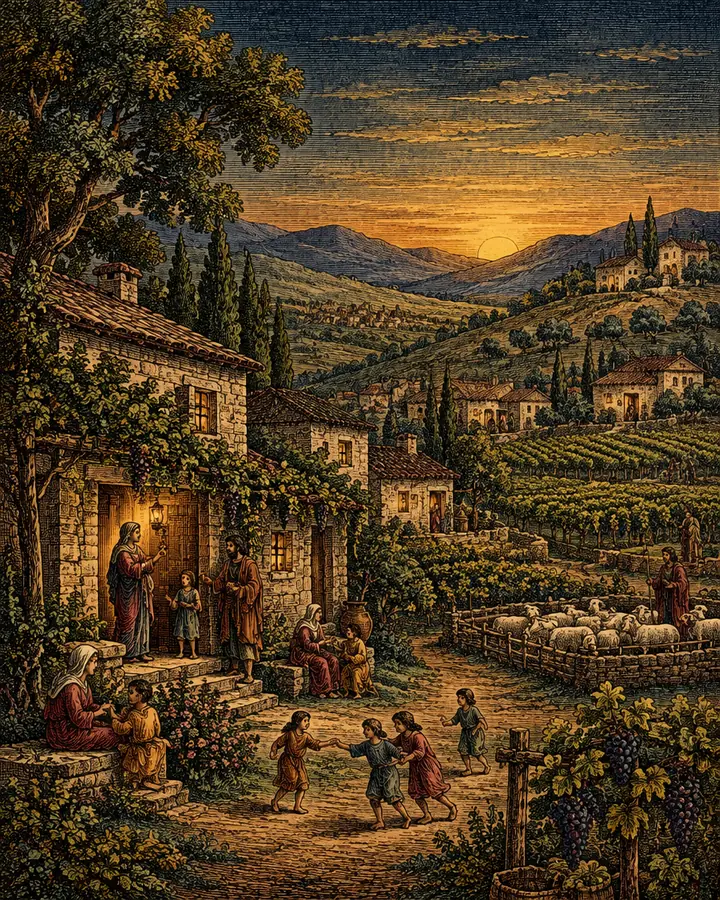
I will go to them that are at rest, that dwell safely, all of them dwelling without walls, and having neither bars nor gatesEzekiel 38:11
Go deeper: the prophetic timeline, where Persia stands among the signs.
Opening the members’ pages…
Members read on
Read the rest of Gog and Magog
Your 7 free days open every page of End Times Preparation, and the whole Almanac with them.
Still to read on this page About 2 min
- A great shaking in the land of Israel
- Every man's sword against his brother
- Hail, fire and brimstone
- Seven years of burning the weapons
- Gog and Magog again in Revelation
- How to read it beside the news
- Your birth details, about a minute
- Your 7 free days begin
- Back here, every page open
$0 today, then $12/month after 7 days. Cancel anytime.
Already a member? Log in
How God ends the war (Ezekiel 38:17 to 39:8)
No army saves Israel in Ezekiel's vision. God does: "my fury shall come up in my face" (Ezekiel 38:18), and "in that day there shall be a great shaking in the land of Israel" (Ezekiel 38:19), so that the fish, the birds, the beasts "and all the men that are upon the face of the earth, shall shake at my presence" (Ezekiel 38:20).
"Every man's sword shall be against his brother" (Ezekiel 38:21), and God pleads against Gog "with pestilence and with blood; and I will rain upon him, and upon his bands, and upon the many people that are with him, an overflowing rain, and great hailstones, fire, and brimstone" (Ezekiel 38:22). Gog falls "upon the mountains of Israel, thou, and all thy bands" (Ezekiel 39:4).
The purpose is said again and again: "and the heathen shall know that I am the LORD, the Holy One in Israel" (Ezekiel 39:7). The war ends with God's name known among the nations, and with no glory left to any army.
After the war, and how to read it now
Those who dwell in the cities of Israel "shall set on fire and burn the weapons… and they shall burn them with fire seven years" (Ezekiel 39:9), and "seven months shall the house of Israel be burying of them, that they may cleanse the land" (Ezekiel 39:12). The burial valley is called Hamongog, the multitude of Gog (Ezekiel 39:11).
Then the chapter turns to mercy: "Now will I bring again the captivity of Jacob, and have mercy upon the whole house of Israel" (Ezekiel 39:25). "Neither will I hide my face any more from them: for I have poured out my spirit upon the house of Israel" (Ezekiel 39:29).
Revelation names Gog and Magog once more, after the thousand years, when Satan goes out "to deceive the nations which are in the four quarters of the earth, Gog and Magog, to gather them together to battle", and "fire came down from God out of heaven, and devoured them" (Revelation 20:8-9). Most readers take this as a second battle that echoes Ezekiel's, the same names for the same rebellion; some read the two as one.
Read the whole passage
Ezekiel 38 and 39 end in mercy and with God's spirit poured out (Ezekiel 39:29), not with a map.
Name no living leader
Gog is the name Ezekiel gives the last great enemy. Guessing names has failed in every age, and Scripture names no one living.
Do not fear the headlines
"See that ye be not troubled" (Matthew 24:6). In Ezekiel it is God, not an army, who ends the war (Ezekiel 38:22).
Pray for peace
"Pray for the peace of Jerusalem: they shall prosper that love thee" (Psalm 122:6).
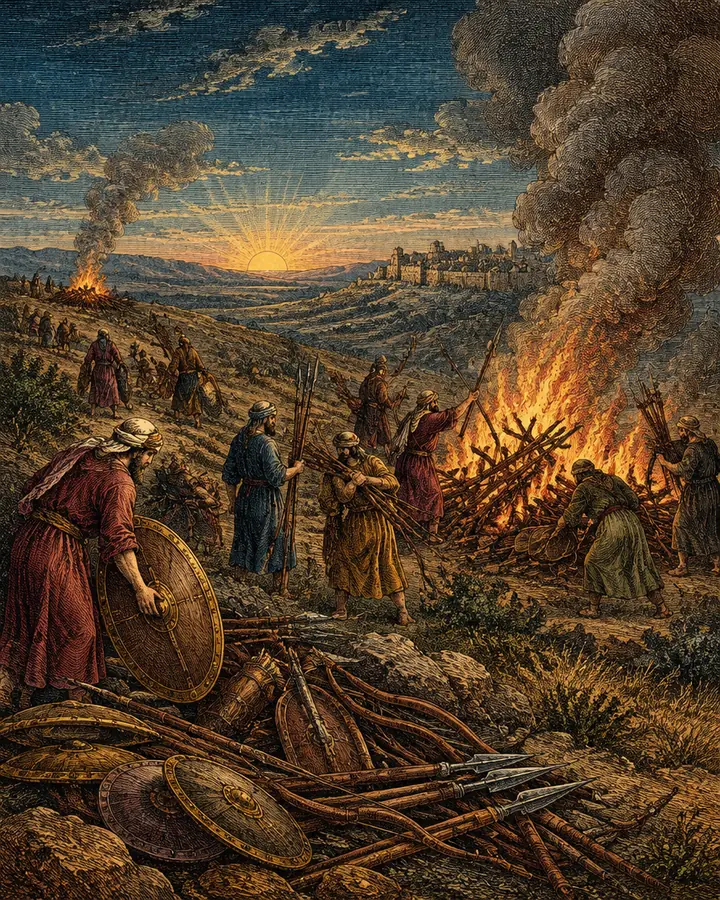
and shall set on fire and burn the weapons, both the shields and the bucklers, the bows and the arrowsEzekiel 39:9
Go deeper: Armageddon, the Antichrist.
Common questions
Who is Gog in the Bible?
Gog is the ruler of "the land of Magog, the chief prince of Meshech and Tubal" (Ezekiel 38:2), who leads a great army out of the far north against Israel in the latter days and is defeated by God himself (Ezekiel 38:18-22). Scripture names no living person as Gog, and neither does the Almanac.
Is Gog and Magog Russia?
Many teachers have read it so, from the Septuagint's "Ros" in Ezekiel 38:2 and from Gog's coming "out of the north parts" (Ezekiel 38:15). Most Hebrew scholars read the word as "chief", as the King James Version does. The direction is plain in the text; the modern map is not, so hold any identification loosely.
Is the war with Iran the Gog and Magog war?
Ezekiel names Persia, the old name of Iran, among Gog's allies (Ezekiel 38:5), and the war with Iran has sent many believers back to these chapters. But Ezekiel describes a great coalition invading a land "at rest, that dwell safely" (Ezekiel 38:11) and its defeat by God himself, which has not happened in that form.
Are Gog and Magog in Revelation the same as in Ezekiel?
Revelation 20:7-9 uses the names for the nations Satan gathers after the thousand years, when fire comes down from heaven and devours them. Most readers take it as a second battle that echoes Ezekiel's; some read the two as one.
When does the Gog and Magog war happen?
Ezekiel places it "in the latter years" (Ezekiel 38:8) and "in the latter days" (Ezekiel 38:16), after Israel is gathered back to its land. Scripture gives no date, and neither does the Almanac. Readers place it before the tribulation, within it, near Christ's return, or at the end of the thousand years.
Sources and editorial method
Research and editorial references used for this page include:
- BibleGateway: Ezekiel 38 (KJV) - Quoted on this page in the King James Version.
- BibleGateway: Ezekiel 39 (KJV) - Quoted on this page in the King James Version.
- BibleGateway: Ezekiel 37 (KJV) - Quoted on this page in the King James Version.
- BibleGateway: Genesis 10:2 (KJV) - Quoted on this page in the King James Version.
- BibleGateway: Revelation 20:7-9 (KJV) - Quoted on this page in the King James Version.
- BibleGateway: Matthew 24:6 (KJV) - Quoted on this page in the King James Version.
- BibleGateway: Psalm 122:6 (KJV) - Quoted on this page in the King James Version.
- Wikipedia: Gog and Magog - The names in Genesis, Ezekiel and Revelation, and how Jewish, Christian and later writers have read them.
Scripture is quoted from the King James Version. Present-day facts were checked against current reporting in October 2026; where events are still unfolding, the page says what was known then. We describe how believers read the signs and never set a date. The paintings are illustrations made for The Great Almanac with AI image tools, in the house's engraved style.

