Aspects
Inconjunct
Direct answer
Inconjunct is another name for the quincunx, a 150-degree relationship that shows disconnection, adjustment, and two chart factors struggling to coordinate.
An Inconjunct is a 150-degree adjustment aspect, usually the same as a quincunx.
$0 today, then $12/month after 7 days. Cancel anytime.
At a glance
- In astrology
- By sign, inconjunct placements often lack shared element, modality, and polarity, which is why they can feel hard to integrate.
- Found in
- Aspects
- Related
- Birth Chart, Zodiac, Transit
An Inconjunct is a 150-degree adjustment aspect, usually the same as a quincunx.
A structural orientation; exact placements depend on the chart or technique being discussed.
What does your own chart say about you?
Choose love, work or purpose. Your reading is written from your chart. Your reading uses your own birth details.
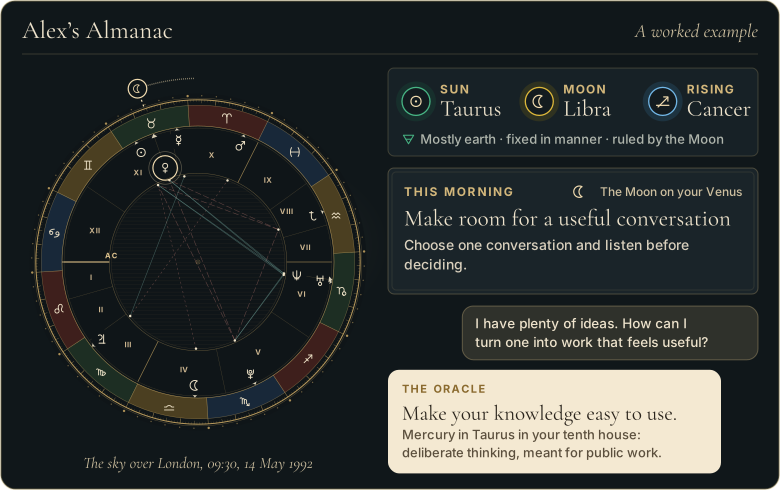
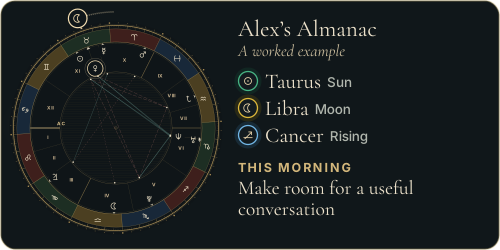
Walk through Alex’s whole example first
 The Road of AgesSee the turning points of your whole life, from your birth date
See your road's shape
The Road of AgesSee the turning points of your whole life, from your birth date
See your road's shape
Prefer to explore first?
 The Road of AgesThe turning points of your whole life, from your own chart
Walk my road
The Road of AgesThe turning points of your whole life, from your own chart
Walk my road
Free, by email
Your daily Almanac letter
One short letter at 7 each morning: the day’s theme read for your own chart, and one thing to do with it.
The story behind Inconjunct
Older astrology often described signs in this relationship as unable to see each other, while modern astrology gave the angle more interpretive detail.
A one-minute story
The Book of the Sky
How people learned to read the sky, from Babylon to the day you were born.

The spiritual meaning of Inconjunct
Spiritually, Inconjunct asks what quiet mismatch is ready for honest adjustment.
Why Inconjunct matters
Inconjunct matters because it explains awkward chart combinations that neither fight openly nor flow naturally.
Inconjunct in practice: an example
Venus inconjunct Pluto can describe a need to adjust desire, trust, control, and intimacy patterns.
Where readings of Inconjunct go wrong
It is a mistake to double-count inconjunct and quincunx as separate if a chart uses both labels for the same 150-degree angle.
Sources and editorial method
This entry summarizes the tradition in the Almanac's own words; where no source is listed, it is an editorial summary rather than a primary text, and symbolic readings are named as the tradition's, not as fact.
- Source
- The Great Almanac Dictionary
- Category
- Aspects
- Last updated
- 2026-09-26
Name your hidden adjustment pattern
Inconjunct in a book is one thing; Inconjunct in your own birth chart is your life. The Oracle casts your real chart and tells you what it means for your love, your work, and your year ahead, in conversation. It opens with the 7-day Seeker trial.
Speak with the OracleHow Inconjunct lives in your own chart across your year, in love, in work, in timing, is written in the Cosmic Codex: the whole year, once. Open the Cosmic Codex
Related terms
More in Aspects
- Novile
- Planetary Configuration
- Semi-Quintile
- Sesquiquadrate
- Tri-Septile
- Applying Aspect
- Bi-Quintile
- Eleventh Harmonic
From the reference page to your own chart
Every word here
is in your own chart.
- A personal reading about love, work or purpose, written from your chart
- A practical next step to consider
- It opens with 7 days free, with the AI Oracle and daily guidance
$0 today, then $12/month after 7 days. Cancel anytime.
Common questions
What is an inconjunct?
Inconjunct is another name for the quincunx, a 150-degree relationship that shows disconnection, adjustment, and two chart factors struggling to coordinate.
Where does an inconjunct come from?
Older astrology often described signs in this relationship as unable to see each other, while modern astrology gave the angle more interpretive detail.
What does an inconjunct mean in astrology?
By sign, inconjunct placements often lack shared element, modality, and polarity, which is why they can feel hard to integrate.
What does an inconjunct look like in a birth chart?
Venus inconjunct Pluto can describe a need to adjust desire, trust, control, and intimacy patterns.
What does an inconjunct mean spiritually?
Spiritually, Inconjunct asks what quiet mismatch is ready for honest adjustment.
Free, by email
The Almanac, in your inbox at 7
One short letter at 7 each morning: the day’s theme read for your own chart, and one thing to do with it.