Minor astrological aspects
Novile
Direct answer
A novile is exact when two positions are 40 degrees apart. It belongs to the ninth-harmonic family with the binovile at 80 degrees and quadranovile at 160 degrees, and is normally judged with a narrow orb.
A novile is an astrological aspect of 40 degrees, created by dividing the 360-degree circle into nine equal parts.
$0 today, then $12/month after 7 days. Cancel anytime.
Quick facts
| Question | Direct answer |
|---|---|
| Exact angle | 40 degrees. |
| Harmonic basis | One ninth of the zodiacal circle. |
| Related aspects | Binovile at 80 degrees and quadranovile at 160 degrees. |
| Common interpretive theme | Ripening, integration, devotion, or inward development in modern harmonic astrology. |
A Novile is a ninth-harmonic aspect linked with inner growth and devotion.
A structural orientation; exact placements depend on the chart or technique being discussed.
What does your own chart say about you?
Choose love, work or purpose. Your reading is written from your chart. Your reading uses your own birth details.
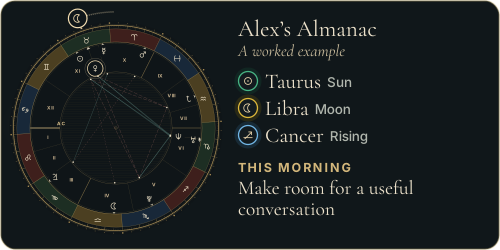
Walk through Alex’s whole example first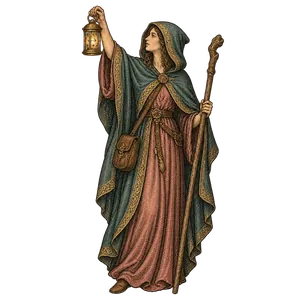
 The Road of AgesSee the turning points of your whole life, from your birth date
See your road's shape
The Road of AgesSee the turning points of your whole life, from your birth date
See your road's shape
Prefer to explore first?
 The Road of AgesThe turning points of your whole life, from your own chart
Walk my road
The Road of AgesThe turning points of your whole life, from your own chart
Walk my road
Free, by email
Your daily Almanac letter
One short letter at 7 each morning: the day’s theme read for your own chart, and one thing to do with it.
How the novile is calculated
Dividing 360 degrees by nine produces exactly 40 degrees, so the novile is easier to state than the repeating decimal of a septile. Take the shortest angular distance between two chart factors and compare it with 40 degrees. A difference of 39 degrees 20 minutes gives a 40-minute orb; 42 degrees gives a 2-degree orb and may fall outside a narrow policy. The ninth harmonic also includes multiples, but terminology varies after the binovile and quadranovile. A chart report should print the actual angle and orb instead of relying on a barely visible minor-aspect line.
A one-minute story
The Book of the Sky
How people learned to read the sky, from Babylon to the day you were born.

The ninth-harmonic family
Harmonic astrology treats a family of aspects as multiples of the same division. In a ninth-harmonic chart, natal points separated by noviles and their multiples come together as conjunctions, allowing the astrologer to inspect the pattern as a group. This mathematical transformation does not make every ninth-harmonic contact equally important. Exactness, angularity, repetition, and the natal condition of the planets still matter. In Indian astrology, the navamsha also involves a ninth division, but it belongs to a distinct sign-division tradition; equating every Western novile claim with navamsha doctrine flattens two different methods.
What astrologers associate with a novile
Modern interpretations often use words such as gestation, ripening, initiation, devotion, fulfillment, or a capacity that develops inwardly before becoming visible. These meanings are neither universally ancient nor empirically demonstrated. A useful reading joins the symbolism to the planets: a Moon-Saturn novile might prompt questions about emotional maturity or slowly developed steadiness, while Venus-Neptune might prompt questions about refining an artistic ideal. Avoid declaring spiritual attainment from one aspect. The same configuration can be quiet, ordinary, or hard to recognize without supporting themes and biographical evidence.
A precise example
Suppose Venus is at 18 degrees Taurus and Jupiter at 28 degrees Gemini. Their absolute longitudes are 48 and 88 degrees, producing an exact 40-degree novile. An astrologer could ask whether values, relationship skills, or aesthetic interests mature through study, generosity, travel, or worldview. Yet Venus and Jupiter may also have stronger major aspects that dominate the chart, and house placement could shift the topic entirely. The proper conclusion is “an exact novile worth investigating,” not “guaranteed luck” or “proof of a spiritual marriage.” Precision in geometry should be matched by restraint in interpretation.
How to use Novile Aspect responsibly
Astrological terminology is most useful when the calculation and interpretive convention are stated separately. For Novile Aspect, a careful account identifies the chart factors, degrees, or classification rule first, then explains what astrologers have traditionally inferred from them. Different schools may use different orbs, planets, house systems, or symbolic vocabularies, so a borderline result should be described rather than forced into a label. Astrology is a historical divinatory practice, not a scientifically validated method for diagnosing personality or predicting events. Treat the interpretation as a bounded symbolic hypothesis, compare it with the full chart and lived evidence, and never use it to replace medical, legal, financial, mental-health, or safeguarding advice.
Sources and editorial method
Research and editorial references used for this page include:
- Astrodienst Astrowiki: Novile - Reference description of the novile and ninth harmonic.
- Astrodienst Astrowiki: Harmonics - Background on harmonic transformations and aspect families.
These references support the factual, historical, textual, or interpretive claims on this page. Interpretive traditions are identified as such, and factual claims are kept separate from symbolic claims.
Related reading
Notice your inner initiation
Novile in a book is one thing; Novile in your own birth chart is your life. The Oracle casts your real chart and tells you what it means for your love, your work, and your year ahead, in conversation. It opens with the 7-day Seeker trial.
Speak with the OracleHow Novile lives in your own chart across your year, in love, in work, in timing, is written in the Cosmic Codex: the whole year, once. Open the Cosmic Codex
More in Aspects
- Platic Aspect
- Semi-Quintile
- Sesquiquadrate
- Trine
- Applying Aspect
- Bi-Quintile
- Exact Aspect
- Inconjunct
From the reference page to your own chart
Every word here
is in your own chart.
- A personal reading about love, work or purpose, written from your chart
- A practical next step to consider
- It opens with 7 days free, with the AI Oracle and daily guidance
$0 today, then $12/month after 7 days. Cancel anytime.
Common questions
How many degrees is a novile?
Exactly 40 degrees.
What orb should I use?
Many practitioners use about 1 degree or less; the chosen policy should be stated.
Is novile the same as navamsha?
No. Both involve ninefold division, but they operate in different astrological frameworks.
Free, by email
The Almanac, in your inbox at 7
One short letter at 7 each morning: the day’s theme read for your own chart, and one thing to do with it.
