
The way to the tree of life
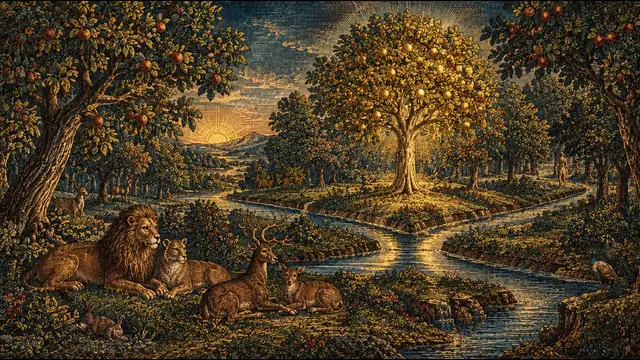
When Adam and Eve were sent out of the garden, cherubim and a flaming sword were set at its east to keep the way to the tree of life.
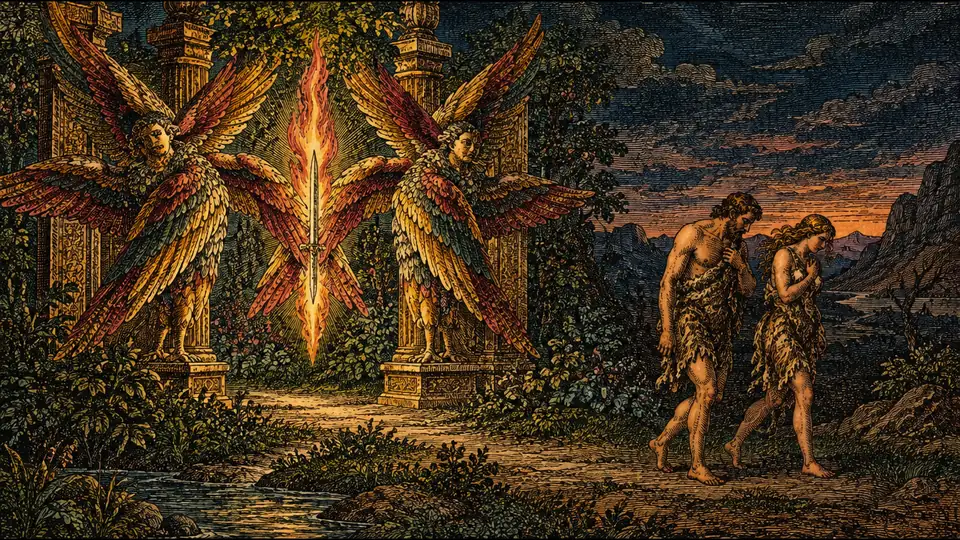
Press play: the paintings change with the story and the words come as the narrator reads them. The whole story is written out below.
Now playing: The way to the tree of life
The whole story
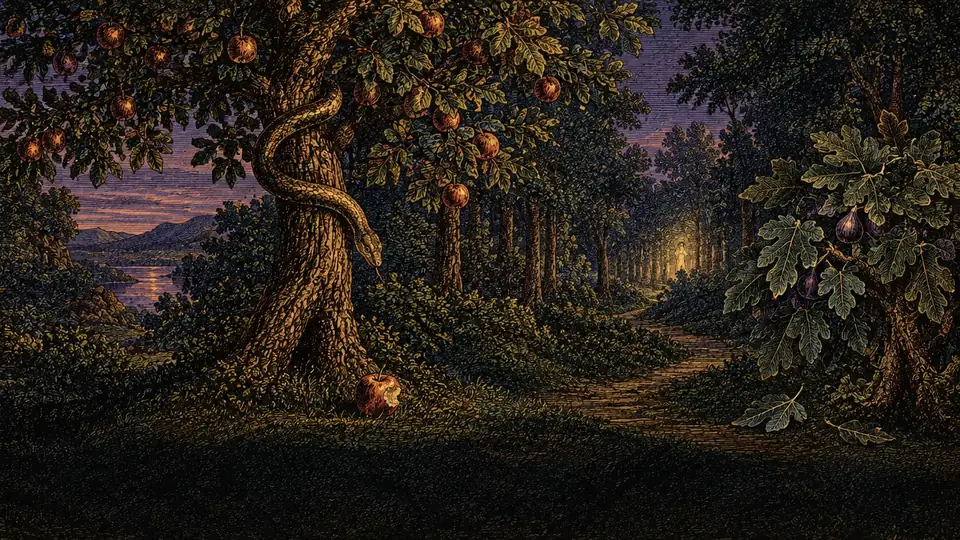
The serpent asked the woman whether God had said they must not eat of every tree, and told her they would not surely die but be as gods, knowing good and evil. She ate, and gave to her husband, and their eyes were opened. They sewed fig leaves together, and hid from the presence of the LORD God among the trees of the garden in the cool of the day.
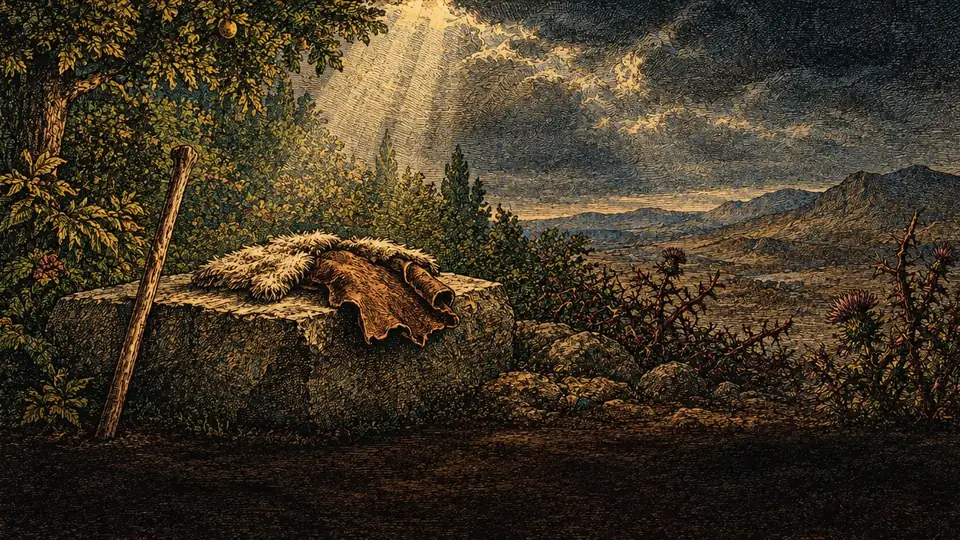
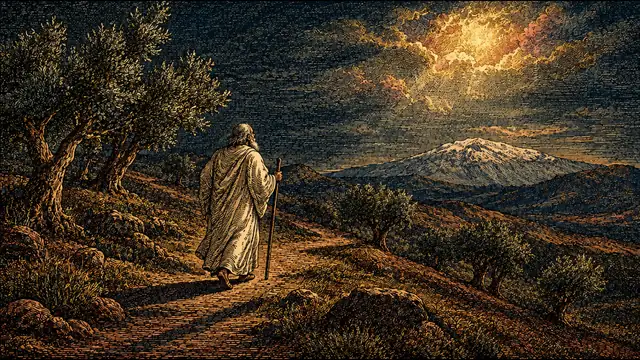
God spoke a word to each: to the serpent, that the seed of the woman would bruise its head; to the woman, sorrow in bearing children; to the man, that the ground was cursed and that he would eat bread in the sweat of his face until he returned to the dust. Then God made them coats of skins and clothed them, and sent the man out to till the ground from which he was taken.
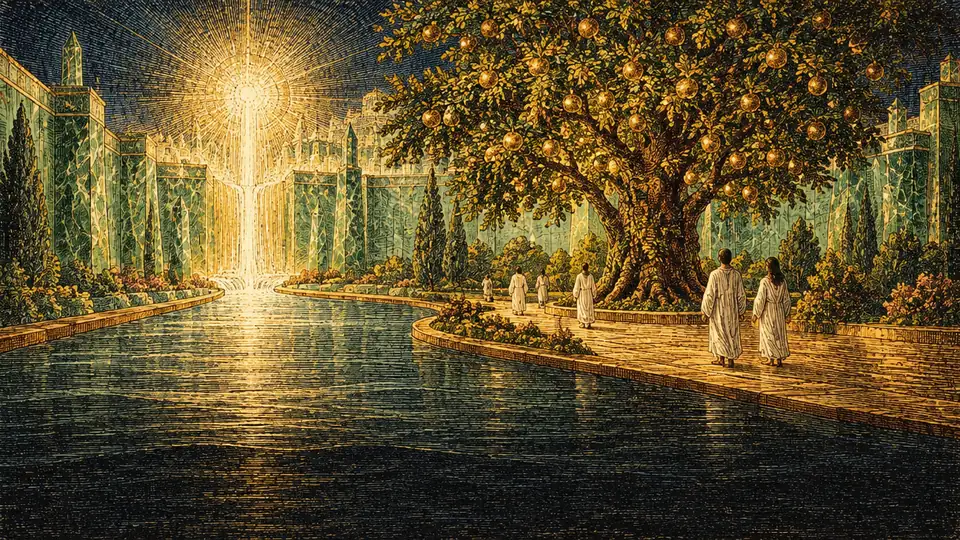
The cherubim are the Bible’s guardians of holy things: later two of gold spread their wings over the ark of the covenant, and Ezekiel saw them with the wheels by the river of Chebar. Christian readers have long seen the way to the tree of life opened again at the end, where Revelation sets the tree beside the river of the new Jerusalem.
a flaming sword which turned every way, to keep the way of the tree of life
Genesis 3:24, KJV
Where it happened
Eden, Al-Qurnah, southern Iraq (site unknown).
The mark stands where the Tigris and the Euphrates meet, at Al-Qurnah in southern Iraq, as local tradition has it; the other two rivers Genesis names, Pison and Gihon, nobody can trace.
Every story stands at its place on the Worldwide Watch map: the Bible’s world, on the map.
More from Beginnings
Genesis 1 to 11
Sources and editorial method
Research and editorial references used for this page include:
- The King James Bible, as published by bible-api.com
- The Book of Enoch, translated by R. H. Charles (1917), Project Gutenberg
Every story is told from the King James Bible, and from the Book of Enoch in R. H. Charles’s translation (1917) where a story names it. Every quotation was checked word for word against those texts. Where a place is not known, the page says so. The paintings and the narration were made for the house.

