
A garden eastward in Eden
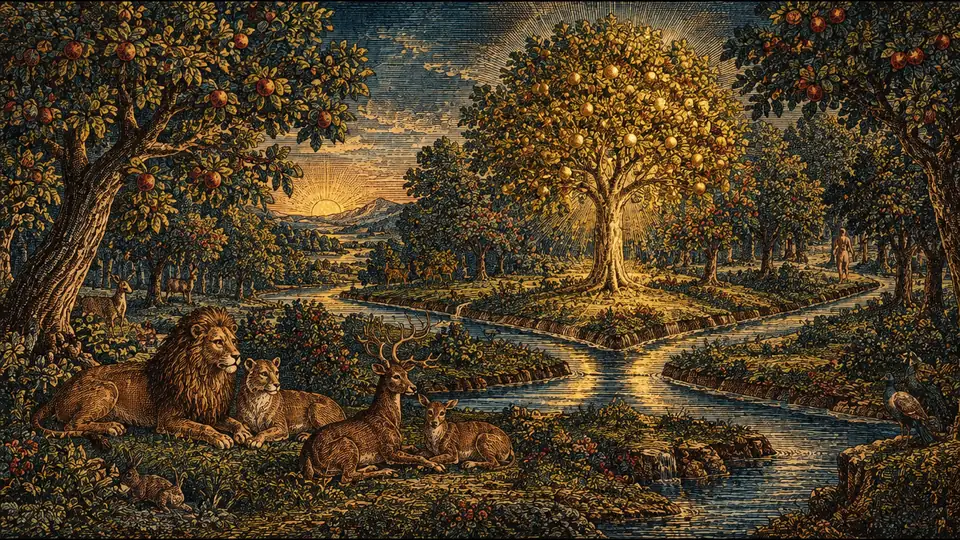
Genesis tells how God planted a garden and set the first man in it, watered by a river that parted into four. Two of the four it names: the Hiddekel, which is the Tigris, and the Euphrates.
Press play: the paintings change with the story and the words come as the narrator reads them. The whole story is written out below.
Now playing: A garden eastward in Eden
The whole story
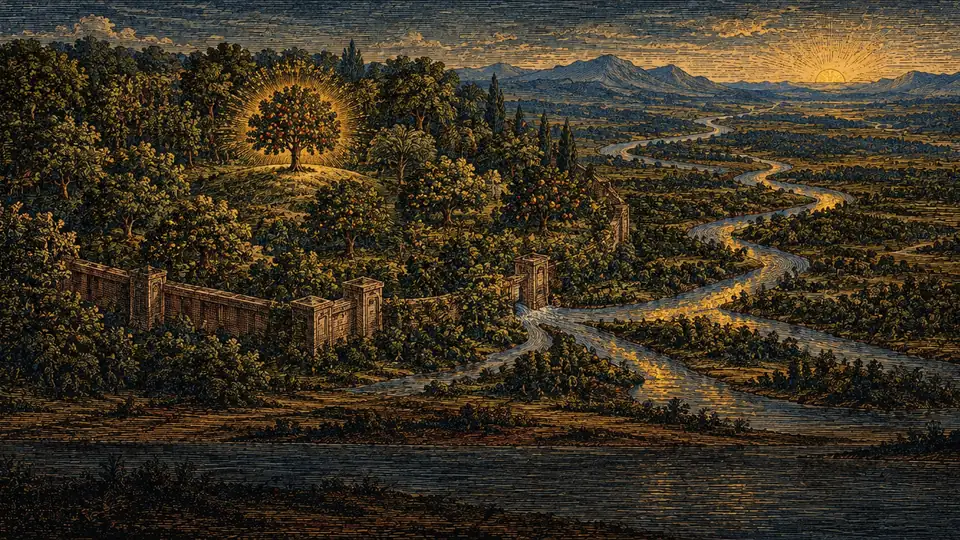
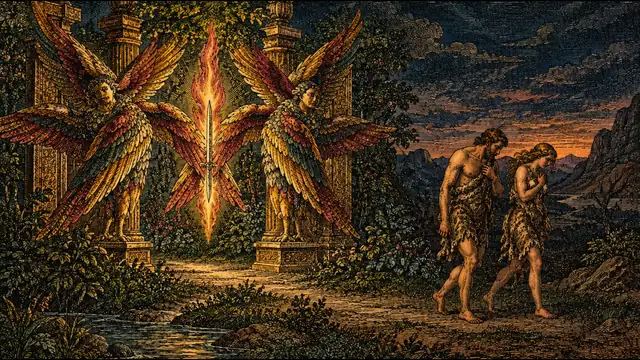
The garden’s river divides into four heads: Pison, which compasses the land of Havilah where there is gold; Gihon, which compasses the land of Ethiopia; Hiddekel, which goes toward the east of Assyria; and Euphrates. Adam was set there to dress it and to keep it, free to eat of every tree but one, the tree of the knowledge of good and evil.
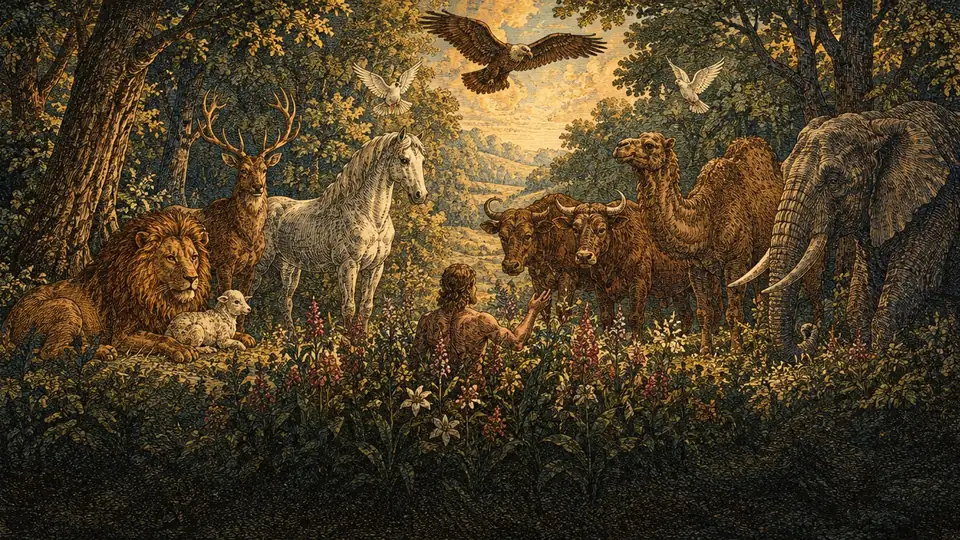
God brought the beasts and the birds to Adam to see what he would call them, and whatever he called every living creature, that was its name. Finding no helper fit for him, God caused a deep sleep to fall on him and made the woman from his rib, and the man said, “This is now bone of my bones, and flesh of my flesh” (Genesis 2:23).
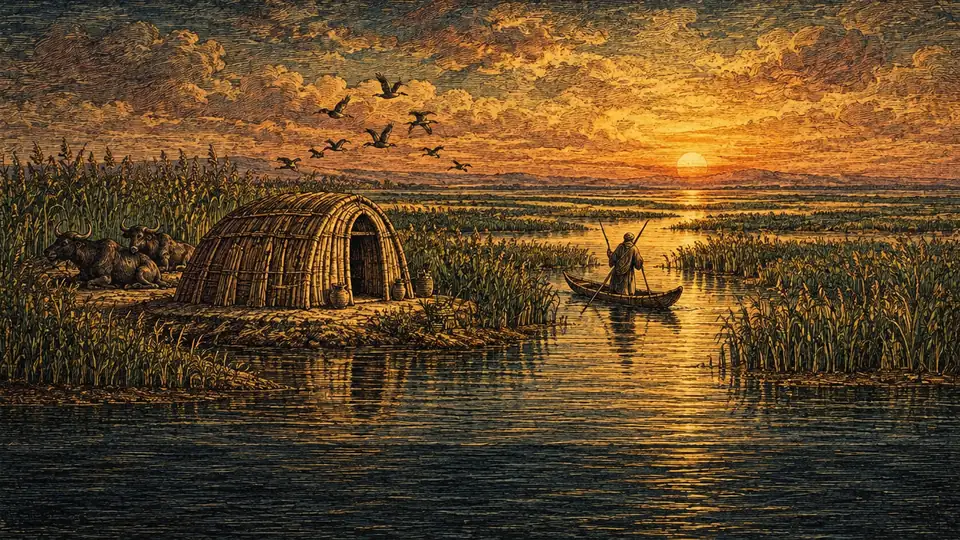
Where Eden lay has been asked for as long as Genesis has been read. With two of its rivers in Mesopotamia, many look to the head of the Persian Gulf, where the Tigris and the Euphrates meet; others think the flood changed the face of the earth beyond tracing. The word Eden may echo an old Sumerian word for a plain, or the Hebrew word for delight.
And the LORD God planted a garden eastward in Eden; and there he put the man whom he had formed.
Genesis 2:8, KJV
Where it happened
Eden, Al-Qurnah, southern Iraq (site unknown).
The mark stands where the Tigris and the Euphrates meet, at Al-Qurnah in southern Iraq, as local tradition has it; the other two rivers Genesis names, Pison and Gihon, nobody can trace.
Every story stands at its place on the Worldwide Watch map: the Bible’s world, on the map.
More from Beginnings
Genesis 1 to 11
Sources and editorial method
Research and editorial references used for this page include:
- The King James Bible, as published by bible-api.com
- The Book of Enoch, translated by R. H. Charles (1917), Project Gutenberg
Every story is told from the King James Bible, and from the Book of Enoch in R. H. Charles’s translation (1917) where a story names it. Every quotation was checked word for word against those texts. Where a place is not known, the page says so. The paintings and the narration were made for the house.

