
The Watchers come down
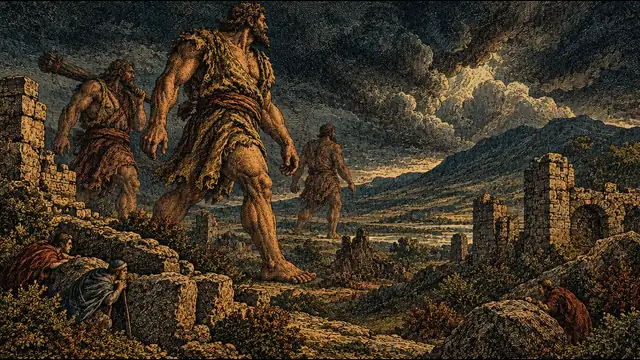
Genesis says the sons of God saw the daughters of men and took them wives. The Book of Enoch calls them the Watchers, two hundred angels who came down on Mount Hermon and bound themselves by an oath.
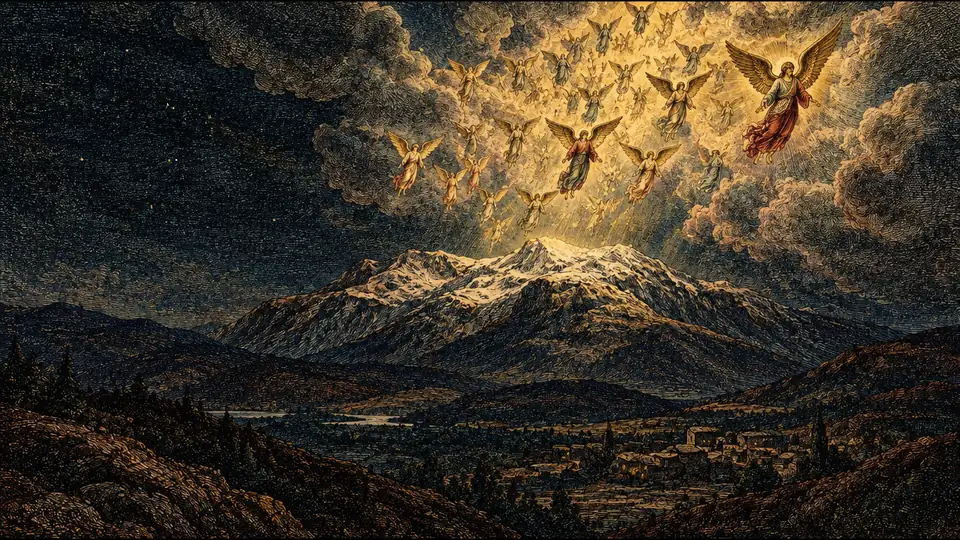
Press play: the paintings change with the story and the words come as the narrator reads them. The whole story is written out below.
Now playing: The Watchers come down
The whole story
Who the sons of God were has been argued for two thousand years. Many of the earliest Jewish and Christian readers took them to be angels, as the same words seem to mean in the book of Job, where “the sons of God came to present themselves before the LORD” (Job 1:6). From the third century onward others read them as the faithful line of Seth marrying into the line of Cain, and some Jewish teachers as the sons of nobles and judges.
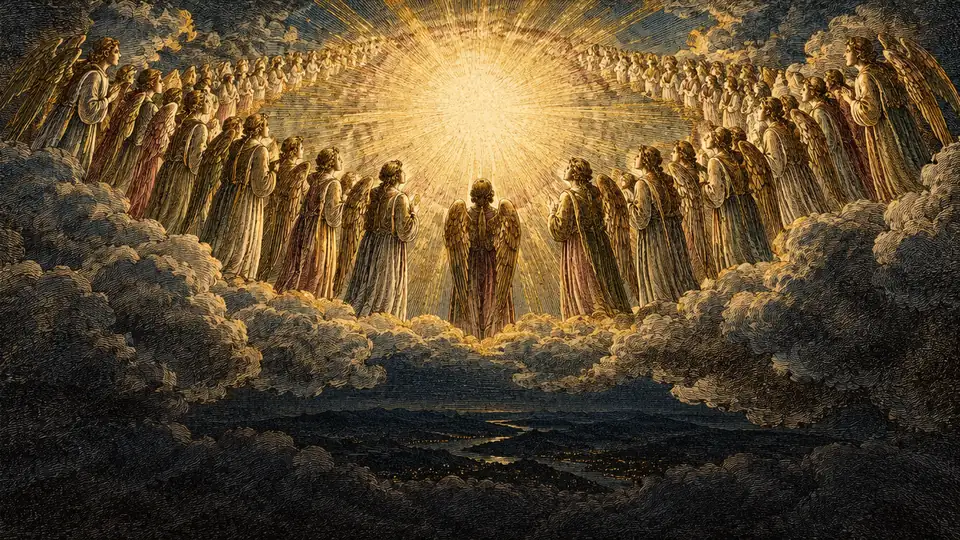
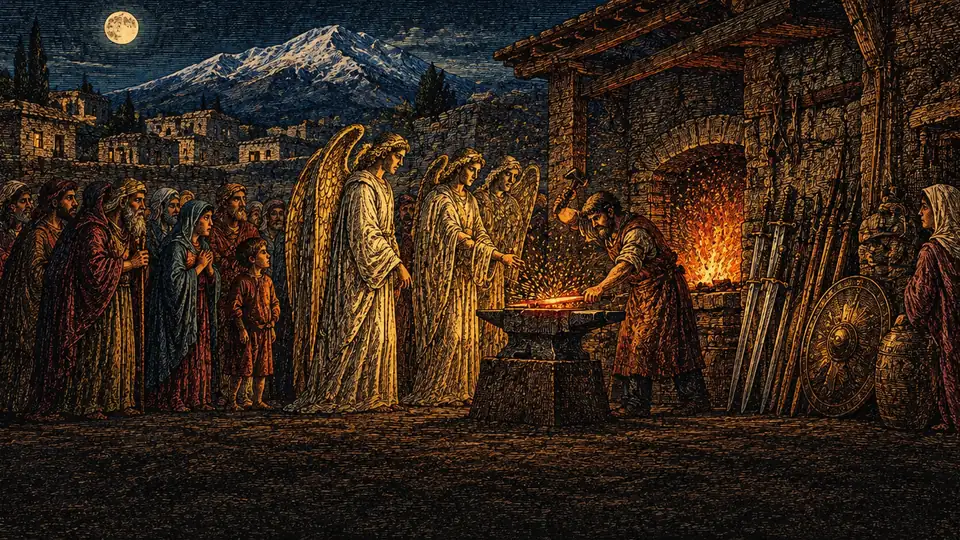
The Book of Enoch tells it at length: “And they were in all two hundred; who descended in the days of Jared on the summit of Mount Hermon” (1 Enoch 6:6). Led by Semjaza, they swore to take wives together, and they taught people charms and enchantments, the working of metals and the making of weapons, and the signs of the sun, the moon and the stars.
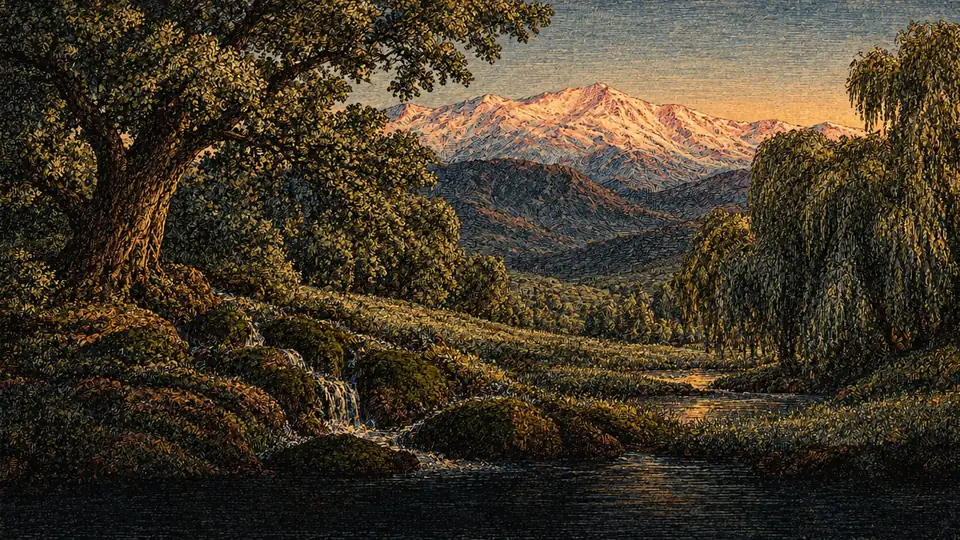
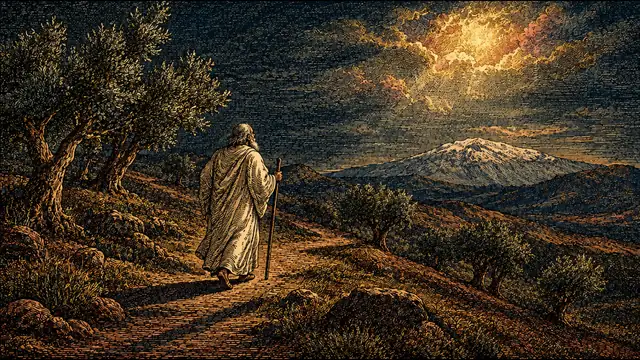
The book even explains the mountain’s name: they called it Mount Hermon, “because they had sworn and bound themselves by mutual imprecations upon it” (1 Enoch 6:6), for in Hebrew the name sounds like a word for a thing set apart under an oath. Hermon stands over the springs of the Jordan, its snow seen from far across the land, and a psalm remembers “the dew of Hermon” (Psalm 133:3).
That the sons of God saw the daughters of men that they were fair; and they took them wives of all which they chose.
Genesis 6:2, KJV
Where it happened
Mount Hermon, on the border of Lebanon and Syria (site by tradition).
Genesis names no place. The Book of Enoch sets the Watchers’ descent on the summit of Mount Hermon; the mark stands on the mountain.
Every story stands at its place on the Worldwide Watch map: the Bible’s world, on the map.
More from Beginnings
Genesis 1 to 11
Sources and editorial method
Research and editorial references used for this page include:
- The King James Bible, as published by bible-api.com
- The Book of Enoch, translated by R. H. Charles (1917), Project Gutenberg
Every story is told from the King James Bible, and from the Book of Enoch in R. H. Charles’s translation (1917) where a story names it. Every quotation was checked word for word against those texts. Where a place is not known, the page says so. The paintings and the narration were made for the house.

