
The bow in the cloud
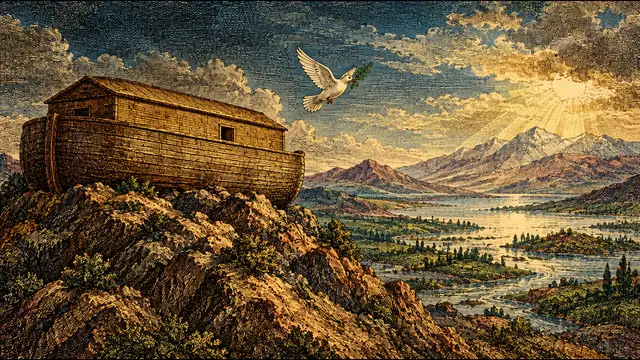
God set the rainbow in the cloud as the token of his covenant: the waters would never again become a flood to destroy all flesh.
Press play: the paintings change with the story and the words come as the narrator reads them. The whole story is written out below.
Now playing: The bow in the cloud
The whole story
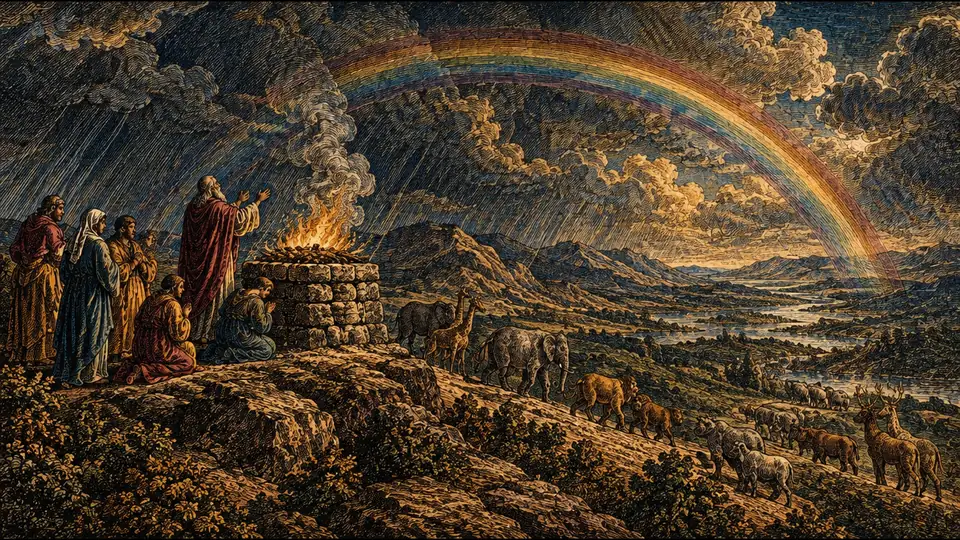
Noah came out of the ark with his family and every living thing, built an altar to the LORD and offered burnt offerings on it. The LORD smelled a sweet savor and said in his heart that he would not again curse the ground for man’s sake, and that while the earth remains, seedtime and harvest, cold and heat, summer and winter, and day and night shall not cease.
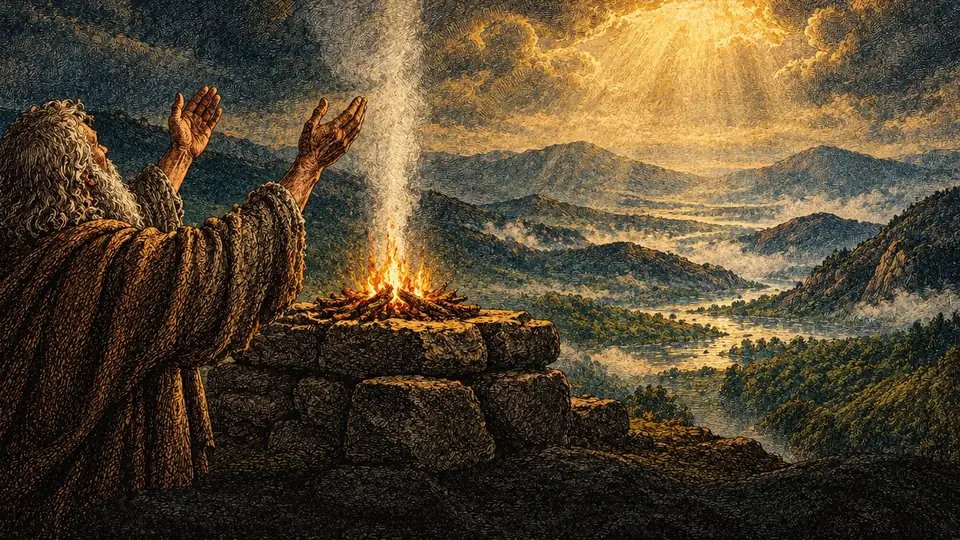
Then God blessed Noah and his sons and made a covenant with them and with every living creature, that never again would a flood destroy the earth. The sign was the bow in the cloud: “and I will look upon it, that I may remember the everlasting covenant” (Genesis 9:16).
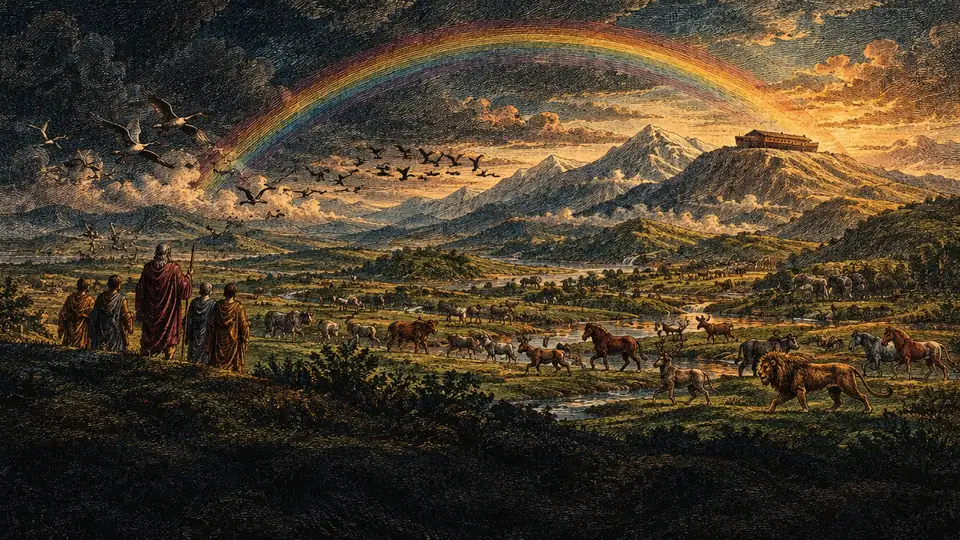
The rainbow returns at the far end of the Bible, where Ezekiel and John both see a bow around the throne of God. Many peoples remember a great flood, the best known the Babylonian tale of Utnapishtim in the epic of Gilgamesh, whose hero also sends out birds when his boat comes to rest on a mountain.
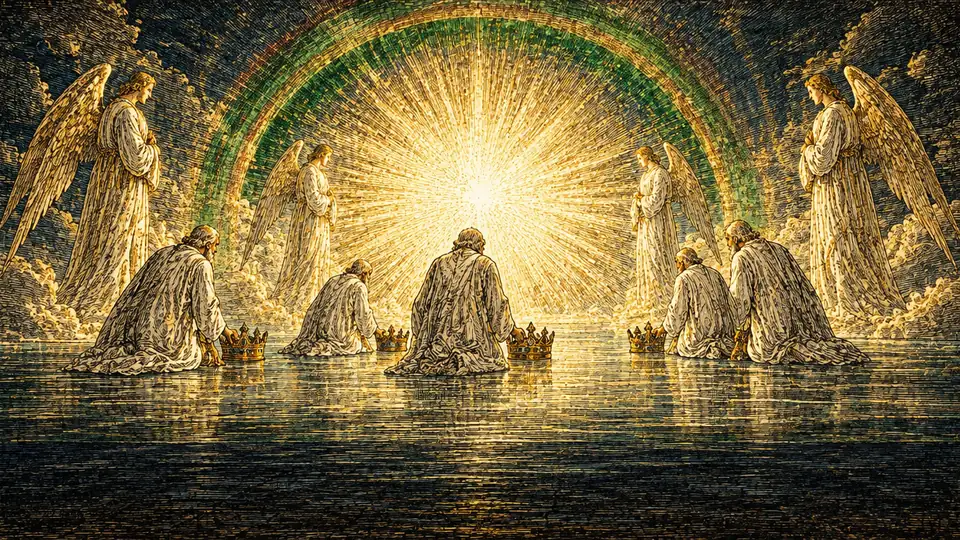
I do set my bow in the cloud, and it shall be for a token of a covenant between me and the earth.
Genesis 9:13, KJV
Where it happened
The mountains of Ararat, Mount Ararat, eastern Turkey (site by tradition).
Genesis says only the mountains of Ararat, the old kingdom of Urartu in the Armenian highlands. Tradition chose Mount Ararat, its highest peak, where the mark stands.
Every story stands at its place on the Worldwide Watch map: the Bible’s world, on the map.
More from Beginnings
Genesis 1 to 11
Sources and editorial method
Research and editorial references used for this page include:
- The King James Bible, as published by bible-api.com
- The Book of Enoch, translated by R. H. Charles (1917), Project Gutenberg
Every story is told from the King James Bible, and from the Book of Enoch in R. H. Charles’s translation (1917) where a story names it. Every quotation was checked word for word against those texts. Where a place is not known, the page says so. The paintings and the narration were made for the house.

