
Giants in the earth
There were giants in the earth in those days, says Genesis: the Nephilim, mighty men of old, men of renown. The Book of Enoch makes them the Watchers’ children, and the reason the flood came.
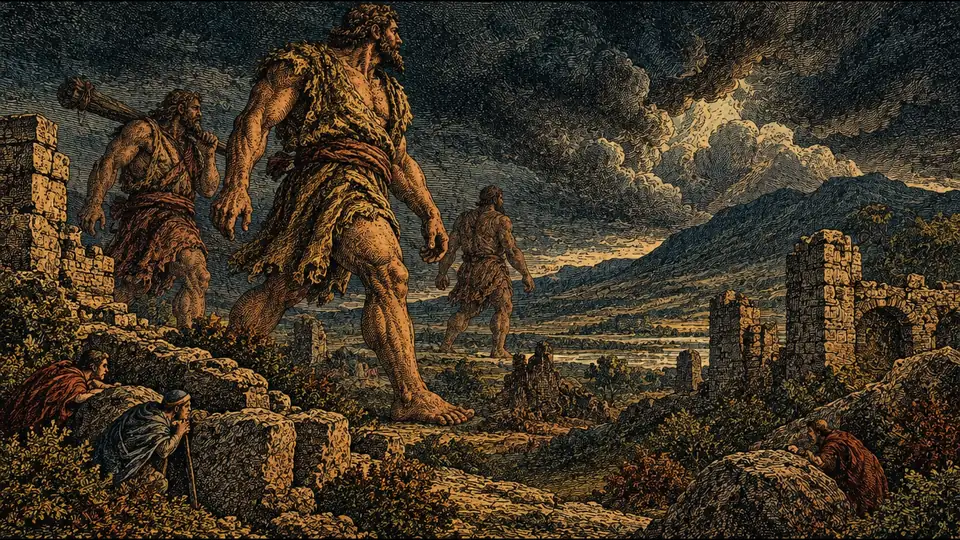
Press play: the paintings change with the story and the words come as the narrator reads them. The whole story is written out below.
Now playing: Giants in the earth
The whole story
The Hebrew word is Nephilim. The King James Version, following the old Greek translation, calls them giants. Some take the word from a root meaning to fall, the fallen ones; others hear in it simply the great ones. Genesis does not say what they were, only that they lived in the days before the flood, when “the earth was filled with violence” (Genesis 6:11).
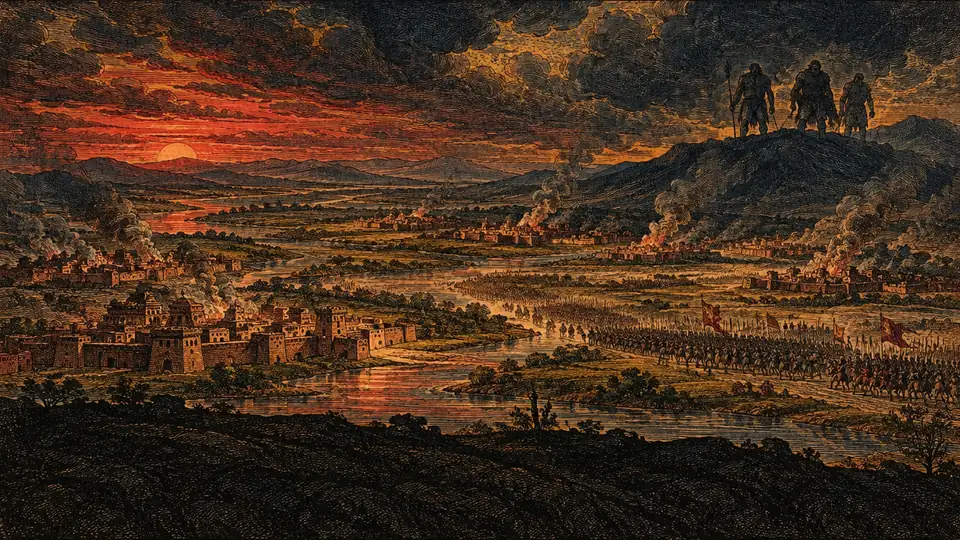
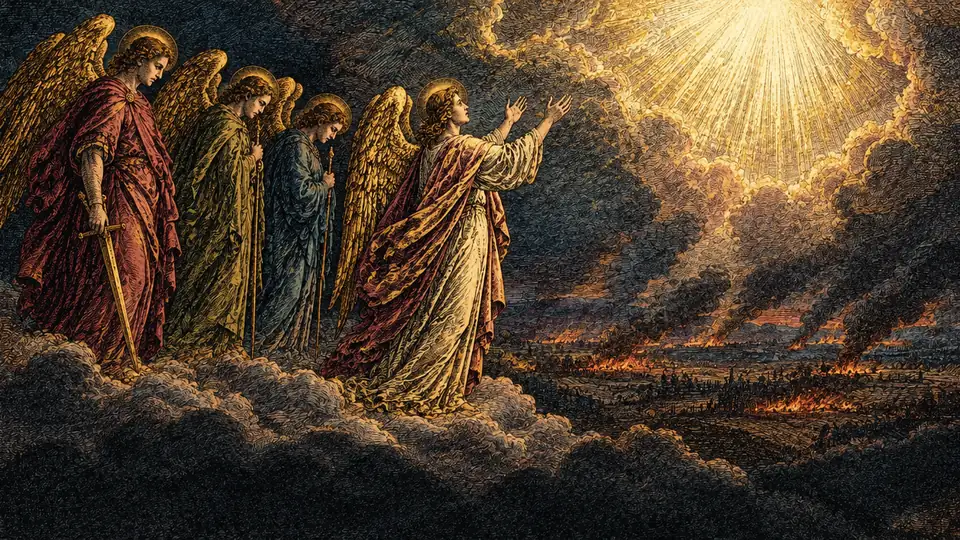
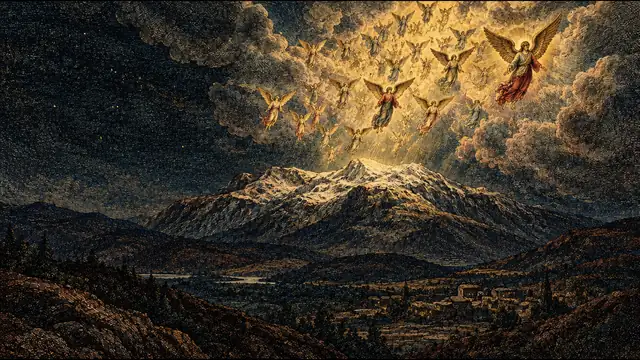
The Book of Enoch gives them a darker tale. Of the Watchers’ wives it says, “And they became pregnant, and they bare great giants” (1 Enoch 7:2), and the giants consumed all that men had, until the earth itself cried out. The archangels Michael, Uriel, Raphael and Gabriel brought the cry before God, and Noah was warned of the flood that would cleanse the earth.
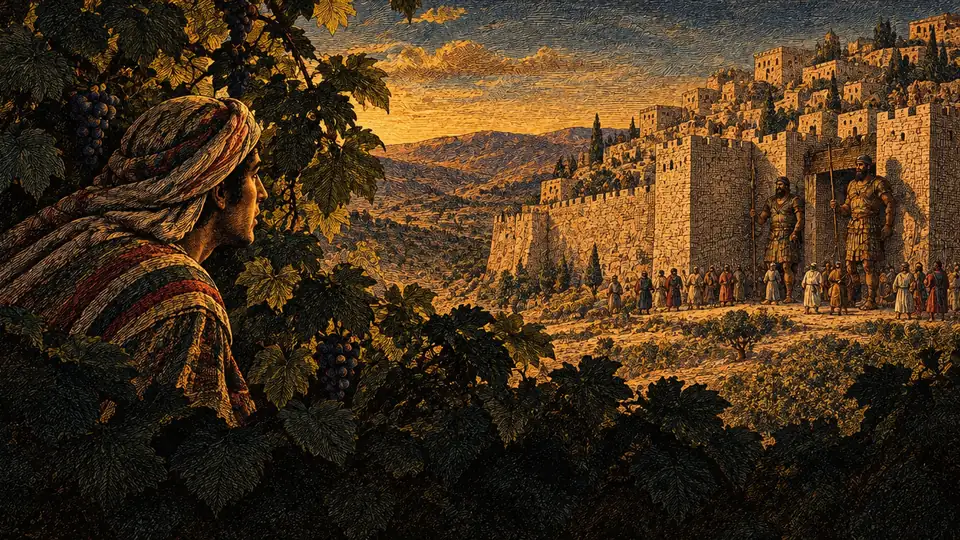
Giants appear again later in the Bible: the sons of Anak at Hebron, Og king of Bashan, and Goliath of Gath with his brothers. Whether these were the Nephilim’s heirs or simply very tall men, readers still debate. Among the Dead Sea Scrolls are pieces of a Book of Giants that tells the story from their own side, with dreams that warned them of the flood.
There were giants in the earth in those days; and also after that, when the sons of God came in unto the daughters of men, and they bare children to them, the same became mighty men which were of old, men of renown.
Genesis 6:4, KJV
Where it happened
Mount Hermon, on the border of Lebanon and Syria (site by tradition).
Genesis gives the giants no place; the Book of Enoch ties them to the Watchers who came down on Mount Hermon, where the mark stands.
Every story stands at its place on the Worldwide Watch map: the Bible’s world, on the map.
More from Beginnings
Genesis 1 to 11
Sources and editorial method
Research and editorial references used for this page include:
- The King James Bible, as published by bible-api.com
- The Book of Enoch, translated by R. H. Charles (1917), Project Gutenberg
Every story is told from the King James Bible, and from the Book of Enoch in R. H. Charles’s translation (1917) where a story names it. Every quotation was checked word for word against those texts. Where a place is not known, the page says so. The paintings and the narration were made for the house.

