
Enoch walked with God
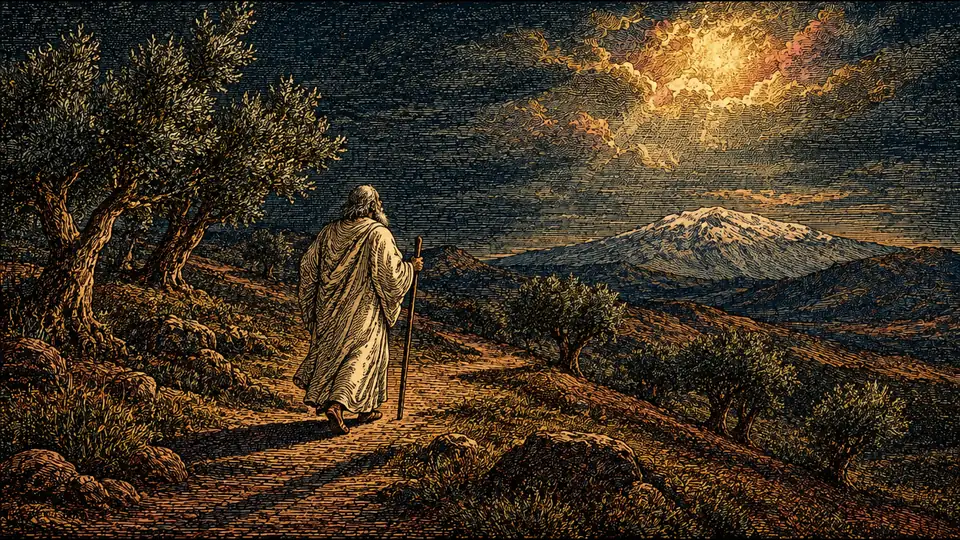
Enoch, the seventh from Adam, walked with God three hundred years, and then he was not, for God took him. Genesis says little more, but a whole book came to bear his name.
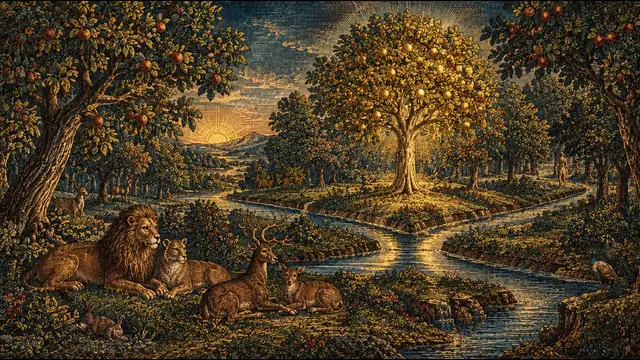
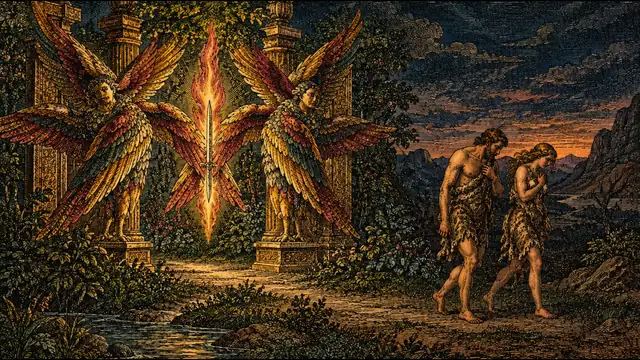
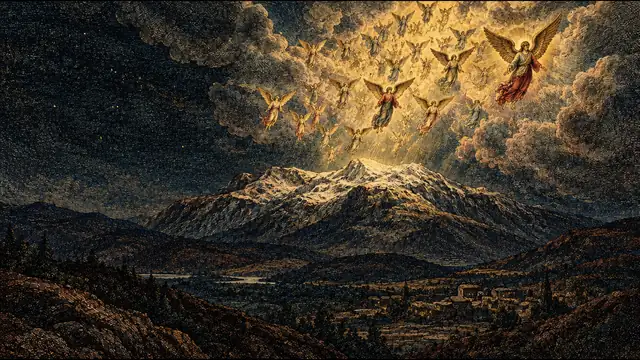
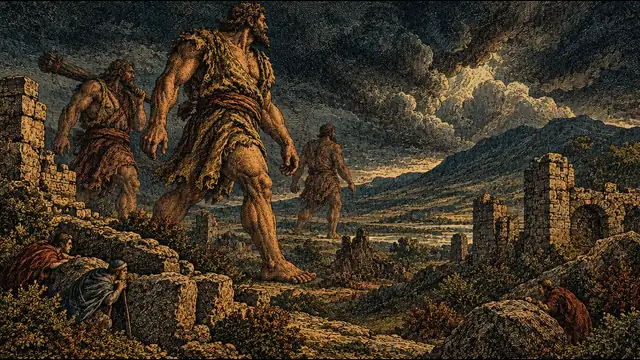
Press play: the paintings change with the story and the words come as the narrator reads them. The whole story is written out below.
Now playing: Enoch walked with God
The whole story
Enoch stands in the line of Seth, the father of Methuselah, who lived longer than any man in the Bible, and the great-grandfather of Noah. Every other life in the list of Genesis 5 ends with the words and he died; his ends otherwise. The letter to the Hebrews explains it: “By faith Enoch was translated that he should not see death; and was not found, because God had translated him” (Hebrews 11:5).
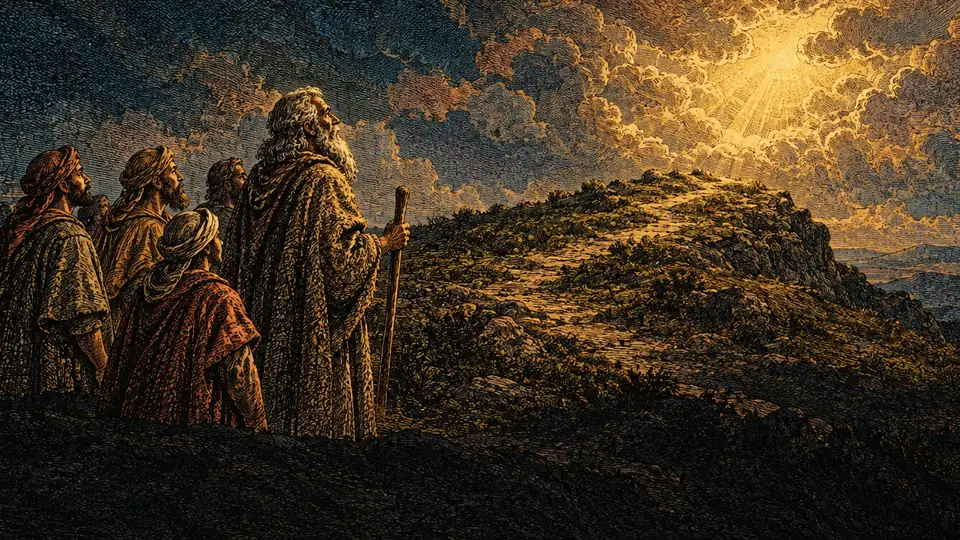
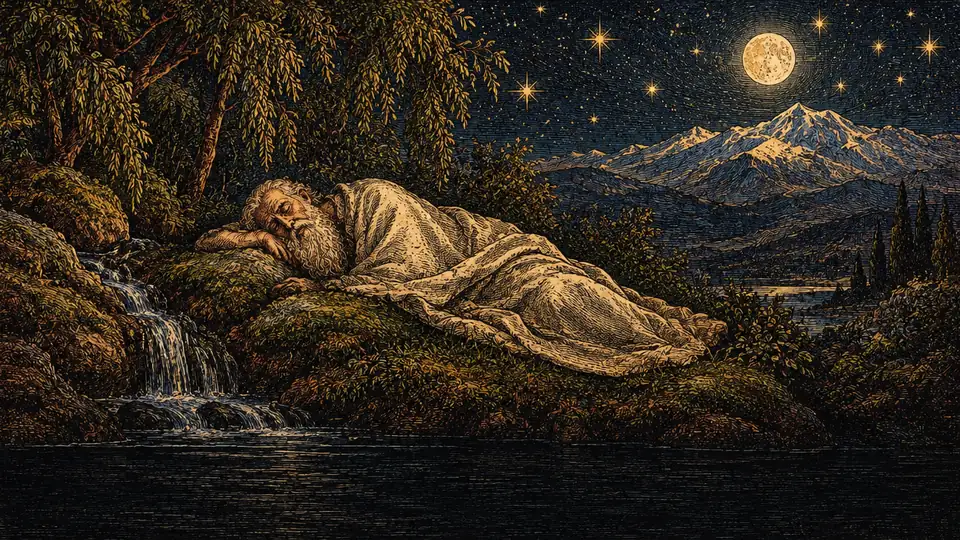
Around those few verses grew the Book of Enoch, a collection whose oldest parts were written some three centuries before Christ. It tells of Enoch carried through the heavens, shown the courses of the sun, the moon and the stars, and sent with a message to the fallen Watchers. In it he says, “I went off and sat down at the waters of Dan, in the land of Dan, to the south of the west of Hermon” (1 Enoch 13:7), where he read their petition until he fell asleep and dreamed.
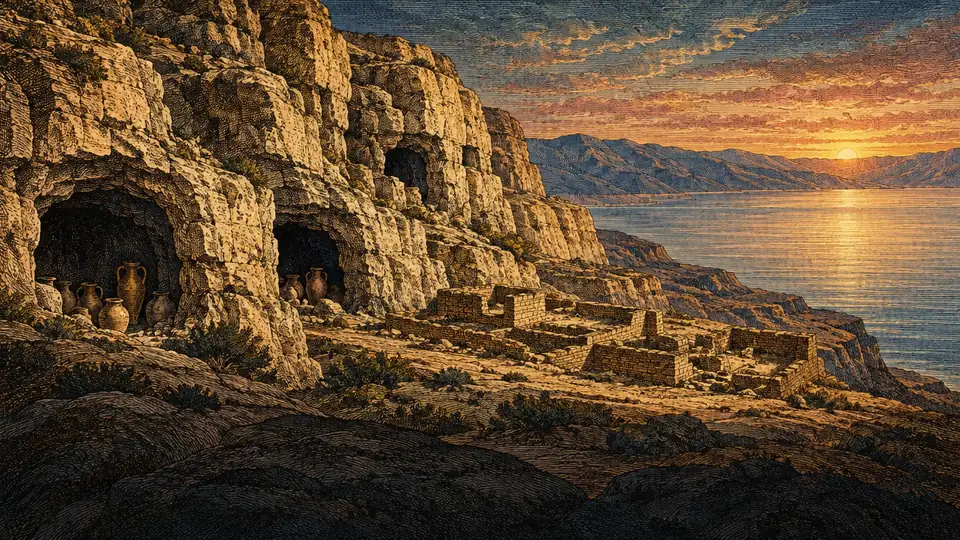
The book was lost to most of the world for centuries but kept whole in the Ethiopian Orthodox Church, whose Bible still includes it. The Scottish traveler James Bruce brought copies to Europe in 1773, and pieces of it in Aramaic were found among the Dead Sea Scrolls at Qumran. The New Testament letter of Jude quotes it: “Enoch also, the seventh from Adam, prophesied of these” (Jude 1:14).
And Enoch walked with God: and he was not; for God took him.
Genesis 5:24, KJV
Where it happened
Dan, Tel Dan, at the springs of the Jordan (site by tradition).
Genesis names no place for Enoch. The Book of Enoch sets him by the waters of Dan, to the south and west of Mount Hermon, where the springs of the Jordan rise at Tel Dan; the mark stands there.
Every story stands at its place on the Worldwide Watch map: the Bible’s world, on the map.
More from Beginnings
Genesis 1 to 11
Sources and editorial method
Research and editorial references used for this page include:
- The King James Bible, as published by bible-api.com
- The Book of Enoch, translated by R. H. Charles (1917), Project Gutenberg
Every story is told from the King James Bible, and from the Book of Enoch in R. H. Charles’s translation (1917) where a story names it. Every quotation was checked word for word against those texts. Where a place is not known, the page says so. The paintings and the narration were made for the house.

