
The ark comes to rest
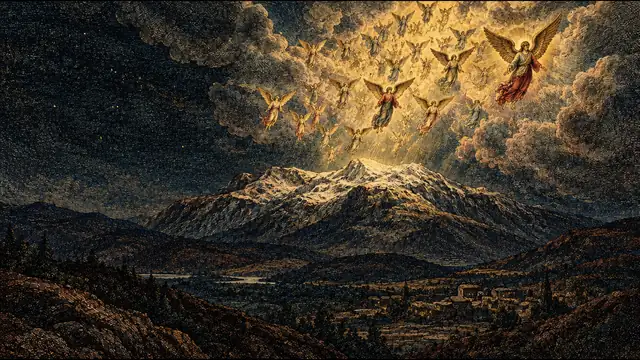
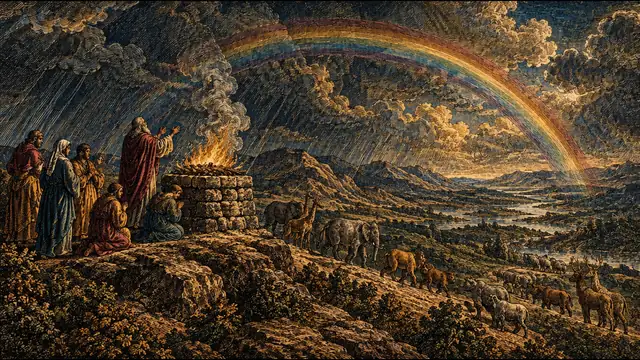
After the flood, Genesis says, the ark rested on the mountains of Ararat, in the seventh month, on the seventeenth day of the month.
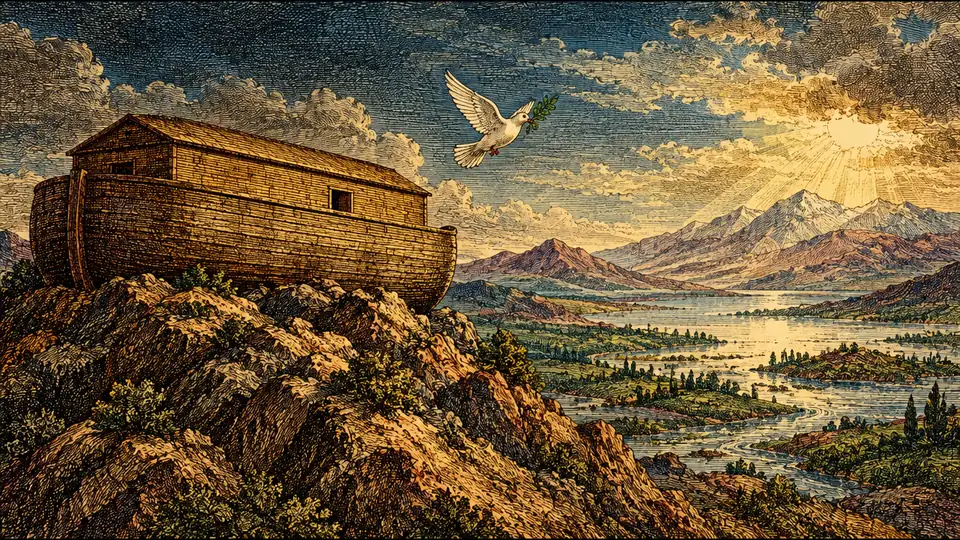
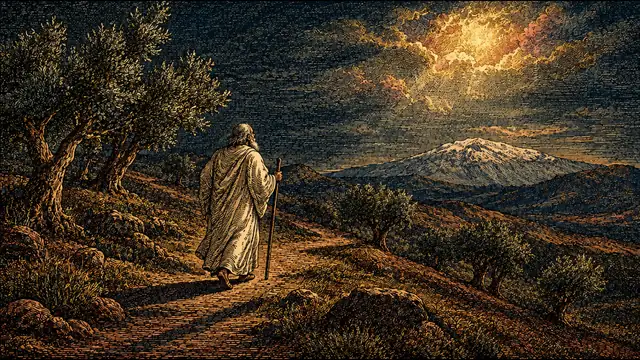
Press play: the paintings change with the story and the words come as the narrator reads them. The whole story is written out below.
Now playing: The ark comes to rest
The whole story
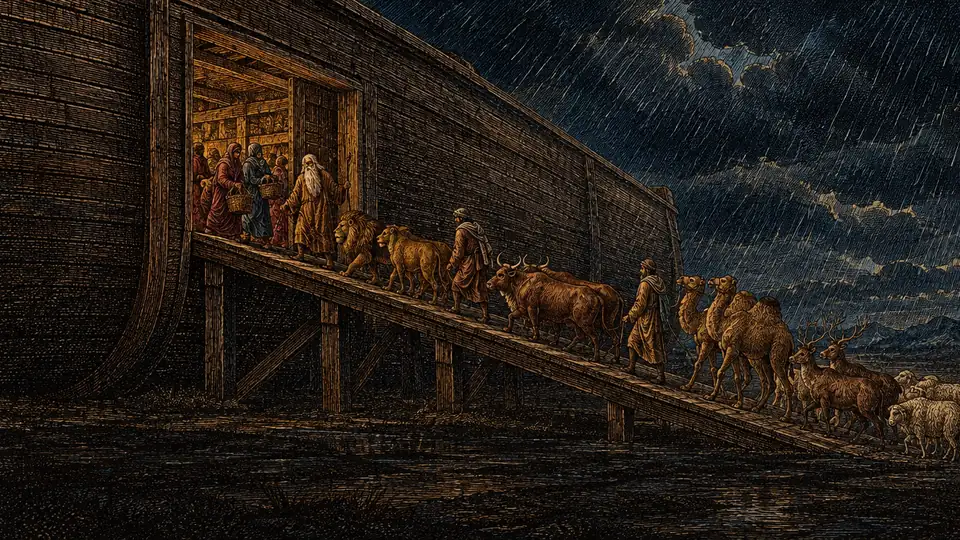
God saw that the wickedness of man was great in the earth, and told Noah to build an ark of gopher wood, three hundred cubits long, fifty broad and thirty high, and to bring in his family and the animals, two of every sort. The rain fell forty days and forty nights, and the waters prevailed upon the earth a hundred and fifty days.
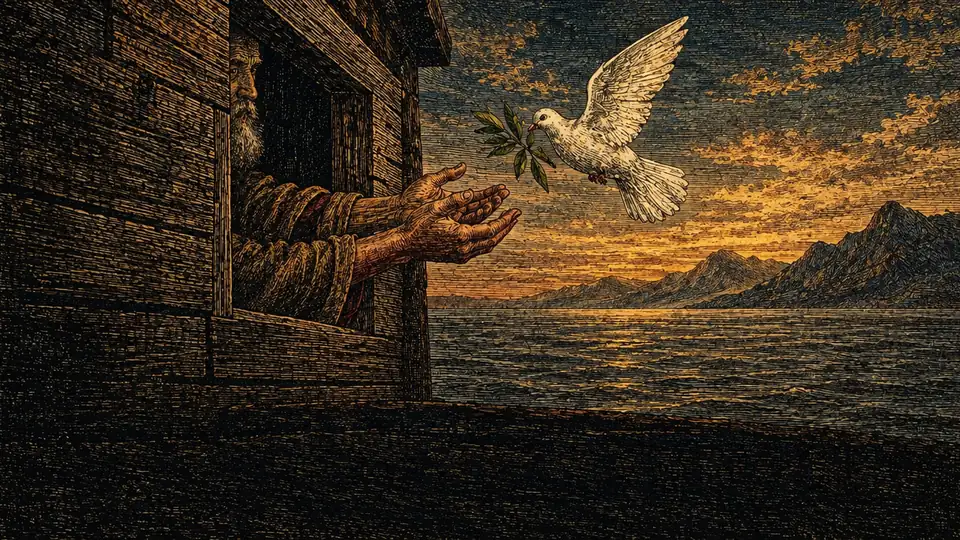
Then God remembered Noah, and the waters went down. After the ark came to rest, Noah opened the window and sent out a raven, and then a dove, which found no rest for the sole of her foot and came back. Sent again, she returned at evening with an olive leaf in her mouth, and the third time she did not return at all.
Genesis says the mountains of Ararat, the land the Assyrians called Urartu, in the highlands of eastern Turkey and Armenia. Travelers have searched the snows of Mount Ararat for the ark for centuries, and older traditions pointed to other peaks, such as Mount Judi to the south. Nothing found on any of them has been accepted as the ark.
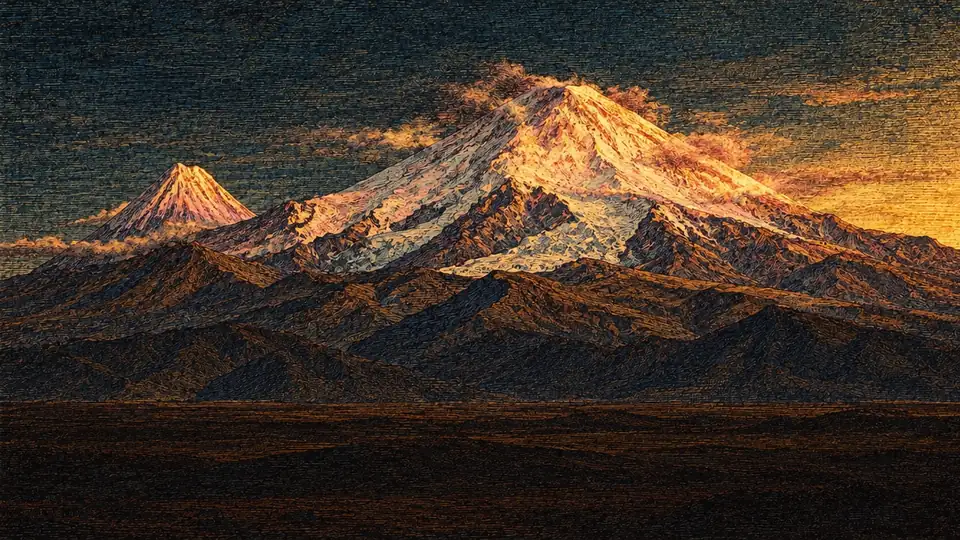
And the ark rested in the seventh month, on the seventeenth day of the month, upon the mountains of Ararat.
Genesis 8:4, KJV
Where it happened
The mountains of Ararat, Mount Ararat, eastern Turkey (site by tradition).
Genesis says only the mountains of Ararat, the old kingdom of Urartu in the Armenian highlands. Tradition chose Mount Ararat, its highest peak, where the mark stands.
Every story stands at its place on the Worldwide Watch map: the Bible’s world, on the map.
More from Beginnings
Genesis 1 to 11
Sources and editorial method
Research and editorial references used for this page include:
- The King James Bible, as published by bible-api.com
- The Book of Enoch, translated by R. H. Charles (1917), Project Gutenberg
Every story is told from the King James Bible, and from the Book of Enoch in R. H. Charles’s translation (1917) where a story names it. Every quotation was checked word for word against those texts. Where a place is not known, the page says so. The paintings and the narration were made for the house.

