
The unknown god
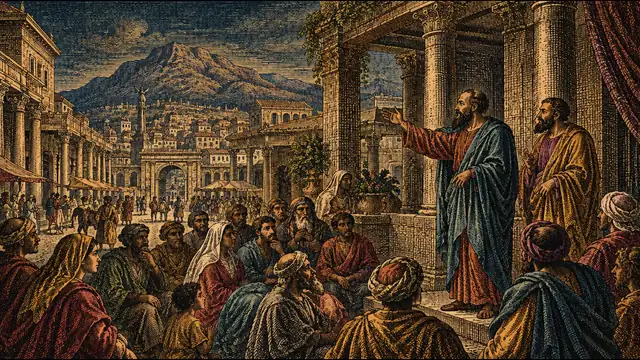
On Mars’ hill in Athens, Paul told the philosophers of the God they worshipped without knowing him.
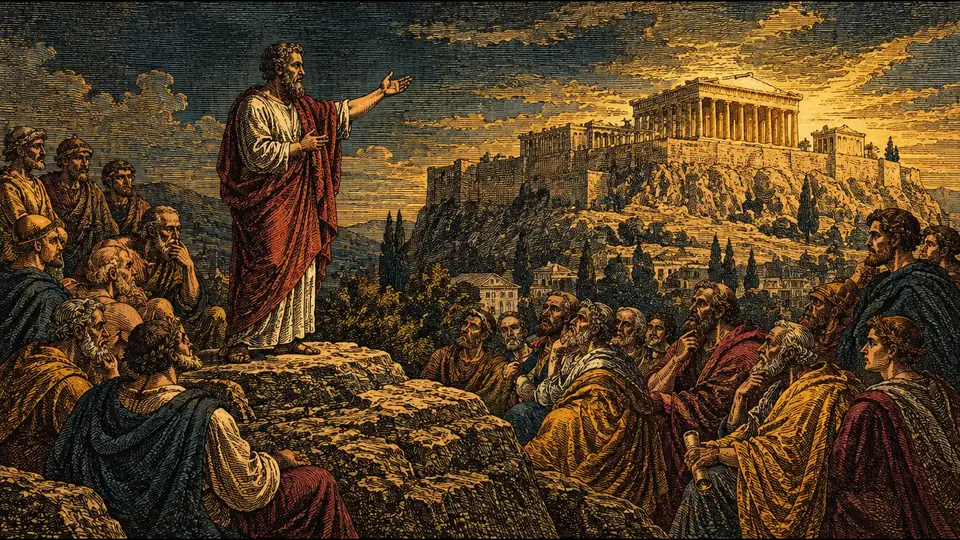
Press play: the paintings change with the story and the words come as the narrator reads them. The whole story is written out below.
Now playing: The unknown god
The whole story
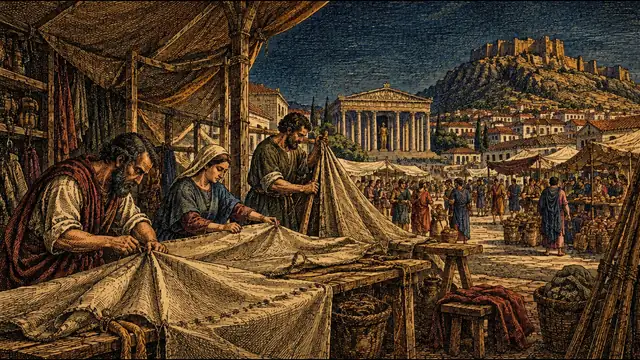
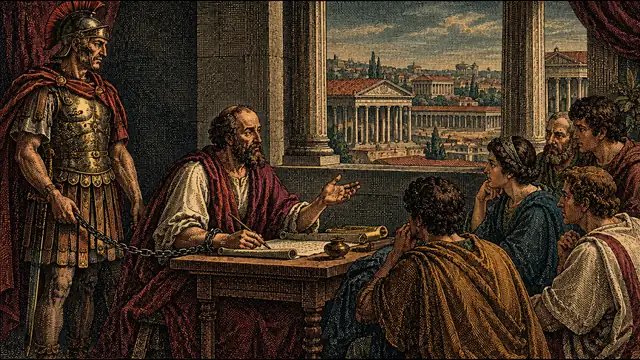
Waiting at Athens for Silas and Timothy, Paul saw the city wholly given to idolatry and disputed daily in the market. Epicurean and Stoic philosophers called him a babbler and a setter forth of strange gods, and brought him to the Areopagus, for all the Athenians spent their time in nothing else but either to tell, or to hear some new thing.
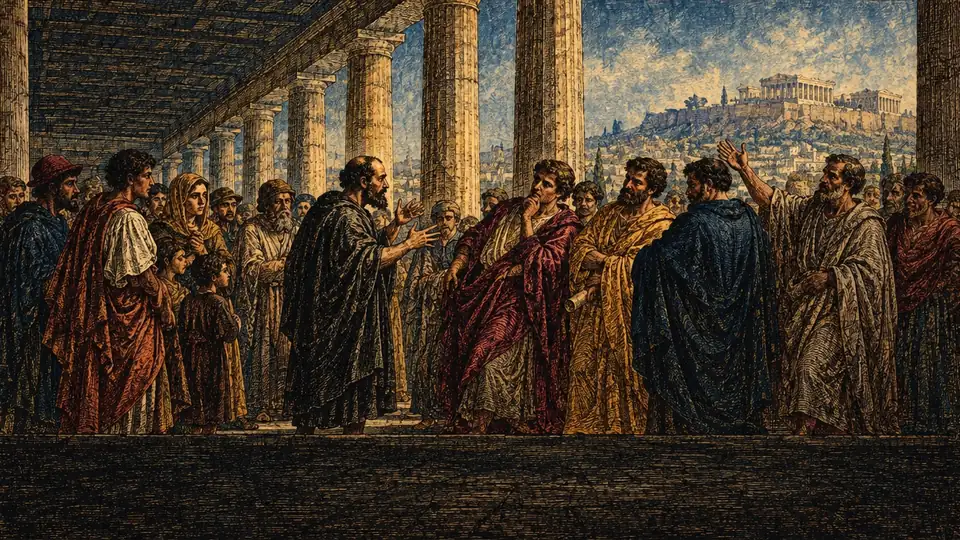
He spoke of the God who made the world and dwells not in temples made with hands, who made of one blood all nations of men, “For in him we live, and move, and have our being” (Acts 17:28), quoting their own poets. When he spoke of the resurrection of the dead, some mocked, others said they would hear him again, and a few believed, among them Dionysius the Areopagite and a woman named Damaris.
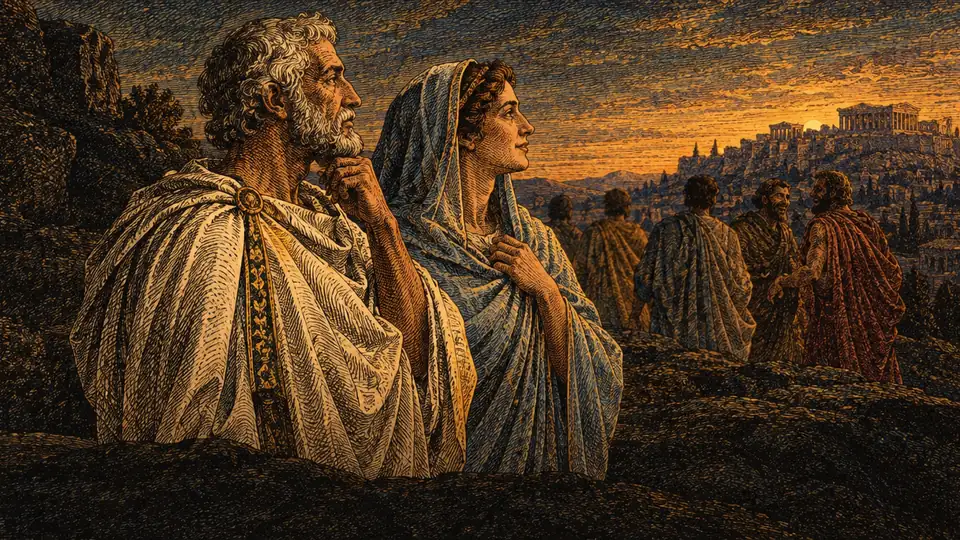
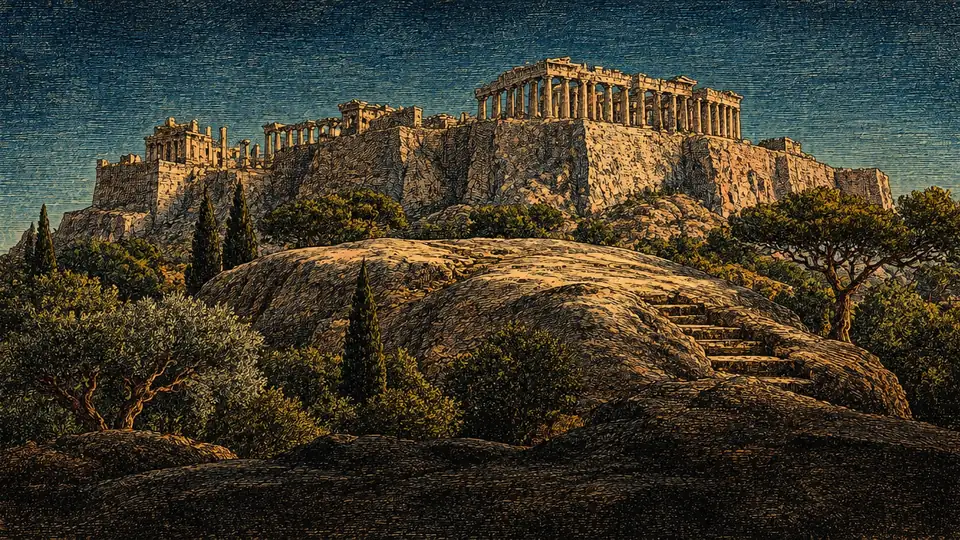
The Areopagus, Mars’ hill, is a bare rock below the Acropolis, worn smooth by the feet of visitors, where the council of the same name once met. A bronze plaque at its foot carries Paul’s speech in Greek, and tradition remembers Dionysius as the first bishop of Athens.
For as I passed by, and beheld your devotions, I found an altar with this inscription, TO THE UNKNOWN GOD. Whom therefore ye ignorantly worship, him declare I unto you.
Acts 17:23, KJV
Where it happened
Athens, The Areopagus, Athens.
The rock of the Areopagus, Mars’ hill, below the Acropolis.
Every story stands at its place on the Worldwide Watch map: the Bible’s world, on the map.
More from Acts and the letters
Acts and the epistles
Sources and editorial method
Research and editorial references used for this page include:
- The King James Bible, as published by bible-api.com
- The Book of Enoch, translated by R. H. Charles (1917), Project Gutenberg
Every story is told from the King James Bible, and from the Book of Enoch in R. H. Charles’s translation (1917) where a story names it. Every quotation was checked word for word against those texts. Where a place is not known, the page says so. The paintings and the narration were made for the house.

