
The road to Damascus
Saul, on his way to arrest the believers in Damascus, was struck down by a light from heaven and heard Jesus speak. Blinded, he was led into the city, and the persecutor became the apostle Paul.
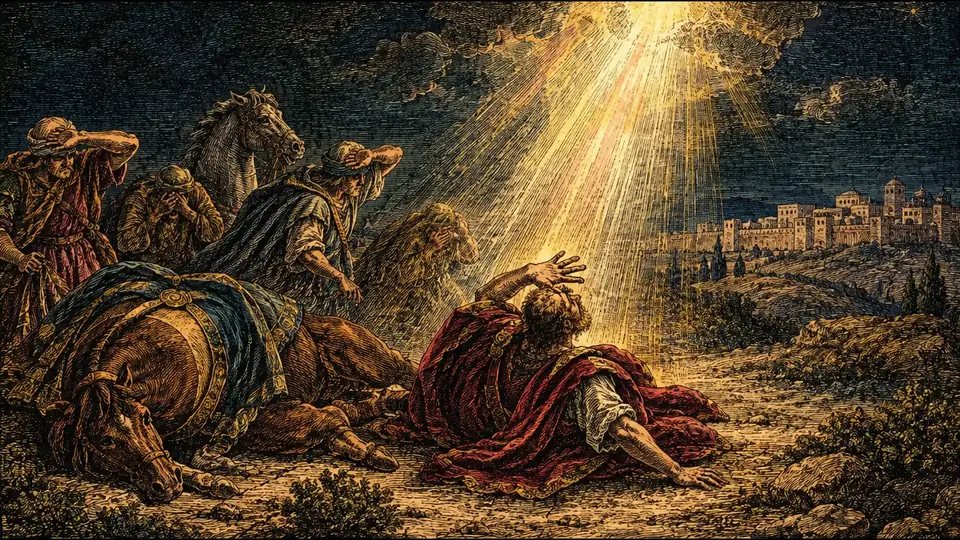
Press play: the paintings change with the story and the words come as the narrator reads them. The whole story is written out below.
Now playing: The road to Damascus
The whole story
Saul of Tarsus had kept the clothes of those who stoned Stephen and made havock of the church, and he asked the high priest for letters to the synagogues of Damascus, to bring any believers he found bound to Jerusalem. Struck down by the light, he asked, “Who art thou, Lord?” and heard, “I am Jesus whom thou persecutest” (Acts 9:5).
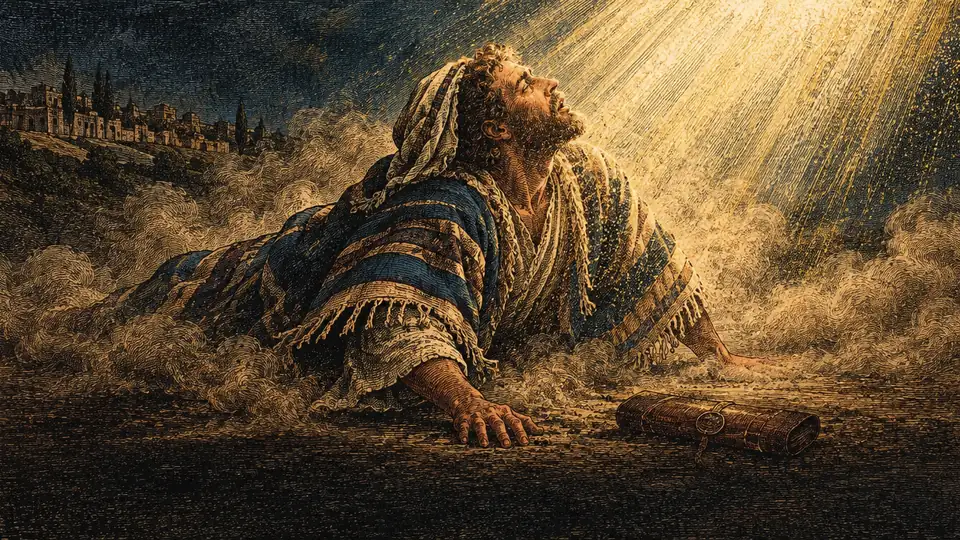
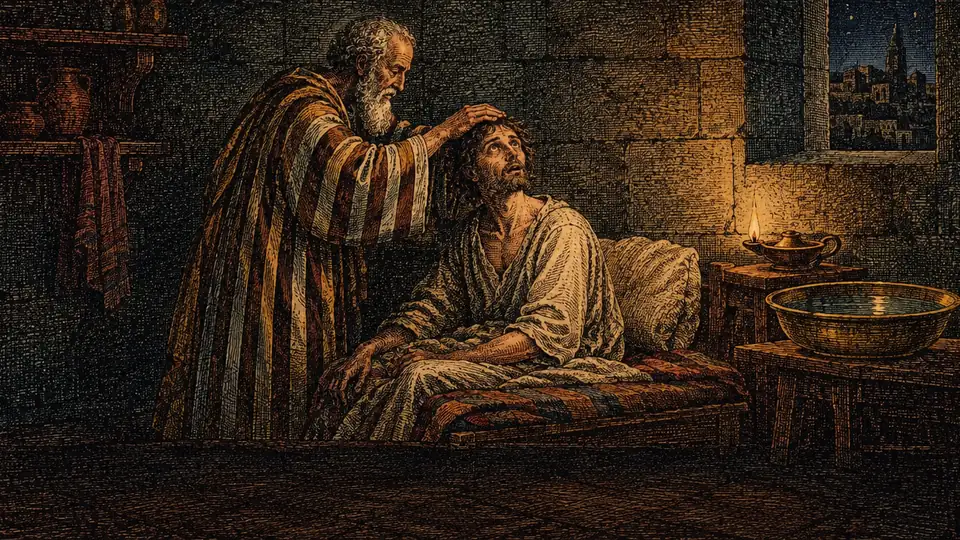
Blind three days, he was led into the city to the street called Straight, where he neither ate nor drank. The Lord sent a disciple named Ananias to lay his hands on him, and there fell from his eyes as it had been scales. He was baptized, and soon preached in the synagogues that Jesus was the Son of God, until a plot against his life forced him to escape by night, let down over the wall in a basket.
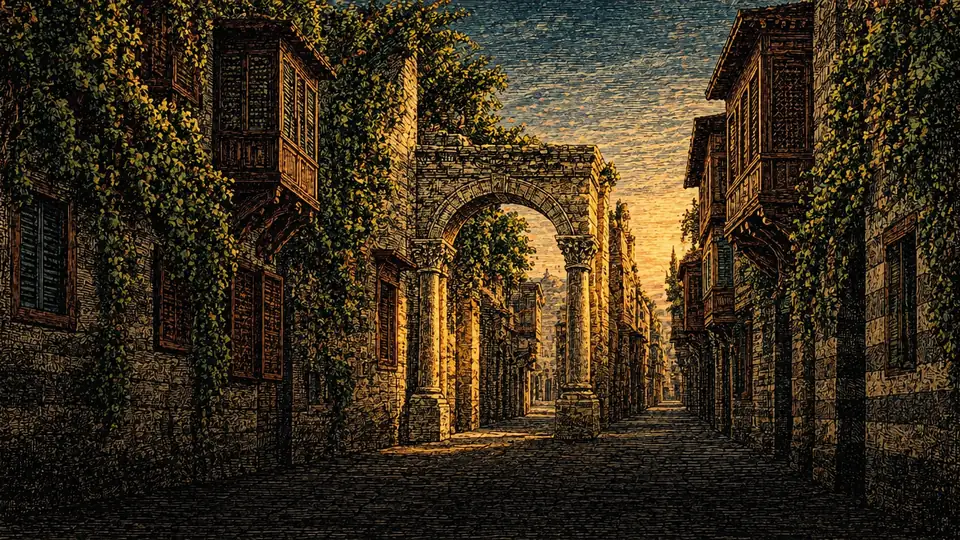
The street called Straight, the long straight street of Roman Damascus, still runs across the old city from east to west, with a Roman arch along it. An underground chapel of Saint Ananias is shown nearby, and a chapel of Saint Paul stands by the gate where tradition says he was let down from the wall.
And he fell to the earth, and heard a voice saying unto him, Saul, Saul, why persecutest thou me?
Acts 9:4, KJV
Where it happened
Damascus, Syria.
Damascus is known; the spot on the road where Saul fell is not.
Every story stands at its place on the Worldwide Watch map: the Bible’s world, on the map.
More from Acts and the letters
Acts and the epistles
Sources and editorial method
Research and editorial references used for this page include:
- The King James Bible, as published by bible-api.com
- The Book of Enoch, translated by R. H. Charles (1917), Project Gutenberg
Every story is told from the King James Bible, and from the Book of Enoch in R. H. Charles’s translation (1917) where a story names it. Every quotation was checked word for word against those texts. Where a place is not known, the page says so. The paintings and the narration were made for the house.

