
Shipwrecked on Melita
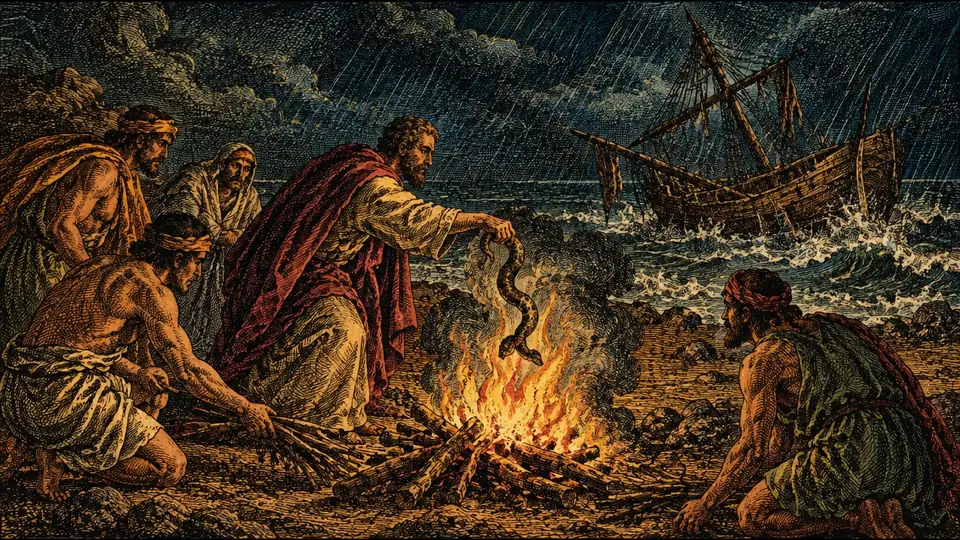
Sailing to Rome as a prisoner, Paul was wrecked on the island called Melita. A viper fastened on his hand by the fire; he shook it off and felt no harm.
Press play: the paintings change with the story and the words come as the narrator reads them. The whole story is written out below.
Now playing: Shipwrecked on Melita
The whole story
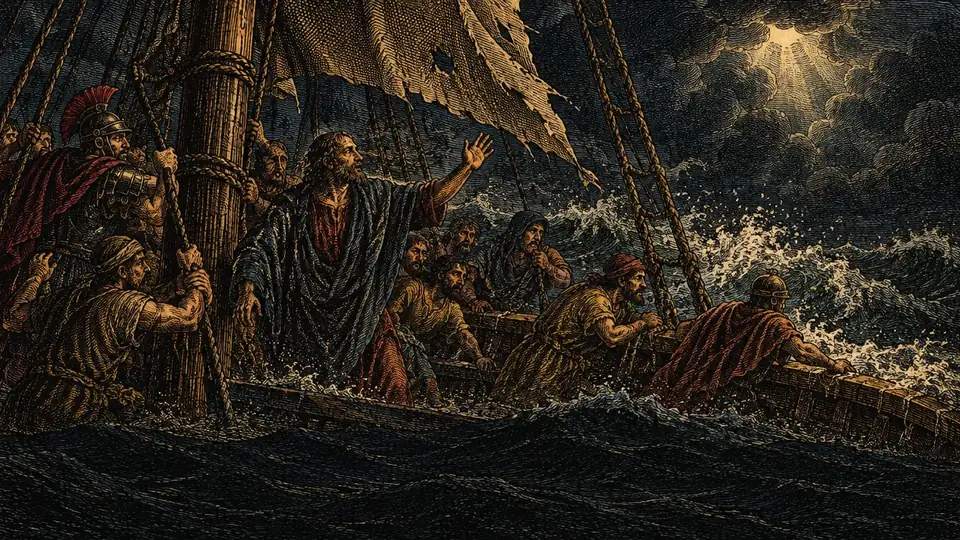
Paul, a prisoner who had appealed to Caesar, sailed for Rome late in the year with two hundred and seventy-six souls on board. A tempestuous wind called Euroclydon drove the ship for fourteen days, until all hope that they should be saved was taken away. Paul stood among them and said an angel had told him that none would be lost, only the ship.
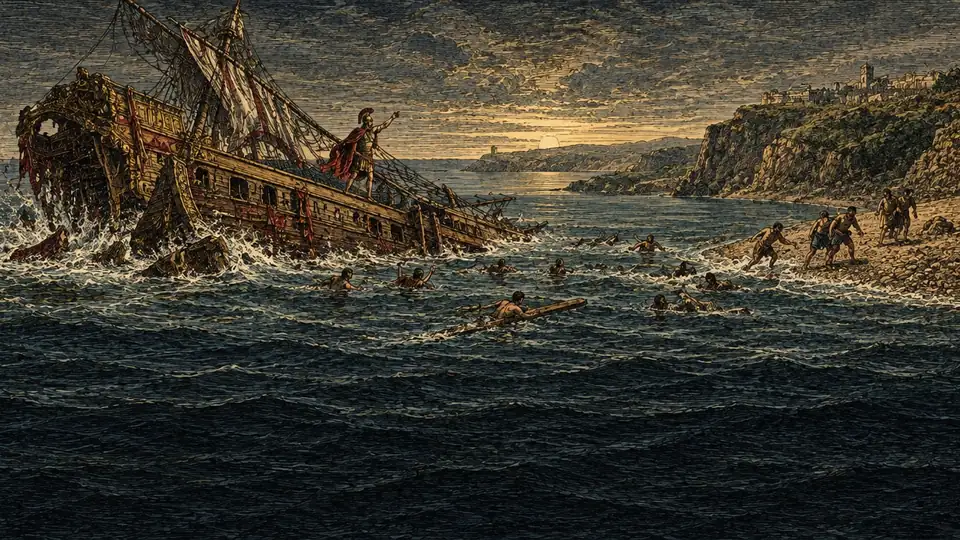
They ran the ship aground where two seas met, and the soldiers wanted to kill the prisoners lest any swim away, but the centurion, willing to save Paul, kept them from it. Some swam and some came on boards and broken pieces of the ship, “And so it came to pass, that they escaped all safe to land” (Acts 27:44).
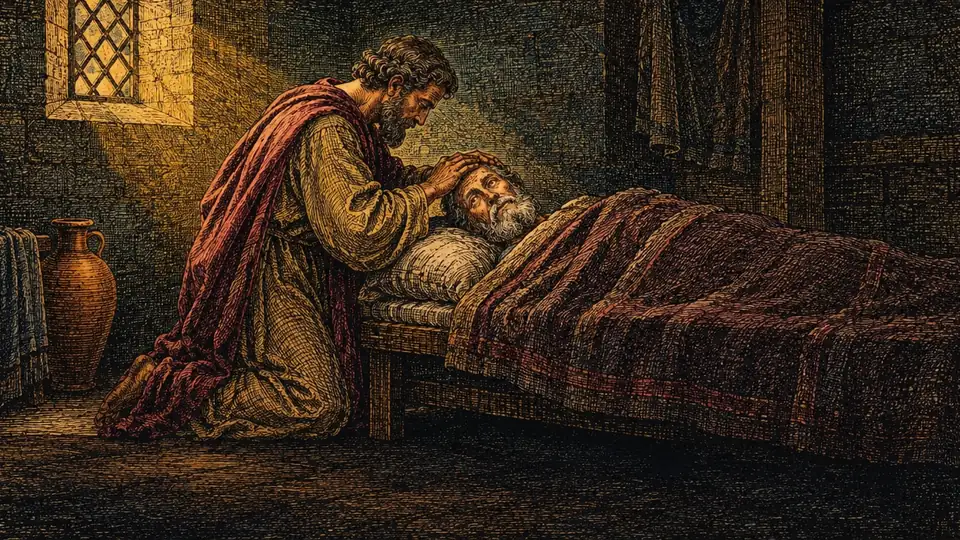
The islanders showed them no little kindness and kindled a fire. When the viper did Paul no harm, they said he was a god. Publius, the chief man of the island, received them, and Paul healed his father of a fever. Malta still keeps the feast of Saint Paul’s shipwreck on the tenth of February, and a statue of the apostle stands on an islet in Saint Paul’s Bay.
And he shook off the beast into the fire, and felt no harm.
Acts 28:5, KJV
Where it happened
Melita, St Paul’s Bay, Malta (site by tradition).
Malta is widely taken to be Melita, and St Paul’s Bay the place of the wreck; a few scholars argue for other islands.
Every story stands at its place on the Worldwide Watch map: the Bible’s world, on the map.
More from Acts and the letters
Acts and the epistles
Sources and editorial method
Research and editorial references used for this page include:
- The King James Bible, as published by bible-api.com
- The Book of Enoch, translated by R. H. Charles (1917), Project Gutenberg
Every story is told from the King James Bible, and from the Book of Enoch in R. H. Charles’s translation (1917) where a story names it. Every quotation was checked word for word against those texts. Where a place is not known, the page says so. The paintings and the narration were made for the house.

