
Pentecost
At Pentecost the Holy Ghost came on the disciples in cloven tongues like as of fire, and the crowd from every nation heard them speak in their own tongues. The lines run to the lands Acts names, from Parthia to Rome.
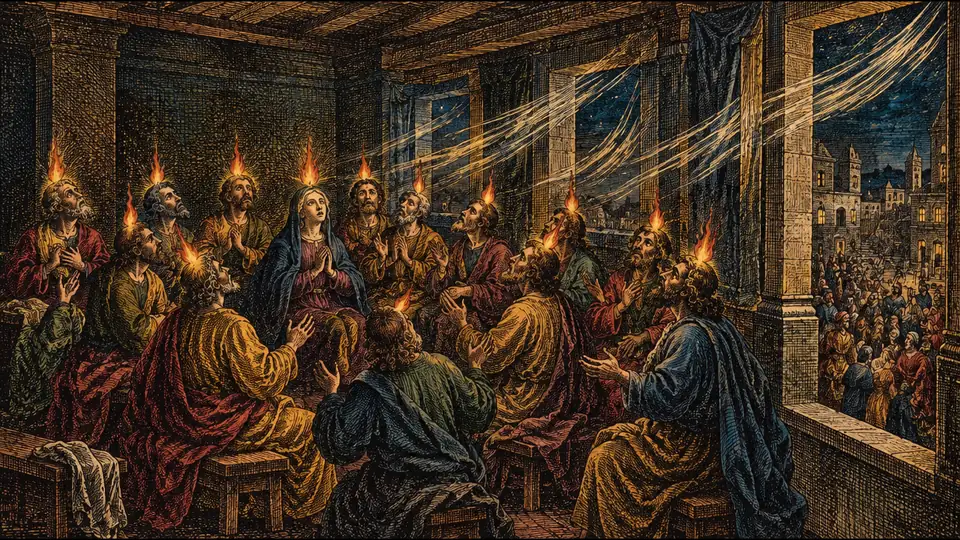
Press play: the paintings change with the story and the words come as the narrator reads them. The whole story is written out below.
Now playing: Pentecost
The whole story
Fifty days after the Passover, at the Jewish feast of weeks, the disciples were all with one accord in one place. Suddenly there came a sound from heaven as of a rushing mighty wind, and cloven tongues like as of fire sat upon each of them. Jews from every nation under heaven, dwelling in Jerusalem, heard them speak in their own languages, and were amazed.
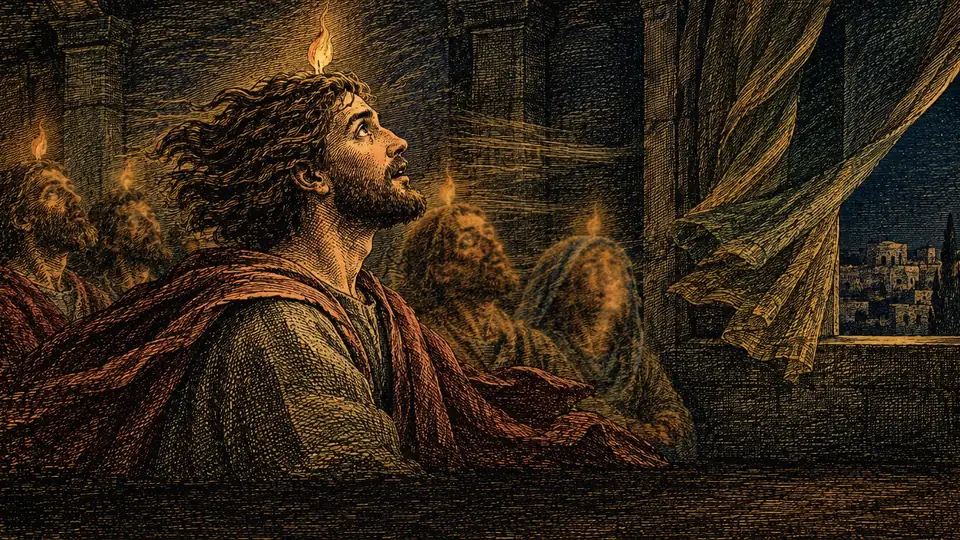
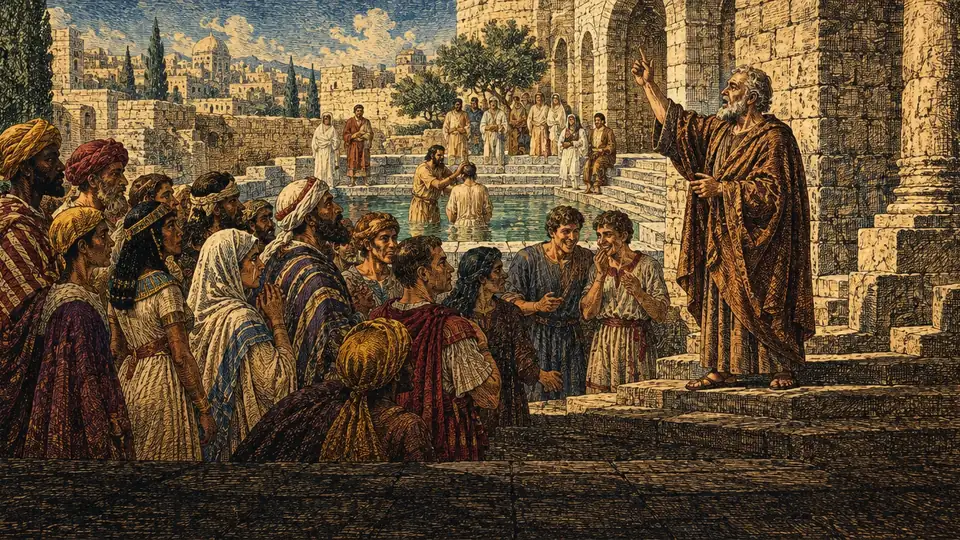
Some mocked and said they were full of new wine. Peter stood up and said it was but the third hour of the day, and that this was what the prophet Joel had spoken: “I will pour out of my Spirit upon all flesh” (Acts 2:17). He preached the risen Christ, and about three thousand souls were baptized that day.
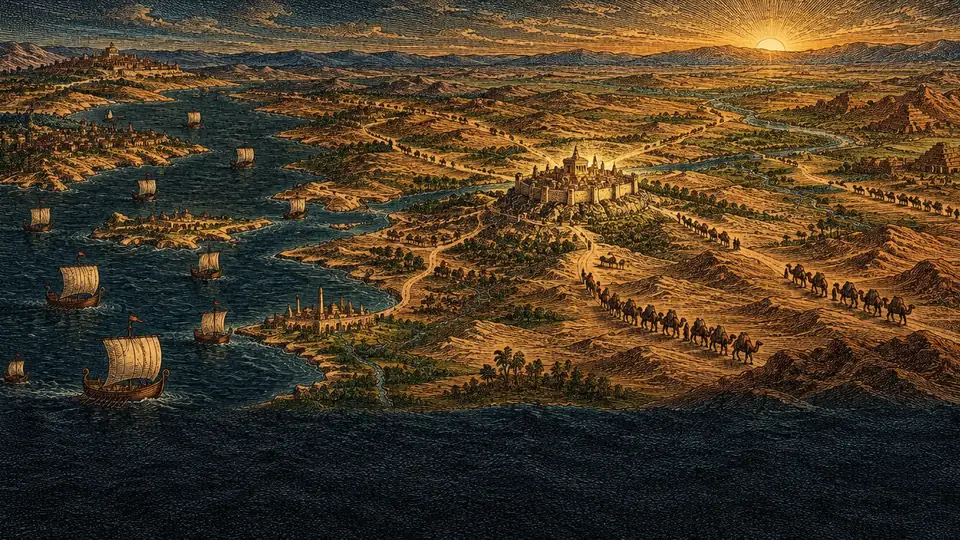
The crowd’s homelands, from Parthia, Media and Elam to Mesopotamia, Asia, Egypt, Crete, Arabia and Rome, run across the known world, and the lines on the map follow them. Many read Pentecost as Babel undone: there one language was confounded and the people scattered; here many languages were understood, and the scattered were gathered.
And they were all filled with the Holy Ghost, and began to speak with other tongues, as the Spirit gave them utterance.
Acts 2:4, KJV
Where it happened
Jerusalem.
The city is known; the gold mark is the Temple Mount, where Solomon’s temple stood.
Every story stands at its place on the Worldwide Watch map: the Bible’s world, on the map.
More from Acts and the letters
Acts and the epistles
Sources and editorial method
Research and editorial references used for this page include:
- The King James Bible, as published by bible-api.com
- The Book of Enoch, translated by R. H. Charles (1917), Project Gutenberg
Every story is told from the King James Bible, and from the Book of Enoch in R. H. Charles’s translation (1917) where a story names it. Every quotation was checked word for word against those texts. Where a place is not known, the page says so. The paintings and the narration were made for the house.

