
Faith, hope, charity
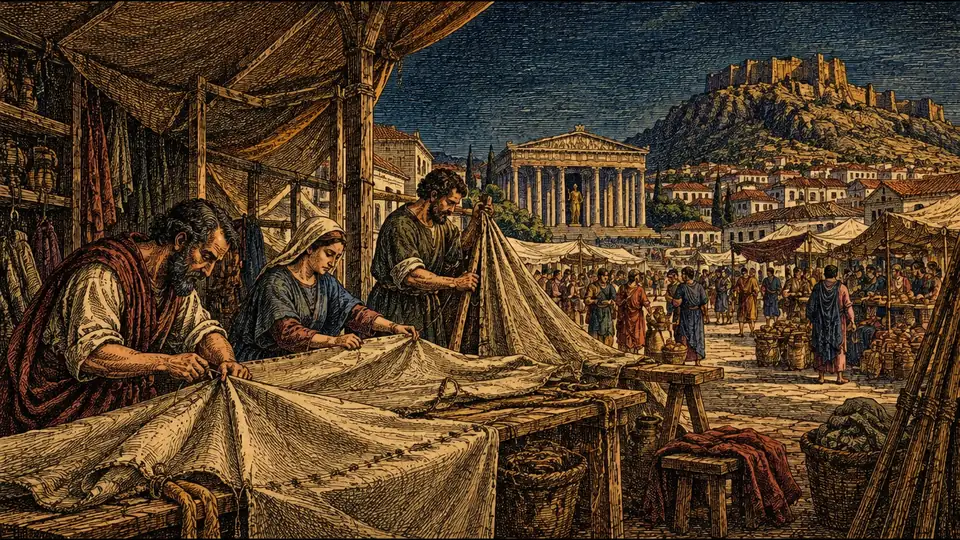
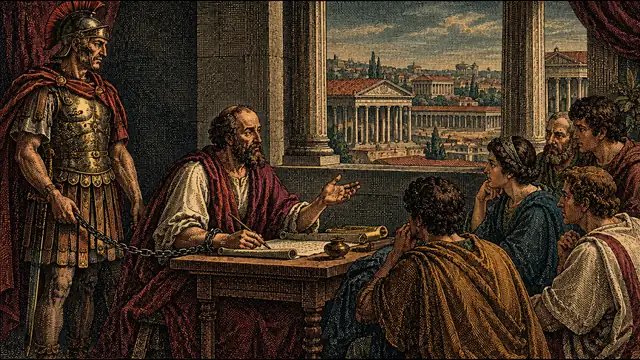
Paul stayed a year and six months in Corinth, making tents and teaching. Later he wrote the Corinthians his chapter on charity.
Press play: the paintings change with the story and the words come as the narrator reads them. The whole story is written out below.
Now playing: Faith, hope, charity
The whole story
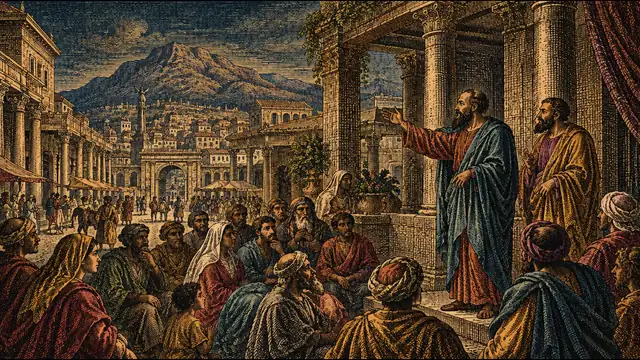
At Corinth Paul found Aquila and Priscilla, lately come from Italy because Claudius had commanded all Jews to depart from Rome, and because they were tentmakers too, he stayed and worked with them. When the synagogue opposed him, he taught next door in the house of Justus, and Crispus, the chief ruler of the synagogue, believed with all his house.
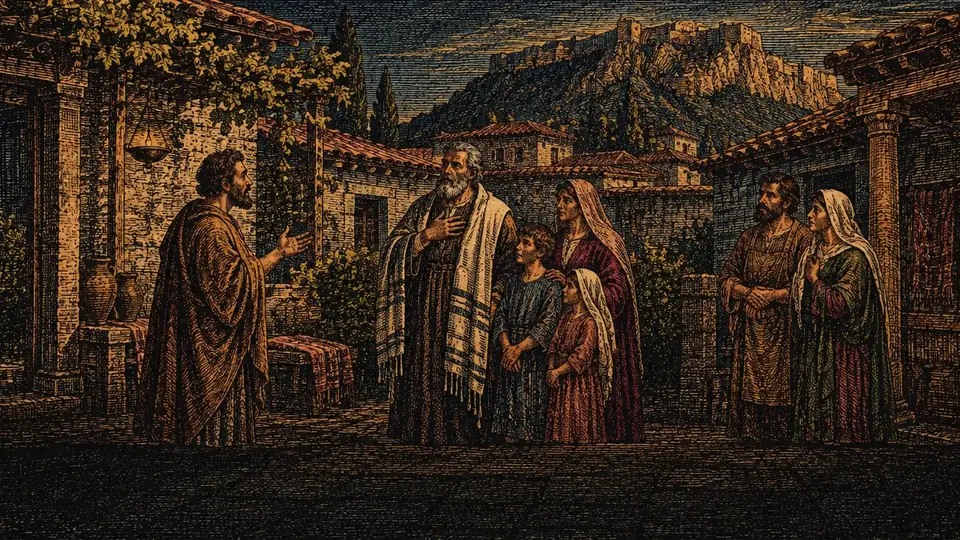
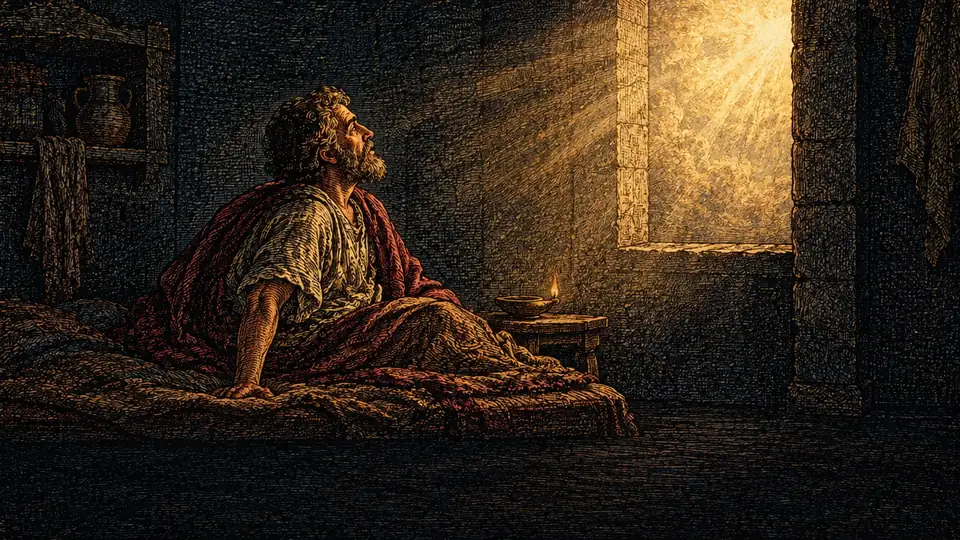
In a vision by night the Lord told him, “Be not afraid, but speak, and hold not thy peace” (Acts 18:9), and he stayed a year and six months. Brought before the proconsul Gallio, he was set free when Gallio refused to judge a question of words and names and of their law. An inscription found at Delphi dates Gallio’s year in office to about AD 51, one of the surest dates in Paul’s life.
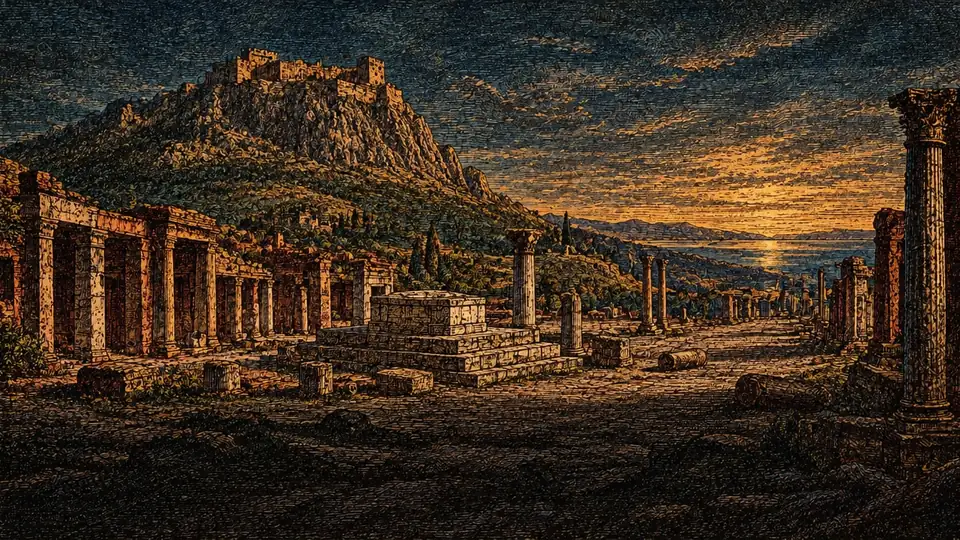
Corinth was a rich and worldly port on the isthmus between two seas, and Paul’s letters to its church deal with divisions, lawsuits and disorder at the Lord’s supper. Into them he set his hymn to charity: “Charity suffereth long, and is kind” (1 Corinthians 13:4). The stone platform where Paul stood before Gallio still stands in the old forum.
And now abideth faith, hope, charity, these three; but the greatest of these is charity.
1 Corinthians 13:13, KJV
Where it happened
Corinth, Ancient Corinth, Greece.
The ruins of Corinth, by the isthmus between two seas.
Every story stands at its place on the Worldwide Watch map: the Bible’s world, on the map.
More from Acts and the letters
Acts and the epistles
Sources and editorial method
Research and editorial references used for this page include:
- The King James Bible, as published by bible-api.com
- The Book of Enoch, translated by R. H. Charles (1917), Project Gutenberg
Every story is told from the King James Bible, and from the Book of Enoch in R. H. Charles’s translation (1917) where a story names it. Every quotation was checked word for word against those texts. Where a place is not known, the page says so. The paintings and the narration were made for the house.

