
Great is Diana
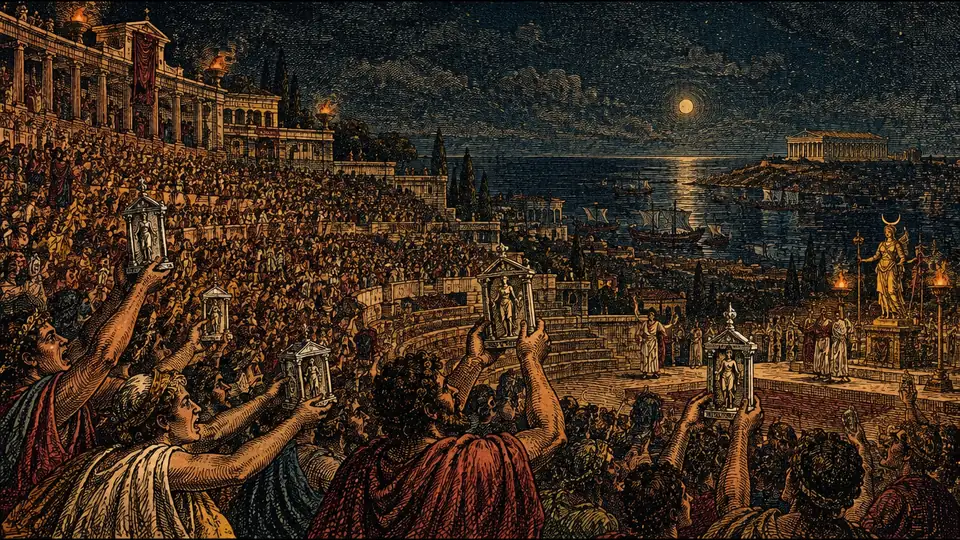
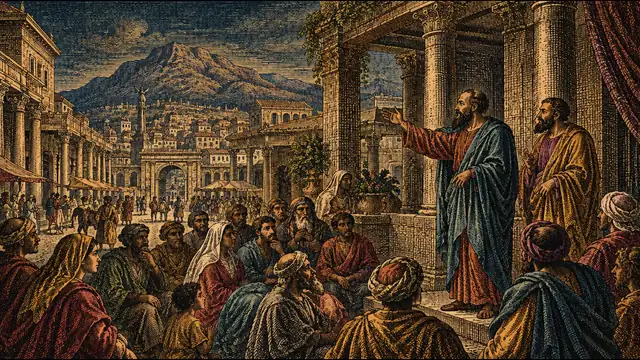
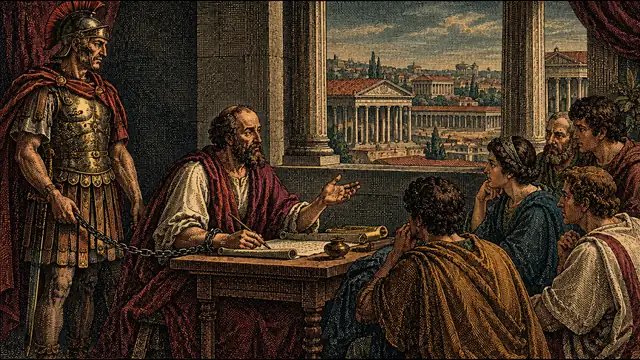
Paul’s preaching in Ephesus so hurt the trade in silver shrines of Diana that the silversmiths filled the theater with a cry that lasted two hours.
Press play: the paintings change with the story and the words come as the narrator reads them. The whole story is written out below.
Now playing: Great is Diana
The whole story
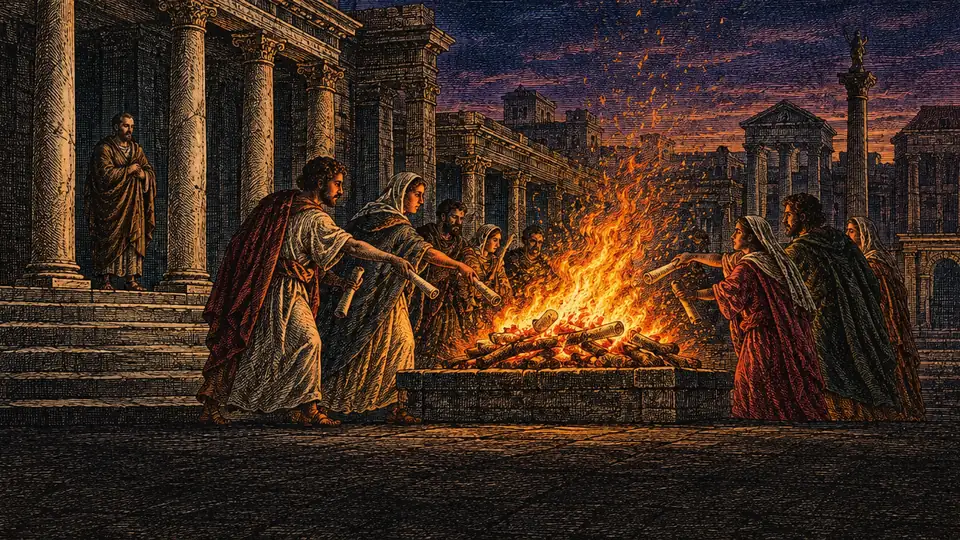
Paul stayed more than two years at Ephesus, disputing daily in the school of Tyrannus, so that all they which dwelt in Asia heard the word. Many who had used curious arts brought their books together and burned them before all, and counted their price at fifty thousand pieces of silver.
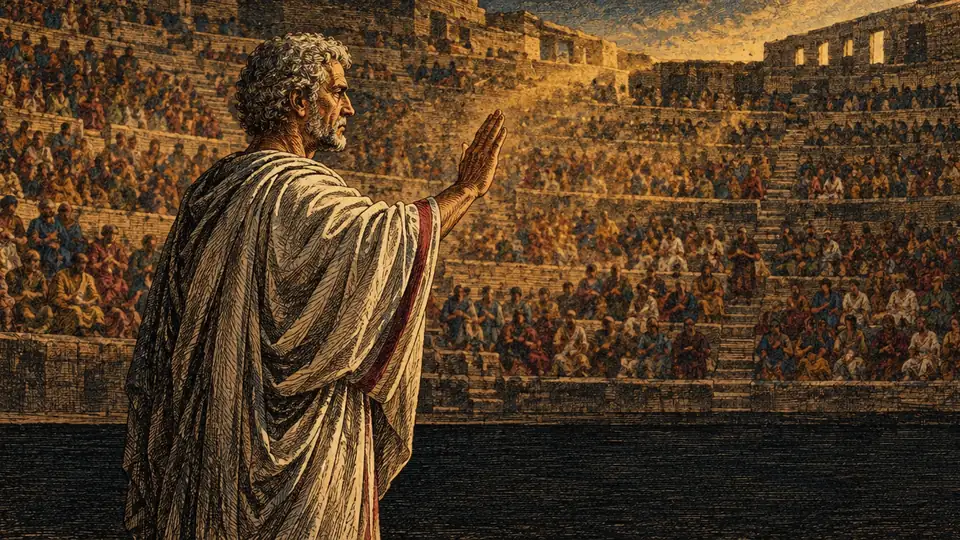
Demetrius, a silversmith who made silver shrines for Diana, called his fellow craftsmen together and warned that their trade and the temple of the great goddess were in danger. The whole city was filled with confusion, and they rushed into the theater and cried out for about two hours, until the town clerk quieted them and sent them away.
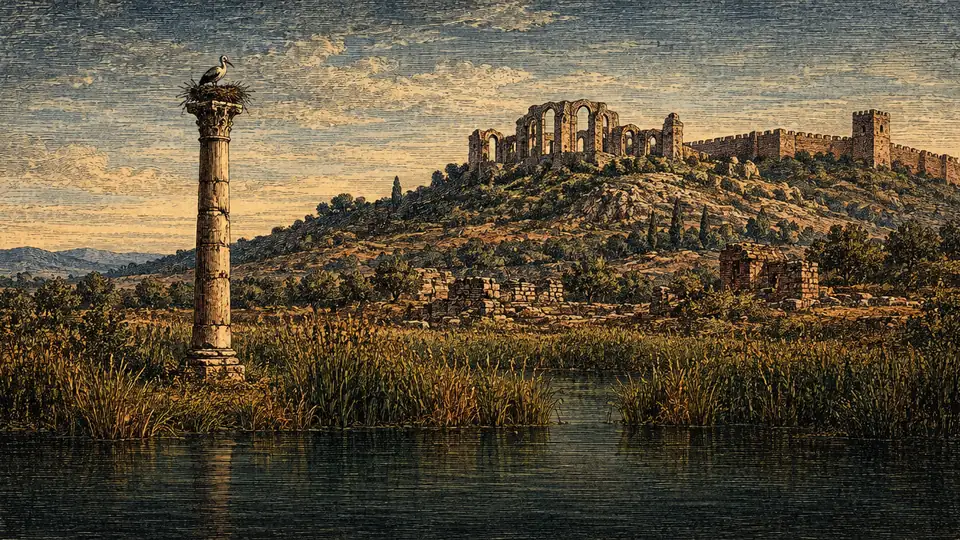
The temple of Artemis, whom the Romans called Diana, was one of the seven wonders of the ancient world; one column of it stands today in a marsh. The great theater, seating some twenty-four thousand, still stands, with the library of Celsus. Tradition says the apostle John lived at Ephesus in his old age, and the ruins of his basilica crown a hill at Selçuk.
And when they heard these sayings, they were full of wrath, and cried out, saying, Great is Diana of the Ephesians.
Acts 19:28, KJV
Where it happened
Ephesus, Near Selçuk, western Turkey.
The ruins of Ephesus, near Selçuk; its great theater still stands.
Every story stands at its place on the Worldwide Watch map: the Bible’s world, on the map.
More from Acts and the letters
Acts and the epistles
Sources and editorial method
Research and editorial references used for this page include:
- The King James Bible, as published by bible-api.com
- The Book of Enoch, translated by R. H. Charles (1917), Project Gutenberg
Every story is told from the King James Bible, and from the Book of Enoch in R. H. Charles’s translation (1917) where a story names it. Every quotation was checked word for word against those texts. Where a place is not known, the page says so. The paintings and the narration were made for the house.

