

Mystical systems
Changeling
Direct answer
Changeling: A changeling, in European folk belief, is a substitute left by the fairies in place of a human child or adult whom they have carried off.
$0 today, then $19/month after 7 days. Cancel anytime.
At a glance
- Found in
- Mystical Systems
- Related
- Fairy, Elementals, Ghost, Gnome
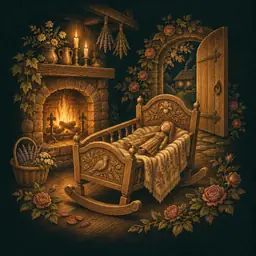

A changeling, in European folk belief, is a substitute left by the fairies in place of a human child or adult whom they have carried off.
A lineage map for books and systems; it avoids presenting symbolic traditions as literal fact.
Understand the chapter you are in.
Your life’s turning points, measured from your birth.
Walk through Alex’s whole example first


Prefer to explore first?
 The Road of AgesThe turning points of your whole life, from your own chart
Walk my road
What is a changeling?
The changeling belief held that the fairies, or in Scandinavia the trolls and in Germany the underground people, coveted human children and sometimes young mothers. They took the healthy one and left in its place one of their own, or an enchanted piece of wood, that looked the same but did not thrive: it cried without stopping, ate and never grew, or lay silent. Unbaptised infants were thought most at risk, and iron, a Bible or a watch kept by the cradle were the usual safeguards.
The stories also told how to get the real child back, by tricking the changeling into speaking or by threatening it. Those parts of the belief led to real harm, because the threats were carried out on real children and invalids.
On the tree of the hidden arts: The spirit realm.
What sets Changeling apart
A changeling story has three fixed parts: the theft, usually of an unbaptised or unwatched infant; the substitute, which is described by exactly the signs of a child who is ill or not developing; and the test, in which the family tries to make the creature reveal itself. The first two explain a sorrow. The third is where the harm lay, since the tests in the tales, fire, water and exposure, were sometimes used. Historians treat the surviving court cases as the plainest evidence of what the belief meant in practice.
- Left in place of: an infant, or a young wife or mother
- Safeguards in the tales: iron, a Bible, and a watch kept by the cradle
- Common tale: the brewing in eggshells that makes it speak
- Kerry case: Ann Roche, tried in 1826
- Tipperary case: Bridget Cleary, killed in 1895
- Other lands: trolls in Scandinavia, underground folk in Germany
Often mistaken for something else: A fairy child in a story may be given or fostered openly; a changeling is a secret exchange, discovered only when the substitute fails to thrive.
The story behind Changeling
Stories of the type are recorded from the Middle Ages, and Martin Luther spoke of such children in his table talk. Collectors found the belief across Ireland, Britain, Scandinavia and Germany in the nineteenth century. Court records show its cost: in 1826 Ann Roche drowned a boy in the River Flesk in County Kerry while trying to drive the fairy out, and in 1895 Bridget Cleary was burned to death in County Tipperary by her husband.
Why Changeling matters
Changeling shows how a folk belief could explain a child who failed to thrive, and how the same belief could turn against the weakest person in the house.
How to read Changeling
Readers meet the word in ballads, fairy tales and fantasy, and the history behind it is a reason to read those tales with some sobriety.
Changeling in practice: an example
An old tale in which a mother brews water in eggshells, so that the strange child speaks and betrays its age, is a changeling story of the commonest kind.
Where readings of Changeling go wrong
The tests in the old tales were cruelty, and a child who is not thriving needs a doctor.
Sources and editorial method
This entry summarizes the tradition in the Almanac's own words; where no source is listed, it is an editorial summary rather than a primary text, and symbolic readings are named as the tradition's, not as fact.
- Source
- The Great Almanac Dictionary
- Category
- Mystical Systems
- Aliases
- changelings, fairy changeling, changeling child, changeling folklore, changeling meaning
- Last updated
- 2026-09-26
See Changeling in your personal almanac
A definition tells you what it is; your own birth chart tells you what it means for you. The Oracle casts your real chart and answers for your love, your work, and your year ahead, in conversation. It opens with the 7-day Oracle trial.
Speak with the OracleRelated terms
More in Mystical Systems
From the reference page to your own chart
Every word here
is in your own chart.
- Your life’s turning points, measured from your birth
- A practical next step to consider
- It opens with 7 days free: the AI Oracle on thirty hidden arts, and your daily horoscope
$0 today, then $19/month after 7 days. Cancel anytime.
Common questions
What is a changeling?
In folk belief, a being left by the fairies in place of a stolen human, usually an infant. The substitute was said to look the same and to sicken or behave strangely.
Why did people believe in changelings?
Scholars think the belief gave families a way to account for a child who was ill, disabled or failing to thrive, at a time when no other explanation was available.
Who was Bridget Cleary?
An Irish woman killed in 1895 by her husband, who claimed the fairies had taken his wife and left a substitute. He was convicted of manslaughter.


