

Mystical systems
Gnome
Direct answer
Gnome: A gnome is the earth elemental in the scheme of Paracelsus: one of a small people who live underground and move through rock as humans move through air.
$0 today, then $19/month after 7 days. Cancel anytime.
At a glance
- Also called
- earth elemental, earth spirit paracelsus, pygmies paracelsus
- Found in
- Mystical Systems
- Related
- Elementals, Undine, Sylph, Salamander
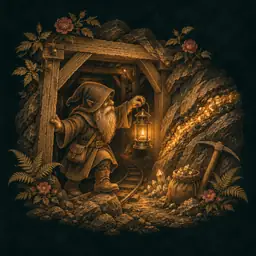

A gnome is the earth elemental in the scheme of Paracelsus: one of a small people who live underground and move through rock as humans move through air.
A lineage map for books and systems; it avoids presenting symbolic traditions as literal fact.
Understand the chapter you are in.
Your life’s turning points, measured from your birth.
Walk through Alex’s whole example first


Prefer to explore first?
 The Road of AgesThe turning points of your whole life, from your own chart
Walk my road
What is a gnome?
The word is first found in Paracelsus, who used it, beside the older word pygmy, for the people of his fourth element. He describes gnomes as about two spans high, able to pass through solid rock as easily as we walk through air, and as the keepers of the metals and treasures under the ground.
Behind his gnomes stand the mine spirits of German lore, the kobolds and the little miners whom real miners blamed for noises, lost tools and foul air, and sometimes thanked for showing a vein. The red-capped garden gnome is far younger: pottery figures of that kind were first made in Germany in the nineteenth century.
On the tree of the hidden arts: The spirit realm.
What sets Gnome apart
Of the four peoples, the gnome is the one Paracelsus ties most closely to work. His gnomes guard seams of ore and buried hoards, and he says a rich vein is found only at its proper time, once its guardians have gone. He gives their size as about two spans and says they need no tunnels, since earth is to them what air is to us. The picture rests on the mine spirits that German miners already spoke of, which the mining writer Agricola had described ten years before the treatise was printed.
- Element: earth, in the scheme of Paracelsus
- First use of the word: Paracelsus, in a treatise printed in 1566
- Other name: pygmies, the word Paracelsus sets beside it
- Height in his account: about two spans
- Older lore behind it: the kobolds and mine spirits of German miners
- Garden figure: pottery gnomes, Germany, nineteenth century
Often mistaken for something else: A dwarf comes from Norse and German myth, a smith with stories of his own; the gnome is a scholar's word of the sixteenth century for the people of the earth.
The story behind Gnome
Paracelsus's treatise on the four peoples was printed in 1566. Why he chose the word gnome is not known, and the usual guesses are a Greek word for earth-dweller or the Greek for knowledge. Georgius Agricola, writing on mining in 1556, had already described the small spirits of the mines. Le Comte de Gabalis spread the word in 1670, and the metal cobalt takes its name from the kobold, whom miners blamed for a worthless ore.
Why Gnome matters
The gnome joins a scholar's invented word to the working folklore of miners, and it is the clearest case of an elemental with a dated first appearance.
How to read Gnome
Readers meet the word in fairy tales, in fantasy and in writing on the elements, where it stands for earth, stone, metal and patience.
Gnome in practice: an example
A miner in the old stories who hears knocking ahead of him in the rock, and says the little people are at work, is describing what Paracelsus called gnomes.
Where readings of Gnome go wrong
A gnome is a figure of folklore and of one author's scheme. No being is claimed under any ground, and nothing here calls on one.
Sources and editorial method
This entry summarizes the tradition in the Almanac's own words; where no source is listed, it is an editorial summary rather than a primary text, and symbolic readings are named as the tradition's, not as fact.
- Source
- The Great Almanac Dictionary
- Category
- Mystical Systems
- Aliases
- gnomes, earth elemental, earth spirit paracelsus, pygmies paracelsus, gnome meaning
- Last updated
- 2026-09-26
See Gnome in your personal almanac
A definition tells you what it is; your own birth chart tells you what it means for you. The Oracle casts your real chart and answers for your love, your work, and your year ahead, in conversation. It opens with the 7-day Oracle trial.
Speak with the OracleRelated terms
More in Mystical Systems
- Kinhin
- Music of the Spheres
- Psychopomp
- Siddhi
- The High Priestess
- Zhan Zhuang
- Bardo Thodol
- Discourse on the Eighth and Ninth
From the reference page to your own chart
Every word here
is in your own chart.
- Your life’s turning points, measured from your birth
- A practical next step to consider
- It opens with 7 days free: the AI Oracle on thirty hidden arts, and your daily horoscope
$0 today, then $19/month after 7 days. Cancel anytime.
Common questions
What is a gnome?
A gnome is an earth spirit in the system of Paracelsus: a small being that lives underground, passes through rock and guards the metals there.
Where does the word gnome come from?
It is first found in the writings of Paracelsus in the sixteenth century. Its origin is uncertain; it may come from a Greek word meaning earth-dweller.
Are garden gnomes related to the gnomes of Paracelsus?
Only by name. Pottery garden gnomes were first made in Germany in the nineteenth century, drawing on folk tales of dwarfs and mine spirits.


