
Florence Scovel Shinn
1871 to 1940
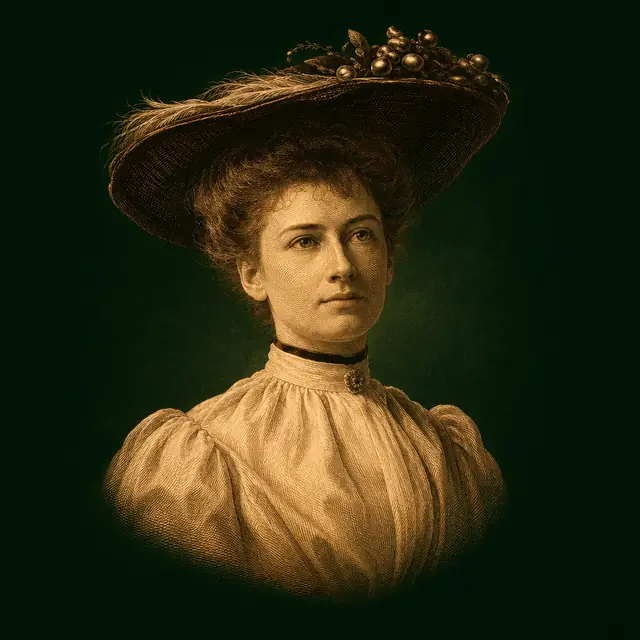
Who was Florence Scovel Shinn, and what is truly known of them?
What is known
American illustrator and New Thought teacher, born at Camden, New Jersey. She trained at the Pennsylvania Academy of the Fine Arts, drew for magazines and for popular novels of the 1900s, and was married from 1898 to 1912 to the painter Everett Shinn. From the 1920s she held classes in New York on the power of the spoken affirmation, mixing Bible verses with stories of her pupils. She printed The Game of Life and How to Play It herself in 1925, after publishers declined it. Your Word Is Your Wand followed in 1928 and The Secret Door to Success in 1940, the year she died.
The teaching
Taught from her own books, above all The Game of Life and How to Play It (1925) and Your Word Is Your Wand (1928).
The game of giving and receiving
Most people, Shinn begins, consider life a battle, but it is not a battle; it is a game, and it cannot be played well without the knowledge of spiritual law, whose rules the Old and New Testaments give. Jesus taught that it is a game of giving and receiving: whatsoever a man soweth, that shall he also reap. Whatever a person sends out in word or deed returns to them; love brings back love, criticism criticism, and the one who cheats is cheated.
The imaging faculty plays the leading part, and she calls the imagination the scissors of the mind, always cutting out the pictures a person holds, which they meet sooner or later in their life. The game is therefore played chiefly by training the imagination to picture only good.
Three minds and the divine design
She teaches three departments of mind. The subconscious is power without direction, like steam or electricity, which carries out in detail whatever is felt deeply or imaged clearly. The conscious mind, the mortal or carnal mind, sees life as it appears, with its sickness, poverty and limitation, and impresses those pictures on the subconscious. The superconscious is the God Mind within each person, the realm of perfect ideas.
In the superconscious is the divine design of each life: a place that one is to fill and no one else can fill, something one is to do that no one else can do. It flashes across the conscious mind as an ideal that seems too good to be true. So she would not speak the word for a woman to marry one particular man, but only for the right man, the divine selection, since what does not belong to a person by divine right would bring no happiness if gained. God's plan for every life she calls the square of life: health, wealth, love and perfect self-expression.
The spoken word
Death and life, she quotes, are in the power of the tongue. Words and thoughts are a great vibratory force, and her method is to speak the word: a short affirmation, said with faith, such as Infinite Spirit, open the way for the right apartment, or for great abundance. Fear is the one enemy, and she calls it inverted faith, faith in evil instead of good. A denial should always be followed by an affirmation, and Your Word Is Your Wand gathers such affirmations by subject for daily use.
Then the student must act as though the prayer were answered. She takes the rule from the story of Elisha and the kings in the desert, told to fill the valley with ditches though they saw neither wind nor rain: prepare for the thing asked for when there is not the slightest sign of it.
Leads, non-resistance and the burden
After speaking the word, do nothing until a definite lead comes, and ask for it: Infinite Spirit, reveal to me the way, let me know if there is anything for me to do. The answer comes through intuition, a hunch, a chance remark or a line in a book, and her rule is never to violate a hunch. She distinguishes visualising, a work of the reasoning mind, from visioning, the pictures given by intuition from the superconscious, and warns that forcing a result through reason brings it to a standstill.
Resist not evil, she teaches, for nothing on earth can resist a person who is wholly non-resistant, as water wears away rock. Evil comes of believing in two powers instead of one. Burdens are not to be fought but cast: I cast this burden on the Christ within, and I go free.
Karma and forgiveness
The game, she says, is a game of boomerangs: a person's thoughts, deeds and words return to them, sooner or later, with astonishing accuracy, and this is the law of karma. But above it stands the law of forgiveness. Christianity, she teaches, is founded on it, and a person may call on it, giving thanks to be under grace and not under law, and so neutralise what would otherwise return. Order belongs to the same law, and she told a woman who wanted prosperity to begin by putting her untidy house in order.
Her books tell many stories of pupils whose spoken words brought money, homes and husbands, and some of healing by denying the appearance of disease. The house teaches them as her belief; no one falls ill by fearing illness, and illness is a matter for a doctor.
Orders and memberships
No order or lodge is documented. Her teaching belongs to the New Thought movement; she held her own meetings in New York and founded no church.
The legend
The cases in her books, in which a spoken sentence brings a flat, a husband or a sum of money, are her own telling of her pupils’ stories, without names or dates, and cannot be checked. Nothing shows that words spoken aloud change outward events. Norman Vincent Peale and Louise Hay both praised her books and drew on them.
Their works
- The Game of Life and How to Play ItBook, 1925
Her first book, printed by herself after publishers declined it, teaching that life is a game played by the law of giving and receiving and the spoken affirmation. It mixes Bible verses with the stories of her pupils. Those cases cannot be checked, and nothing shows that words spoken aloud change outward events.
Ask the Oracle about it - Your Word Is Your WandBook, 1928
A book of short affirmations arranged by subject, for health, work, love and money, with brief notes on each. It was meant to be used daily by her readers. Louise Hay and others later drew on books like it.
Ask the Oracle about it - The Secret Door to SuccessBook, 1940
Her third book, printed in the year she died, on faith, courage and the spoken word, again with the stories of her pupils. It repeats the teaching of her classes in New York. Its stories are her own telling, without names or dates.
Ask the Oracle about it - The Power of the Spoken WordBook, printed 1945
A book gathered from her notes and talks after her death and published by her students. It carries on the themes of her earlier books. It has usually been printed together with them since.
Ask the Oracle about it
How the house tells a life
This life is told from the record, with what is documented, what is legend and what was forged kept apart. A membership in an order is stated only where documents show it. A person’s chart explains none of their deeds.
The arts it feeds
Lives near it in time
Thinkers and teachers
James AllenW. B. YeatsGeorge GurdjieffCharles HaanelD. T. SuzukiWalter RussellSri AurobindoP. D. OuspenskyRamana MaharshiAlvin Boyd KuhnHazrat Inayat KhanNapoleon HillThe whole tree

