

Mystical systems
Doggerland
Direct answer
Doggerland is the land that once joined Britain to mainland Europe across the southern North Sea. Rising seas covered it after the last ice age, mostly by about 6500 BCE.
$0 today, then $19/month after 7 days. Cancel anytime.
At a glance
- Also called
- dogger bank land, north sea land bridge, drowned land north sea
- Found in
- Mystical Systems
- Related
- Atlantis, Lemuria, Flood
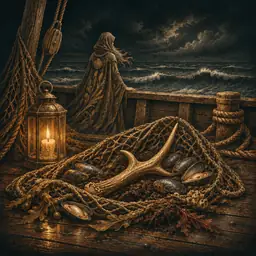

Doggerland is the land that once joined Britain to mainland Europe across the southern North Sea. Rising seas covered it after the last ice age, mostly by about 6500 BCE.
A lineage map for books and systems; it avoids presenting symbolic traditions as literal fact.
Understand the chapter you are in.
Your life’s turning points, measured from your birth.
Walk through Alex’s whole example first


Prefer to explore first?
 The Road of AgesThe turning points of your whole life, from your own chart
Walk my road
Where was Doggerland?
When the ice sheets were at their greatest the sea stood far lower, and a broad plain ran from eastern England to Denmark and the Netherlands. As the ice melted that plain became a rich country of rivers, lakes, marshes and woods, and Middle Stone Age hunters and fishers lived across it. Their tools, and the bones of the animals they hunted, are still dredged from the seabed.
The water rose over thousands of years, turning hills into islands and valleys into inlets, until Britain stood apart. Doggerland is a real lost land, and it differs from the legendary ones in every way that can be tested: it is in a known place, at a known date, with finds to show for it.
On the tree of the hidden arts: Lost worlds.
What sets Doggerland apart
Doggerland is known almost entirely without digging. Most of what can be said of it comes from sound waves sent through the seabed for the oil industry, reread by archaeologists as a map of river valleys, coasts and a great basin now called the Outer Silver Pit. To that are added things caught in nets and cores of sediment holding pollen and insects. Its name is modern and goes back to the Dutch fishing boats called doggers.
- Named by: Bryony Coles, 1998, after the Dogger Bank
- Sea at the ice maximum: about 120 metres below the present level
- Largely submerged by: about 6500 BCE
- Storegga wave: about 6200 BCE, from a landslide off Norway
- Famous find: the Colinda antler point, trawled up in 1931
Often mistaken for something else: Lemuria was a land bridge proposed to solve a puzzle and then given up; Doggerland is a land bridge confirmed by finds and surveys.
The story behind Doggerland
Trawlers were bringing up bones and peat, called moorlog, by the nineteenth century, and the geologist Clement Reid wrote of submerged forests in 1913. In 1931 the trawler Colinda raised a barbed antler point off Norfolk. Bryony Coles named the land Doggerland in 1998. A team at the University of Birmingham then mapped its rivers and coasts from the seismic data of the oil industry, and later work has taken cores of its sediment to recover pollen and traces of plants and animals.
Why Doggerland matters
Doggerland is proof that the sea has taken inhabited land, which lets a reader see what a true case looks like beside a legendary one.
How to read Doggerland
Readers compare it with Atlantis point by point: slow against sudden, hunters against kings, finds in museums against none.
Doggerland in practice: an example
Looking at a map of Doggerland, a reader can follow a river that once ran where ships now cross between Norfolk and Holland.
Where readings of Doggerland go wrong
Doggerland was drowned slowly, over many lifetimes; no city or metalwork has come from it, and it is not the source of the Atlantis story.
Sources and editorial method
This entry summarizes the tradition in the Almanac's own words; where no source is listed, it is an editorial summary rather than a primary text, and symbolic readings are named as the tradition's, not as fact.
- Source
- The Great Almanac Dictionary
- Category
- Mystical Systems
- Aliases
- doggerland meaning, dogger bank land, north sea land bridge, drowned land north sea, doggerland map
- Last updated
- 2026-09-26
See Doggerland in your personal almanac
A definition tells you what it is; your own birth chart tells you what it means for you. The Oracle casts your real chart and answers for your love, your work, and your year ahead, in conversation. It opens with the 7-day Oracle trial.
Speak with the OracleRelated terms
More in Mystical Systems
- Great Pyramid of Giza
- Kumbh Mela
- Myth of Er
- Pythia
- Solar Myth
- The Sun Tarot
- Adam Kadmon
- Bhagavad Gita
From the reference page to your own chart
Every word here
is in your own chart.
- Your life’s turning points, measured from your birth
- A practical next step to consider
- It opens with 7 days free: the AI Oracle on thirty hidden arts, and your daily horoscope
$0 today, then $19/month after 7 days. Cancel anytime.
Common questions
Where was Doggerland?
Under what is now the southern North Sea, between eastern England, the Netherlands and Denmark. The Dogger Bank, a shallow area known to fishermen, is the remains of its high ground and gives it its name.
When did Doggerland disappear?
Gradually, as the ice melted and the sea rose. Most of it was covered by about 6500 BCE, and a great wave set off by the Storegga landslide off Norway about 6200 BCE swept what was left. The last islands went under later.
Who lived in Doggerland?
Middle Stone Age hunters, fishers and gatherers. Their worked flints, their points of bone and antler and the remains of the animals they hunted have been dredged and trawled from the seabed.


