
The will to power
Nietzsche’s phrase: not ruling others, but overcoming oneself.
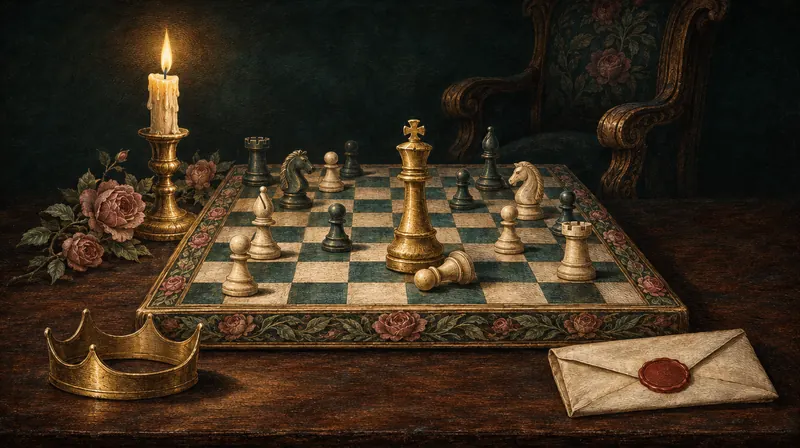
What did Nietzsche mean by the will to power, and how does it differ from The 48 Laws of Power?
What it is
The will to power is Nietzsche's name for what he took to be the basic drive of living things: not merely to survive, but to grow, to discharge strength, to overcome resistance and give things form. In human beings its crude shape is domination of others. Its refined shape, which he prized, is self-overcoming: the artist, the thinker and the saint turn the drive on themselves and make something of their own nature, and the one who does so wholly he pictured as the Übermensch. Ruling others, in some passages, is a sign of weakness; in others he calls exploitation a part of life.
The teaching
As Friedrich Nietzsche teaches it.
More than survival
Nietzsche's teaching begins as a correction. Those who study living things, he says, should think twice before naming self-preservation the basic drive of life. A living thing seeks above all to discharge its strength: life itself is will to power, and staying alive is only one of its indirect and frequent results. He finds the same drive in growth and in contest, and even in the thinker's will to truth, which Zarathustra calls a will to make all being thinkable.
The tablets of the peoples
In Zarathustra's speech on the thousand and one goals, every people hangs a tablet of values over itself, and it is the tablet of its overcomings, the voice of its will to power. What a people finds hard and indispensable it calls good, and what frees it from its direst need it calls holy. One people set itself always to be first and to excel all others; one, to speak truth and be skilled with bow and arrow; one, to honour father and mother and do their will from the root of the soul; one, to keep faith even at the risk of honour and blood.
Valuing is creating. Values are not found but made, and whoever must create must also destroy. There have been a thousand goals for a thousand peoples, he says, and humanity still lacks one goal of its own.
Life that must surpass itself
In the speech on self-overcoming, Zarathustra reports a secret that life told him: 'I am that which must ever surpass itself.' Wherever he found a living thing he found will to power, and even in the will of the servant the will to be master. The lesser yields to the greater to have power over the least, and the greatest stakes life itself for power. Life is not will to existence, he concludes, but will to power, and every value, good and evil included, must keep overcoming itself.
Master and slave valuations
In Beyond Good and Evil and the Genealogy of Morals Nietzsche separates two ways of valuing. A noble or master morality begins from a yes to itself: it calls itself and its own ways good, and calls bad, almost as an afterthought, whatever is low, cowardly or mean. A slave morality begins from a no to what is outside it: it first names the powerful evil, and then calls itself good as their opposite. The first pair is good and bad; the second is good and evil.
Behind the second he finds ressentiment, the rancour of those who cannot act, which takes its revenge in valuation. Turned inward, the will to power that cannot discharge itself outward becomes bad conscience, a cruelty directed at oneself. Even the ascetic ideal, the denial of the body and the world, is in his reading a form of the same drive, for a human being will sooner will nothingness than not will at all.
Power over others as a sign of lack
We exercise power over others, he writes in The Joyful Wisdom, by doing them good or by doing them ill. But the state in which we do ill is seldom as pleasant as the one in which we are kind; it is a sign that we still lack power, or a sign of ill humour at that lack. From this passage comes the reading in which the one who bullies is the one who has too little power, and the strong are those who need not keep proving it.
The hard sayings
Nietzsche does not soften the drive. In Beyond Good and Evil he writes that to refrain from injury, violence and exploitation, and to set every will level with one's own, may be good conduct among equals, but taken as the basic principle of society it would be a will to deny life; life itself, at bottom, is appropriation, conquest of the strange and the weak, and, at the mildest, exploitation. These passages belong to the teaching and are given here as he wrote them. They describe life as he saw it. They are no instruction to exploit a neighbour, and his highest examples of power lie elsewhere.
Giving style to one's character
The highest form of the will to power, in Nietzsche's books, is mastery of oneself. The drives are not to be killed but organised under one ruling taste, so that a chaotic nature becomes a shaped one. One thing is needful, he writes: to give style to one's character, a great and rare art. The one who practises it surveys all the strengths and weaknesses of their nature and fits them into a plan, adding second nature here by long exercise and daily work, taking away some first nature there, concealing what cannot be removed or reinterpreting it until even the weaknesses delight the eye.
The overman
Zarathustra's first teaching in the market place is the overman. Man is something that is to be surpassed, a rope stretched between the animal and the overman, a bridge and not a goal. The overman is the meaning of the earth, and Zarathustra asks his hearers to remain true to the earth and not to believe those who speak of hopes beyond it. The figure stands for the human being who has overcome the old values and created new ones: the self-overcoming of life carried to its end.
Become what you are
Two sayings of The Joyful Wisdom give the teaching its personal shape. 'What saith thy conscience?' he asks, and answers: 'Thou shalt become what thou art.' The task is not to become someone else but to grow into one's own nature by overcoming what stands in its way.
And he offers a test of whether one has done it. Suppose a demon came in your loneliest hour and told you that you must live this life again, and innumerable times, every pain and every joy in the same order. Would you curse him, or answer that you had never heard anything more divine? To be able to will one's life again, as it is, is in his teaching the strongest yes a person can say. His name for it is amor fati, the love of fate: to want nothing to be other than it is, neither forward nor backward.
Two kinds of power
The teaching thus holds two kinds of power. The crude kind seeks to rule others, and by Nietzsche's own analysis betrays a lack. The refined kind orders one's own drives, creates values and says yes to life. Books of tactics describe the first; Nietzsche's highest praise goes to the second.
How it is practised
A reader can try Nietzsche's distinction on an ordinary day. Where did I want power over someone today: to win, to be proved right, to be owed? And where did I exercise power over myself, by finishing the hard task, holding my tongue or changing my mind? He would call the second the stronger act. Writing the two lists for a week shows which kind of strength a person is actually practising, and it needs no opponent.
Where it comes from
The phrase first appears in print in Thus Spoke Zarathustra in 1883, in the chapter on the thousand and one goals, is enlarged in the chapter on self-overcoming, and returns in Beyond Good and Evil (1886) and On the Genealogy of Morals (1887). Nietzsche collapsed in January 1889 and wrote nothing more. The book titled The Will to Power was assembled from his notebooks after 1900 by his sister Elisabeth and others, in an order he never fixed. She later courted the National Socialists, who used his name. Walter Kaufmann's study of 1950 argued for the reading by self-mastery, which other readers dispute.
What is known, and what is not
The passages are in his published books and are not in doubt. The posthumous compilation is unreliable as a statement of his plan, as the critical edition by Colli and Montinari showed. Scholars disagree on how far he meant the will to power as psychology, as biology or as a claim about all reality. That he despised anti-Semitism and German nationalism is documented in his letters and books. The use made of him by the Nazi state ran against his own words.
Its words
- Will to Power
- Nietzsche's name for a basic drive of living things to grow, overcome and give form, shown at its highest in mastery of oneself.
- Übermensch
- Nietzsche's overman: the human being who overcomes himself and makes his own values. It is no race and no ruler over others; the Nazi use of the word twisted it.
Ask the Oracle further
Does Nietzsche's will to power mean I should take power over other people?How is Nietzsche's self-overcoming different from the manipulation in dark psychology?
Before you practise
These books describe how power is sought. The Oracle teaches them so you can recognise the moves, and will not help deceive or control a particular person. If someone is controlling or frightening you, tell someone you trust; if you are in danger, call the police.
Its other branches
The 48 Laws of PowerThe PrinceThe Art of WarRecognising the movesKeeping your footingThe whole artSearch the tree

