
The Prince
Machiavelli’s handbook of 1513, and what he meant by it.
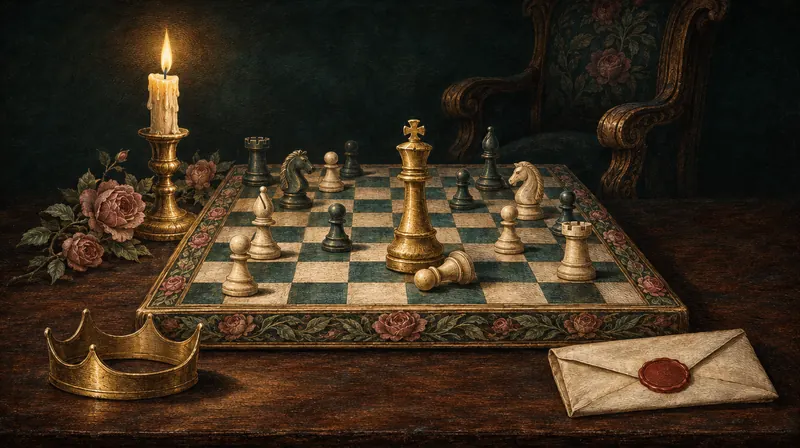
What did Machiavelli really teach in The Prince about power?
What it is
The Prince is a short handbook on how a new ruler wins and keeps a state. Machiavelli's break with earlier advice books is his starting point: he writes of how men live, not of how they ought to live. A prince must learn how not to be good, and use that knowledge when need requires. It is safer to be feared than loved if one cannot be both, yet he must never be hated. He must be a fox to know the traps and a lion to frighten the wolves. Half of success is fortuna, and the rest is virtù.
The teaching
As Machiavelli's The Prince teaches it.
The effectual truth
Machiavelli declares that he will follow the real truth of things and not an imagined one. Many have pictured republics and principalities never seen or known, he writes, but how one lives is so far distant from how one ought to live that a ruler who neglects what is done for what ought to be done will sooner bring about his ruin than his preservation. A man who tries to be good in everything comes to grief among so many who are not good.
His knowledge, the dedication says, comes from long experience of present affairs and continual study of ancient ones. He likens himself to those who draw landscapes, who go down into the plain to see the mountains and up the mountains to see the plain: to know the nature of princes, one must be of the people.
Kinds of states
All states are republics or principalities, and principalities are inherited or new. An inherited state is easy to hold, for the prince need only keep the customs of his ancestors. A new one is hard: people change rulers gladly, hoping to better themselves, and find themselves worse off, and the newcomer offends those he has conquered and cannot satisfy those who let him in. To hold an added territory he should end the old ruling line, keep its laws and taxes, and go to live there, or plant colonies, which cost less than garrisons. Men must be either caressed or crushed, because they avenge small injuries but cannot avenge great ones.
A city used to its own laws never forgets its liberty. And troubles must be met early: like a hectic fever, a danger is easy to cure and hard to see at its beginning, and later easy to see and hard to cure.
The armed prophet
Those who rose by their own arms and ability, Moses, Cyrus, Romulus and Theseus, had from fortune only the opportunity. Their hardship was the founding of a new order, and there is nothing more difficult to take in hand or more perilous to conduct, because the innovator has for enemies all who did well under the old order and only lukewarm defenders among those who may do well under the new. So armed prophets have conquered, and unarmed ones, like the friar Savonarola in Florence, have failed.
Those who rise by fortune and by other men's arms must lay their foundations quickly. Cesare Borgia is the model: he sent a cruel and swift lieutenant to pacify the Romagna, then, to clear himself of the hatred it caused, had the man cut in two and left in the square at Cesena. His one great error was to allow the election of a pope he had injured.
Cruelty well used
Some rise by crime, as Agathocles of Syracuse did, and here Machiavelli separates cruelty well used from cruelty badly used. Well used is cruelty done at a stroke, out of the need to make oneself secure, then not persisted in and turned to the subjects' benefit. Badly used is cruelty that begins small and grows with time. Injuries should be done all at once, so that, being tasted less, they offend less; benefits should be given little by little, so that they are savoured more.
The people and the great
In every city there are two humours: the people, who wish not to be oppressed, and the great, who wish to oppress. A prince raised by the people stands more securely than one raised by the nobles, for the people's aim is the more honest and they are too many to make enemies of, whatever the proverb says of building on the people as building on mud. His strength is measured by whether he can field an army of his own or must shelter behind walls.
Arms of one's own
The foundations of every state are good laws and good arms, and there cannot be good laws where there are not good arms. Mercenaries are useless and dangerous: disunited, ambitious, faithless, brave among friends and cowardly before the enemy. Auxiliaries, the armies of a powerful ally, are worse, because if they lose you are undone and if they win you are their prisoner. A prince should have no other aim or thought than war and its discipline, and in peace he should train more than in war, hunting to harden the body and learn the land, and reading history to study how great men acted.
Learning how not to be good
Since a prince lives among many who are not good, he must learn how not to be good, and use that knowledge or not as necessity requires. He cannot have every quality that is praised. He should avoid the vices that would cost him his state and not fret over those that would not. On spending, it is better to be thought mean: lavishness to win a name for generosity empties the purse, forces taxes and earns hatred, while thrift lets him defend himself without burdening anyone.
Feared or loved
Is it better to be loved than feared? One would wish to be both, but since they rarely go together, it is much safer to be feared than loved, if one of the two must be lacking. Men, he says, are ungrateful, fickle, false, cowardly and covetous; while you do them good they are yours, but when need comes they turn away. Love is held by a chain of obligation which men break when it suits them, and fear by a dread of punishment that never fails.
Yet a prince should be feared in such a way that, if he does not win love, he avoids hatred. This he can do so long as he keeps his hands off his citizens' property and their women, for men forget the death of a father sooner than the loss of their inheritance.
The fox and the lion
There are two ways of contending, by law and by force; the first is proper to men and the second to beasts, and since the first is often not enough, a prince must know how to use both. The ancients taught this, he says, in the story that Achilles was given to the centaur Chiron, half man and half beast, to be raised. Of the beasts the prince should choose the fox and the lion, because the lion cannot defend himself against snares and the fox cannot defend himself against wolves: he must be a fox to recognise the snares and a lion to frighten the wolves.
A prudent ruler cannot keep his word when keeping it turns against him. He must seem merciful, faithful, humane, upright and religious, because everyone sees what you appear to be and few know what you are, and in the actions of princes people judge by the result.
Hatred, counsel and flatterers
Above all a prince must avoid being hated or despised. He is despised for seeming fickle, frivolous, mean-spirited or irresolute, and the best fortress he can have is not to be hated by the people. He wins esteem by great enterprises and by being a true friend or a true enemy, since neutrality satisfies no one.
The first judgement of his intelligence is the men he keeps about him. Of minds there are three kinds: one understands by itself, one discerns what others understand, and one does neither; the first is excellent, the second good, the third useless. Flatterers he escapes by choosing a few wise men and letting them speak the truth when he asks, for good counsel springs from the prince's wisdom, not his wisdom from good counsel.
Virtù and fortuna
Fortune, Machiavelli judges, is the arbiter of half our actions, but leaves the other half, or nearly, to us. He likens her to a violent river that floods the plain, uproots trees and carries off the soil; no one can stand against it once it rises, but in quiet times men can build dykes and banks so that the next flood is held. Where no virtù, no skill and nerve prepared beforehand, stands against her, fortune shows her power.
Men prosper while their way of acting suits the times and fail when it does not, and since a man rarely changes his nature, the same character that raised him ruins him when the times turn. On balance he judges it better to be bold than cautious, for fortune, in his image, favours the young and the daring. The book closes with an exhortation to a new prince to free Italy from the foreign armies, ending on lines of Petrarch.
Reading him to see the moves
Read for recognition, the book names the moves of anyone who holds power without being bound by it: the harsh measure done at once and blamed on a deputy, the favours handed out slowly, the show of virtue, the care to be feared without being hated. Seen in an office or a family, they are a signal to look beneath the appearance for the effectual truth.
How it is practised
The Prince rewards being read against his other great book, the Discourses on Livy, where the same man argues for republics and the rule of law. A reader sets a chapter of each side by side and asks which voice is his. Then they bring one maxim down to scale: where, in an office or a family, is it true that people forgive a firm decision sooner than a wavering one? The aim is to see the mechanism, not to borrow the mask.
Where it comes from
Machiavelli served the Florentine republic as a secretary and envoy from 1498, and on his missions met Cesare Borgia, the model of his new prince. When the Medici returned in 1512 he lost his post, and early in 1513 he was arrested, tortured and released. He wrote the book that year on his farm and dedicated it to a Medici, hoping for work that did not come. It was printed in 1532 as Il Principe, after his death, and banned by the Church in 1559. Machiavellian was an English insult within a few decades.
What is known, and what is not
The text and its dates are secure. Its purpose is disputed. Some read it as a plain application for work with the Medici, some as a cold science of politics, and some, with Rousseau, as a book that exposes princes to the people. The phrase about the end justifying the means is not in it, and the maxim divide and rule is credited to him without proof. Its way of judging politics by power and interest was named realpolitik three centuries later. Machiavelli's own life was that of a loyal servant of a republic, which sits oddly with the adjective made from his name.
Its words
- The Prince
- Machiavelli's short book of 1513 on how a new ruler gains and keeps a state, argued from how people act and not from how they ought to.
- Machiavellianism
- Cunning and bad faith in pursuit of power, named after Machiavelli; in psychology, a measured tendency to manipulate and to take a cynical view of people.
- Virtù and Fortuna
- Machiavelli's pair: virtù is the skill, nerve and energy of a ruler; fortuna is chance and circumstance, which he says governs about half of what happens.
- Realpolitik
- Politics run on power and interest as they stand, not on ideals. Ludwig von Rochau coined the word in 1853 as a method for reformers; it later came to mean plain power politics.
- Divide and Rule
- Keeping control by keeping the governed apart, through separate dealings, unequal favours and old grievances. It fails once the divided compare notes.
Ask the Oracle further
Did Machiavelli mean The Prince sincerely, or as a satire?What did Machiavelli mean by virtù and fortuna?
Before you practise
These books describe how power is sought. The Oracle teaches them so you can recognise the moves, and will not help deceive or control a particular person. If someone is controlling or frightening you, tell someone you trust; if you are in danger, call the police.
Its other branches
The 48 Laws of PowerThe Art of WarRecognising the movesThe will to powerKeeping your footingThe whole artSearch the tree

