
The Art of War
Sun Tzu: win before the fight, or do not fight.
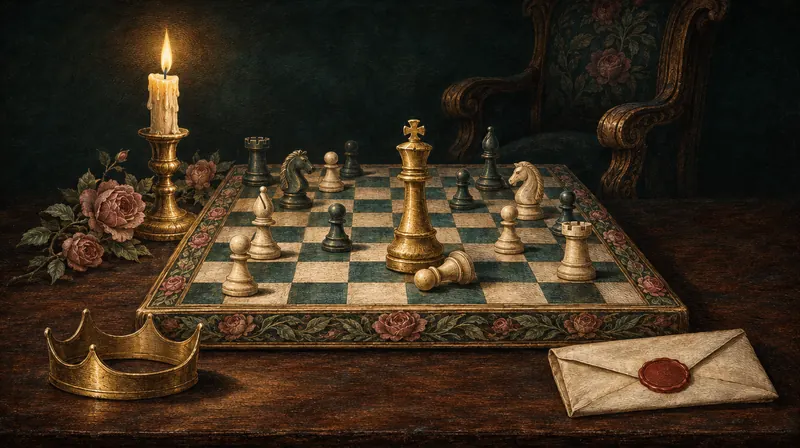
What does Sun Tzu’s The Art of War teach about power and conflict?
What it is
The Art of War is a manual of thirteen short chapters on how to win a conflict at the least cost. Its argument runs against the love of battle. The highest skill is to defeat the other side's plans without fighting; the next is to break its alliances; the worst is to besiege a walled city. War rests on deception and on knowledge: whoever knows both the opponent and himself is not in danger in a hundred battles. Long wars ruin states, and a ruinous win, which the West calls a Pyrrhic victory, is counted a failure.
The teaching
As Sun Tzu's The Art of War teaches it.
Laying plans
War is of vital importance to the state, a matter of life and death, a road to safety or to ruin, and so it must be studied. It is governed by five constant factors. The Moral Law makes the people one in mind with their ruler, so that they follow him regardless of danger. Heaven is night and day, cold and heat, times and seasons. Earth is distance, danger and security, open ground and narrow passes. The Commander stands for wisdom, sincerity, benevolence, courage and strictness. Method and discipline are the ordering of the army, its ranks, its roads and its spending. Before any campaign the two sides are compared on these, point by point.
All warfare is based on deception. When able to attack, seem unable; when near, make the enemy believe you are far away; hold out baits, feign disorder; if he is of an angry temper, irritate him; attack where he is unprepared and appear where you are not expected. The general who wins makes many calculations in his temple before the battle is fought, and the one who loses makes few.
Waging war
War is ruinously costly, and its great object is victory, not lengthy campaigns: there is no instance of a country having benefited from prolonged warfare. Haste can be foolish, but cleverness is never found in long delays. The wise general forages on the enemy, since one cartload of the enemy's provisions is worth twenty of one's own, and treats captured soldiers kindly, so that the conquered foe adds to his strength.
Attack by stratagem
To fight and conquer in all one's battles is not supreme excellence; supreme excellence consists in breaking the enemy's resistance without fighting. So the highest form of generalship is to balk the enemy's plans; the next, to prevent his forces from joining; the next, to attack his army in the field; and the worst of all is to besiege walled cities. It is better to take a state whole and intact than to destroy it.
Victory has five essentials: to know when to fight and when not to fight; to know how to handle both larger and smaller forces; to have an army of one spirit through all its ranks; to be prepared and to wait for an unprepared enemy; and to be a capable general whom the sovereign does not interfere with. If you know the enemy and know yourself, you need not fear the result of a hundred battles; if you know yourself but not the enemy, for every victory you will suffer a defeat; if you know neither, you will lose every battle.
Tactical dispositions
The good fighters of old first put themselves beyond the possibility of defeat and then waited for a chance to defeat the enemy. Security against defeat lies in our own hands; the chance of victory is given by the enemy himself. So the victorious strategist seeks battle only after the victory has been won, while the one destined for defeat fights first and looks for victory afterwards. The method runs in five steps, each born of the last: measurement of the ground, estimation of quantities, calculation, the balancing of chances, and victory.
Energy
In fighting, the direct method joins battle and the indirect method wins it. There are only five musical notes, five primary colours and five tastes, yet their combinations are more than can ever be heard, seen or tasted; so there are only two methods of attack, the direct and the indirect, and they lead into each other like moving in a circle, without end. Energy is like the bending of a crossbow, and decision like the releasing of the trigger. The good fighter looks to the force of the whole and does not ask too much of individuals, so that his men become like round stones rolled down a mountain thousands of feet high.
Weak points and strong
Whoever is first on the field and awaits the enemy is fresh; whoever arrives late and hurries to battle is exhausted. The clever combatant imposes his will on the enemy and does not let the enemy's will be imposed on him. He appears at points the enemy must hasten to defend and marches swiftly to places where he is not expected.
Military tactics are like water. Water runs away from high places and hurries downward, and so in war one avoids what is strong and strikes at what is weak. As water shapes its course by the ground it flows over, the soldier works out his victory by the foe he faces; and as water keeps no constant shape, in war there are no constant conditions.
Manoeuvring
The hardest art is to turn the devious into the direct and misfortune into gain. Let your rapidity be that of the wind and your compactness that of the forest; in raiding be like fire, in stillness like a mountain; let your plans be dark as night, and when you move, fall like a thunderbolt. Gongs, drums, banners and flags make many men act as one. A soldier's spirit is keenest in the morning, flags by noon, and by evening is bent only on returning to camp, so the clever general avoids an army whose spirit is keen. Do not interfere with an army that is returning home; when you surround an army, leave an outlet free; do not press a desperate foe too hard.
Variation in tactics
There are roads that must not be followed, armies that must not be attacked, towns that must not be besieged, positions that must not be contested, and commands of the sovereign that must not be obeyed. The art of war teaches us to rely not on the likelihood of the enemy's not coming, but on our own readiness to receive him. And there are five dangerous faults in a general: recklessness, which leads to destruction; cowardice, which leads to capture; a hasty temper, which can be provoked by insults; a delicate sense of honour, which is sensitive to shame; and over-solicitude for his men, which exposes him to worry and trouble.
The army on the march, and terrain
The ninth chapter teaches the reading of signs. Birds rising in flight mean an ambush; startled beasts, a sudden attack. Humble words with increased preparations mean the enemy is about to advance; violent language and a show of advancing mean he will retreat; peace proposals without a sworn covenant mean a plot. Soldiers leaning on their spears are faint for want of food, and water-carriers who drink first show an army suffering from thirst. Birds gathering on a spot show that it is empty. Rewards given too often show that the enemy is at the end of his resources, and too many punishments show dire distress. Soldiers must be treated first with humanity but kept under control by iron discipline.
The tenth names six kinds of ground: accessible, entangling, temporising, narrow passes, precipitous heights, and positions far from the enemy. It names six calamities that come not from nature but from the faults of the general: flight, insubordination, collapse, ruin, disorganisation and rout. Regard your soldiers as your children and they will follow you into the deepest valleys. Know the enemy and know yourself, and your victory will not stand in doubt; know Heaven and know Earth, and you may make it complete.
The nine situations
The eleventh chapter names nine kinds of ground and the conduct proper to each. On dispersive ground, one's own country, fight not. On facile ground, a little way into the enemy's, halt not. On contentious ground, which gives great advantage to whoever holds it, attack not. On open ground, do not try to block the enemy's way. On ground where highways meet, join hands with allies. On serious ground, deep in hostile land, gather in plunder. In difficult ground, keep steadily on the march. On hemmed-in ground, resort to stratagem. On desperate ground, where only fighting can save the army, fight.
The skilful tactician is like the shuai-jan, a snake of the Ch'ang mountains: strike its head and the tail attacks, strike its tail and the head attacks, strike its middle and both attack. Even men of enemy states help each other like the left hand and the right when they are caught in the same boat in a storm. At first, then, show the coyness of a maiden until the enemy gives an opening; afterwards be as swift as a running hare.
Fire and spies
The twelfth chapter lists five ways of attacking with fire and the seasons and winds that favour them, and closes with its gravest teaching. No ruler should put troops into the field merely to gratify his own spleen, and no general should fight a battle simply out of pique. Anger may in time change to gladness and vexation to content, but a kingdom once destroyed can never come again into being, nor can the dead be brought back to life. So the enlightened ruler is heedful and the good general full of caution.
The last chapter is on spies. Foreknowledge, it says, cannot be had from spirits, nor by reasoning from like cases, nor by calculation; knowledge of the enemy's dispositions can be had only from other men. There are five kinds of spy, local, inward, converted, doomed and surviving, and the converted spy, an enemy's spy won over, is the most precious, for through him the others can be found and used.
How it is practised
A reader can bring the book to a conflict of their own with three of its questions, answered in writing. What does the other side want, and what do I? What would it cost each of us to fight this to the end? Is there ground on which I do not need to fight at all? Most quarrels at work or at home look different after the second question. The book is read here to avoid needless battles, and it is no licence to deceive the people one lives with.
Where it comes from
The historian Sima Qian, writing about 100 BCE, credits the book, Sunzi bingfa in Chinese, to Sun Wu, a general who served the state of Wu around 500 BCE. Many modern scholars place the text a century or more later, in the Warring States era, and doubt a single author. Bamboo strips found in a tomb at Yinqueshan in 1972 proved that it existed in close to its present form by the second century BCE. A French Jesuit, Joseph Amiot, translated it in 1772, and Lionel Giles made the standard early English version in 1910.
What is known, and what is not
The text's antiquity is confirmed by the find of 1972. Its authorship and date remain open, and Sun Tzu the man is known only from accounts written centuries later. Its influence on East Asian strategy is well documented; claims that particular modern generals or companies won by it are usually anecdote. Its maxims are general enough to fit any outcome after the fact, which is a reason to treat it as a set of questions and not as a formula.
Its words
- The Art of War
- The Chinese manual in thirteen chapters credited to Sun Tzu. It ranks winning without a battle highest and the siege of a walled city lowest.
- Pyrrhic Victory
- A win that costs the winner so much that it amounts to a defeat, named after King Pyrrhus of Epirus.
Ask the Oracle further
How would Sun Tzu's Art of War have me handle a conflict at work?Who really wrote The Art of War, and when?
Before you practise
These books describe how power is sought. The Oracle teaches them so you can recognise the moves, and will not help deceive or control a particular person. If someone is controlling or frightening you, tell someone you trust; if you are in danger, call the police.
Its other branches
The 48 Laws of PowerThe PrinceRecognising the movesThe will to powerKeeping your footingThe whole artSearch the tree

