

The inner life
Will to Power
Direct answer
Will to Power: The will to power is Friedrich Nietzsche's term for the fundamental drive he saw in living things to expand, overcome resistance and impose form, of which self-mastery is the highest expression.
$0 today, then $19/month after 7 days. Cancel anytime.
At a glance
- Also called
- wille zur macht
- Found in
- Consciousness & Spiritual Psychology
- Related
- Virtù and Fortuna, Machiavellianism, Soft Power
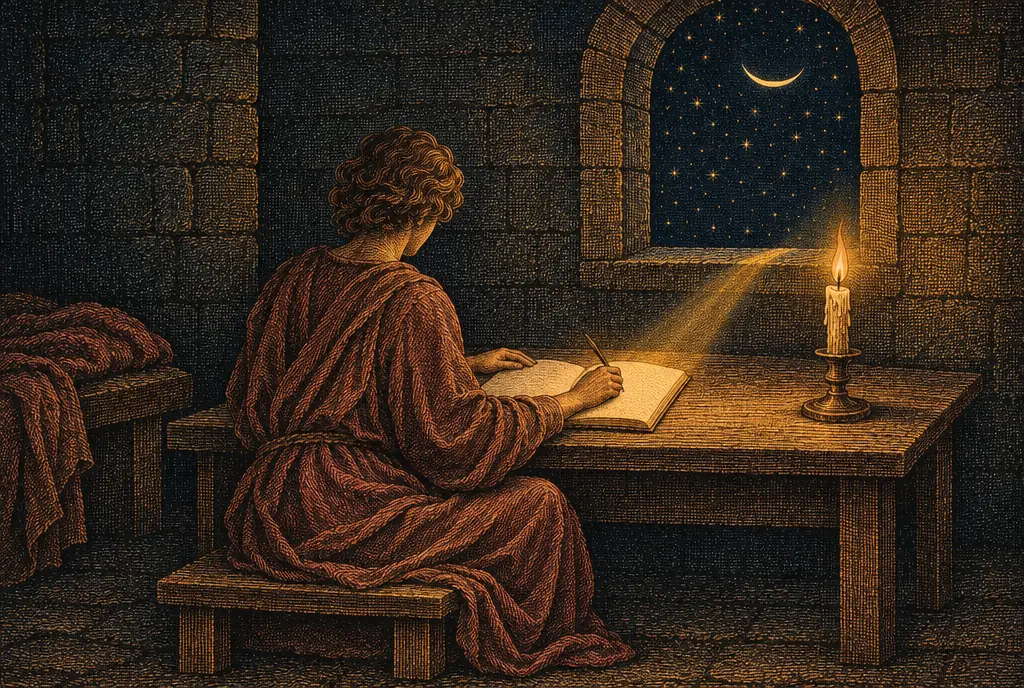
The will to power is Friedrich Nietzsche's term for the fundamental drive he saw in living things to expand, overcome resistance and impose form, of which self-mastery is the highest expression.
A plain educational schematic; it does not diagnose a condition or replace professional care.
Understand the chapter you are in.
Your life’s turning points, measured from your birth.
Walk through Alex’s whole example first


Prefer to explore first?
 The Road of AgesThe turning points of your whole life, from your own chart
Walk my road
What is the will to power?
Nietzsche set the will to power against the view that life chiefly seeks survival or pleasure. A living thing, he argues, wants above all to release its strength and to grow, and risks comfort and even life to do it. He used the idea to explain very different conduct: cruelty and charity, asceticism and conquest, the scholar's patience and the artist's style.
He ranked its forms. Power over others is the commonest and, for him, a lower form. The higher is power over oneself: to give style to one's character, to discipline one's drives and turn them to creation. He called this self-overcoming, and it is the heart of the idea.
On the tree of the hidden arts: Power and influence.
What sets Will to Power apart
Nietzsche arrived at the idea as a critic of Schopenhauer, who held that a blind will to live drives everything and that wisdom lies in denying it. Nietzsche kept the will, turned its aim from survival to growth, and replaced denial with affirmation. He never gave it a finished statement. It lives in aphorisms and in a famous passage of Zarathustra where life itself speaks and says it is that which must always overcome itself.
- German: der Wille zur Macht
- First in print: Thus Spoke Zarathustra, part one, 1883, 'On the Thousand and One Goals'
- Fullest argument: Beyond Good and Evil, 1886, sections 13 and 36
- Book of the name: compiled from notebooks by his sister; 1901, enlarged 1906
- Critical edition: Giorgio Colli and Mazzino Montinari, from 1967
- Rehabilitation: Walter Kaufmann, Nietzsche, 1950
Often mistaken for something else: The 48 Laws of Power catalogues ways to gain power over other people; Nietzsche's will to power is a theory of what drives all life, and its ideal is power over oneself.
The story behind Will to Power
The phrase appears in Thus Spoke Zarathustra (1883 to 1885) and is developed in Beyond Good and Evil (1886). Nietzsche planned and then abandoned a book under the title. After his collapse in 1889 his sister, Elisabeth Förster-Nietzsche, had a selection of his notes published as The Will to Power in 1901, enlarged in 1906. Her arrangement, and her later ties to the Nazi regime, coloured the idea for decades, until scholarship after the war returned to his own texts.
Why Will to Power matters
Will to Power is the phrase most often confused with the hunger to dominate, and on the influential reading of Walter Kaufmann Nietzsche meant almost the opposite by its highest form.
How to read Will to Power
Readers apply it as a question about their own conduct: is this an attempt to master someone else, or to master myself?
Will to Power in practice: an example
A runner who trains through a winter to beat last year's time is, in Nietzsche's sense, exercising will to power on themselves.
Where readings of Will to Power go wrong
Will to Power is a philosopher's interpretation of life, not a finding of biology, and it gives no licence to dominate anyone.
Sources and editorial method
This entry summarizes the tradition in the Almanac's own words; where no source is listed, it is an editorial summary rather than a primary text, and symbolic readings are named as the tradition's, not as fact.
- Source
- The Great Almanac Dictionary
- Category
- Consciousness & Spiritual Psychology
- Aliases
- will to power meaning, nietzsche will to power, wille zur macht, the will to power
- Last updated
- 2026-09-26
See Will to Power in your personal almanac
A definition tells you what it is; your own birth chart tells you what it means for you. The Oracle casts your real chart and answers for your love, your work, and your year ahead, in conversation. It opens with the 7-day Oracle trial.
Speak with the OracleRelated terms
More in Consciousness & Spiritual Psychology
- Bread and Circuses
- Day Residue
- File-Drawer Problem
- Inner Critic
- Near-Death Experience
- Pyrrhic Victory
- Shikantaza
- Synchronicity
From the reference page to your own chart
Every word here
is in your own chart.
- Your life’s turning points, measured from your birth
- A practical next step to consider
- It opens with 7 days free: the AI Oracle on thirty hidden arts, and your daily horoscope
$0 today, then $19/month after 7 days. Cancel anytime.
Common questions
What is the will to power?
It is Nietzsche's name for a basic drive to grow, overcome obstacles and shape things, which he thought more fundamental than the wish to survive or to be happy.
Did Nietzsche write a book called The Will to Power?
Not as published. He abandoned plans for one. The book of that name was compiled after his breakdown from his notebooks by his sister and her editors, in an order of their choosing.
Does will to power mean dominating others?
It can show itself that way, and Nietzsche thought that a crude form. He admired most the person who turns the drive inward, overcoming their own weaknesses and making something of themselves.


